

Want A Shade Tree That Won't Leave A Mess? Here Are The Best Options
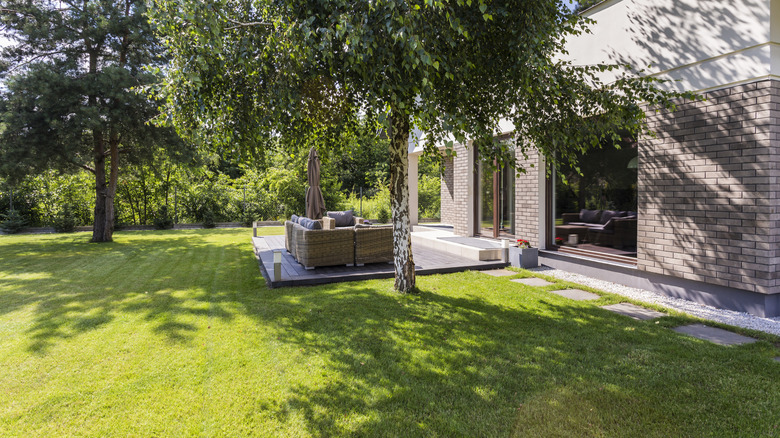
There's nothing quite like enjoying your morning coffee on your patio in the dappled shade. Sadly, this rarely comes to pass, as most shade trees are prone to dropping twigs, petals, fruits, seeds, and leaves — sometimes, even in the softest breezes! While there's no way around this natural phenomenon, unless you're using a faux plant, you can limit the significant messes by being strategic about your planting choices.
Shade trees like white fir, 'Autumn Gold' ginkgo, hornbeam, black tupelo, and 'Raywood' ash can save you from the nuisance and maintenance of cleaning up after plant debris; for varied reasons, of course. They either have concentrated periods of leaf drop, allowing for easy raking, or a sturdy structure that ensures little limb breakage. In some cases, choosing male specimens or sterile hybrids reduces or outrightly prevents the production of messy fruit that could track into your homes, clog your gutters, muddy your pools, or stain your cars. Curious to know more? Here are 16 selections that will offer all the shade, minus the unseemly mess.
White fir
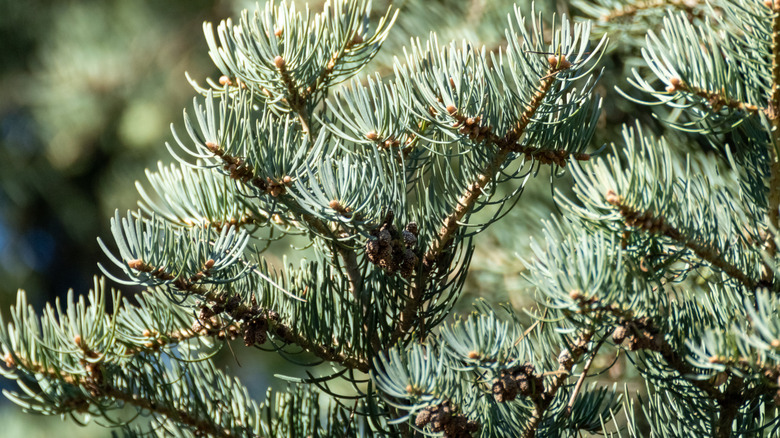
White or concolor fir (Abies concolor) makes a spectacular addition in zones 3 through 7. Young trees, with their graceful, drooping branches, pass off as striking Christmas decorations. Mature trees bush out conically, providing evergreen privacy and shade over 10 feet of area. Their seed cones usually crumble on the tree and rarely create a mess below. You don't ever have to worry about pruning these beautiful plants for shaping or drawing up a treatment plan for pests, since they largely remain unbothered. However, at 30 to 70 feet tall, they can overwhelm small yards.
Momi fir
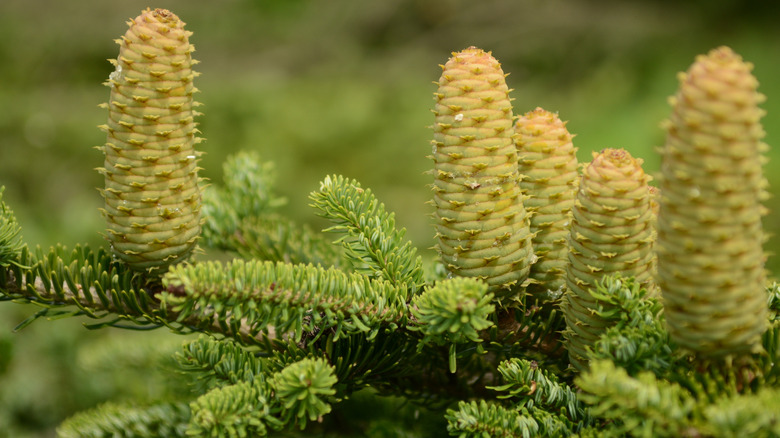
If you enjoy the look of white fir trees but struggle to grow them in your hot, humid climate, consider growing Momi fir (Abies firma) instead. They can handle heat and damp, even when planted in clay soils, and are hardy in zones 6 through 9. Leave the lower limbs be for Christmas cheer year-round, provided you aren't worried about ground clearance. Momi firs don't create much mess, rarely attract pests, and are resistant to critical diseases like balsam woolly adelgid and phytophthora root rot. You must give them lots of space, as they can grow quite tall.
Trident maple
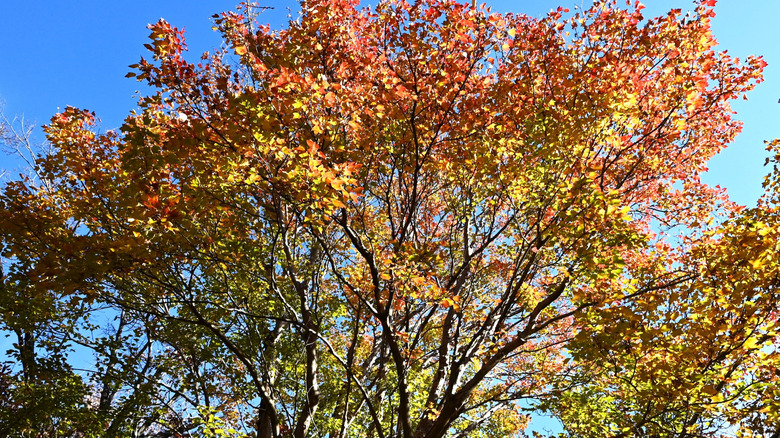
Unlike its cousins, like silver and Norway maples, trident maple (Acer buergerianum) is well-behaved, as it doesn't create any messy flower or fruit litter. It produces sturdy limbs, which are easily retained even in windswept areas. However, if your area receives lots of ice and snow, some branches may break under the accumulated weight. So, choose the location accordingly. Trident maples make beautiful fall specimens when their foliage gains red and orange undertones. They average around 35 feet in height and are ideal in sunny, small yards located in zones 5 to 9.
Manchurian alder
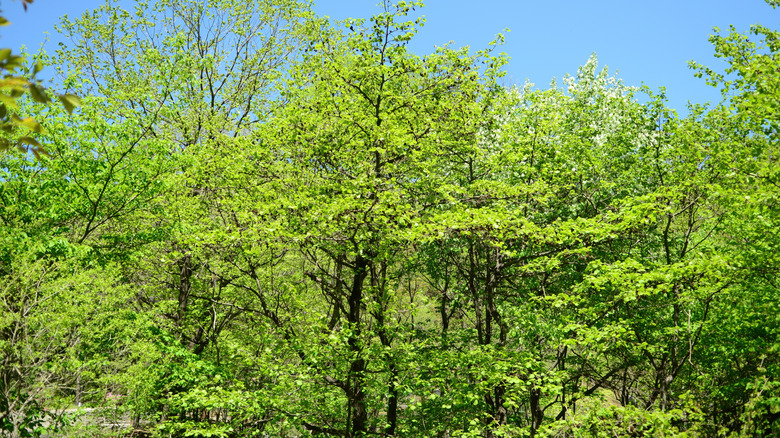
Manchurian alder (Alnus hirsuta) is a great choice for a plethora of challenging sites. You may grow it on sites that occasionally become waterlogged. Since these trees clone themselves, they help control soil erosion. On the flip side, you can also pop them in dry, drought-prone areas. Their ability to fix nitrogen also makes them valuable in poor sites. Manchurian alders produce catkins and pinecones, but don't get too messy. They cast shade over a 20 to 30-foot area, but can be twice as tall. They grow best in zones 3 to 7.
'Autumn Gold' ginkgo
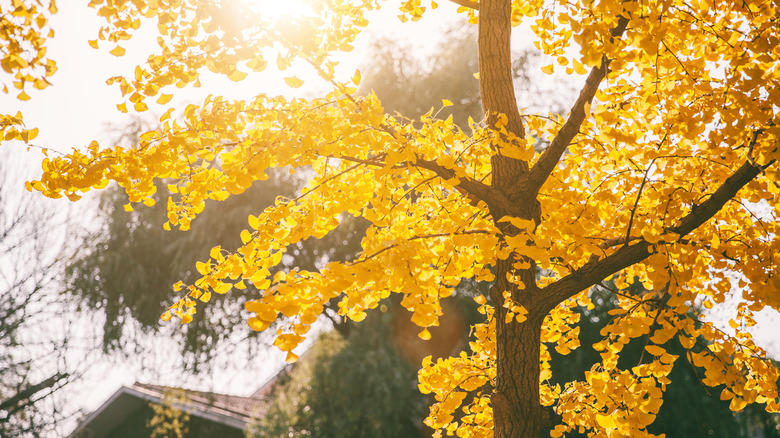
Being an all-male cultivar, 'Autumn Gold' ginkgo (Ginkgo biloba 'Autumn Gold') doesn't create any messy fruit litter, which has earned its female counterparts a bad name. As a shade specimen, they strike up a pleasing presence with their symmetrical shape and gorgeous fall colors, especially if backlit by the sun. Their leaves rain down en masse overnight, creating a beautiful yellow carpet below, which can be easily raked in time for the fall leaf collection happening near you. Do note that 'Autumn Gold' will take some time to develop its oval canopy, so the initial shade will be limited.
'Forest Pansy' redbud
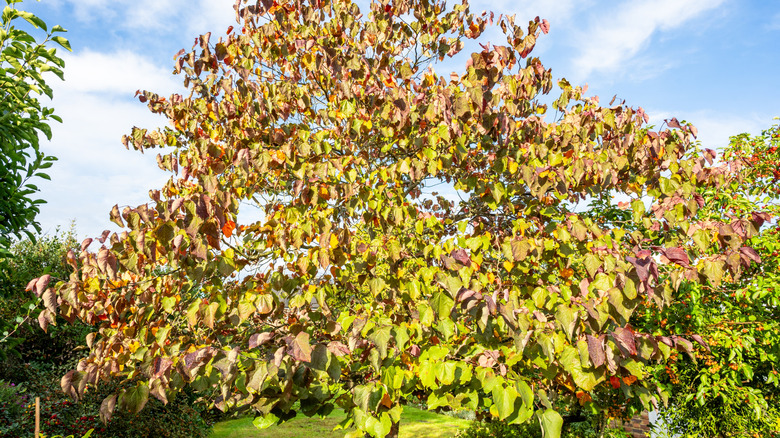
Some gardeners find redbuds messy because of their seed pods in the fall. But you can avoid that issue with the 'Forest Pansy' redbud (Cercis canadensis 'Forest Pansy'). For a start, it produces pods in a limited quantity, and they often tend to hold on to the stems throughout the winter, offering visual interest. You'll love them for their rosy-purple flowers and the various pollinators they bring in. Reddish-purple foliage in the fall is equally spectacular. They can extend to over 25 feet wide and tall at maturity and are great in small yards located in zones 5 through 9.
European hornbeam
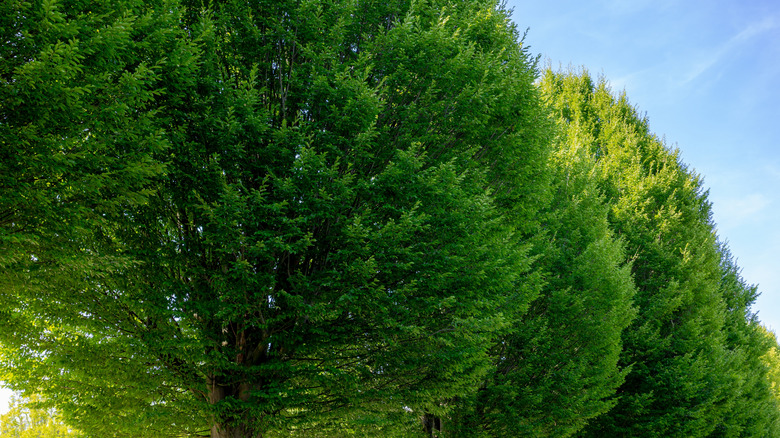
Thanks to their dense canopies, which you can usually leave unpruned, European hornbeams (Carpinus betulus) make spectacular, low-maintenance shade trees in zones 4 through 7. However, choose the cultivar carefully, as some have upright, narrow forms that may not offer much shade. Opt for standard, rounded, or weeping species instead. Despite producing nuts in the fall, European hornbeams remain relatively non-messy because birds scoop up their fruits — those that fail at making it to the beaks persist on the tree. Give it a home in autumn borders for a pop of yellow or in dry sites that can benefit from its drought tolerance.
Parsley hawthorn
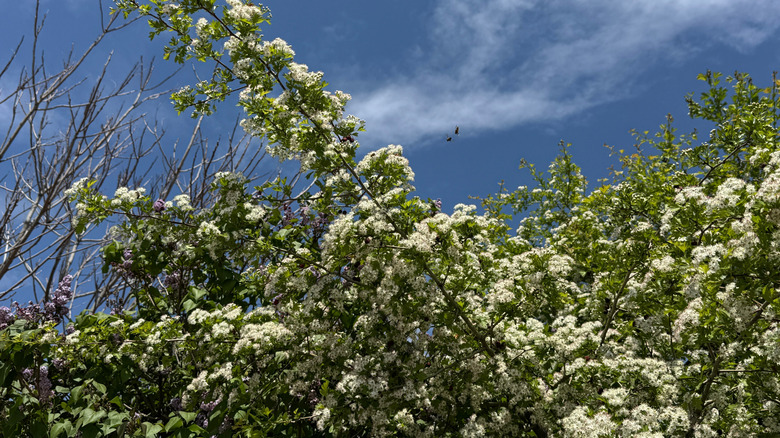
If you'd rather have a flowering tree double up as a shade specimen, with limited litter to boot, give Parsley hawthorn (Crataegus marshallii) a chance. It signals the arrival of spring through tiny, white blooms, delighting pollinators. In the fall, its stems are laden with red berries, which, if not hand-picked by growers for preserves or consumed by the local birds, stay put through the winter. Parsley hawthorns are highly versatile, as they tolerate both full sun and heavy shade, and adapt to most garden soils in zones 7 through 9. Since they grow only 15 feet wide, plant them in rows for greater shade.
Chinese pistache
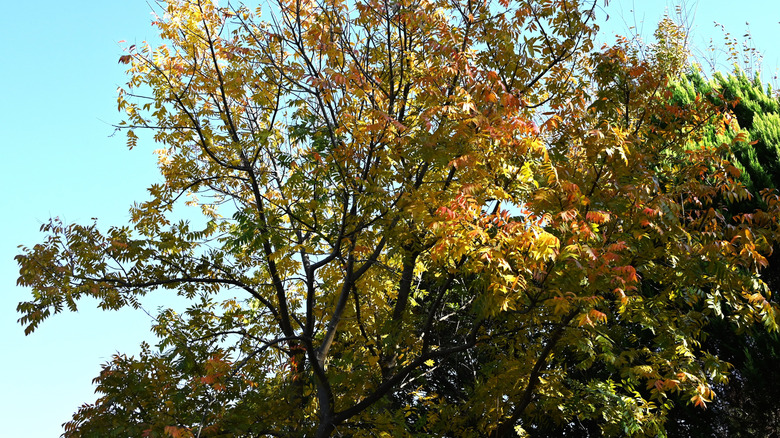
Chinese pistache (Pistacia chinenesis) is prized for its fall colors and size that doesn't overwhelm small yards. Rare attention from pests and diseases means it's easy to maintain, while high drought tolerance ensures a pretty tree even in extended dry spells. To minimize litter, choose male trees, as they don't bear any fruit or seed that could fuel their weedy spread. You'll still need to deal with leaf drop after their autumn display is over, though it's easily tackled. Initially, Chinese pistache trees appear as a lanky, teenage mess, but will grow out a bushy, oval canopy that offers ample shade in zones 6 to 9.
Flowering dogwood
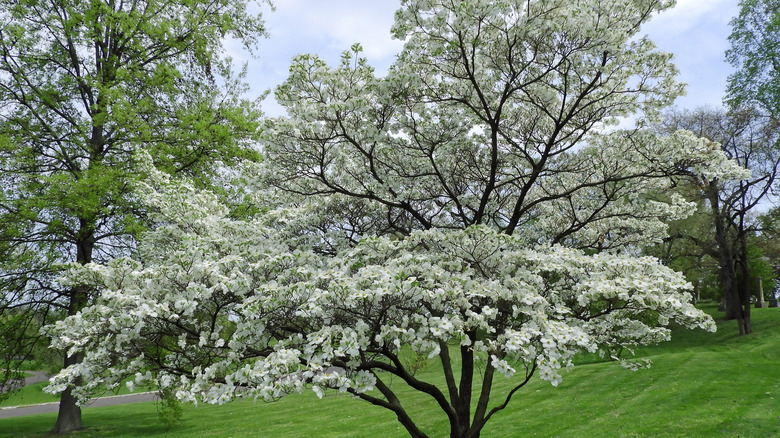
When placed in the best spot, flowering dogwood (Cornus florida) will check all the boxes on your wish list — a shade tree that fits in small spaces, provides year-round interest, and lures in diverse pollinators. Despite producing red fruits, it doesn't leave much of a mess because birds usually get them all. When they don't, the fruits are left hanging on the twigs for winter appeal. Even if they fall, they won't stain the ground, being on the drier side. Flowering dogwood grows well in zones 5 through 9.
Black tupelo
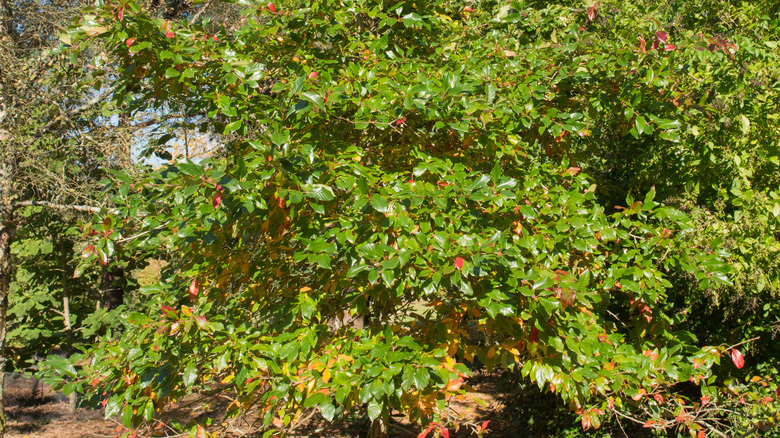
Splendid shade with stunning red fall foliage to boot makes black tupelo (Nyssa Sylvatica) a standout in most urban landscapes. This tough-as-nails tree can bear drought, heat, salt, and wind, and can even put up with poor drainage in zones 4 through 9. But if you'd like it to grow faster, you must water and fertilize it consistently. With male trees, you wouldn't have to worry about fruit and seed litter. But if you would like to feed the local birds, select female trees that bear bluish-black berries. Leftover fruit and bird droppings can be cleaned off.
Japanese tree lilac
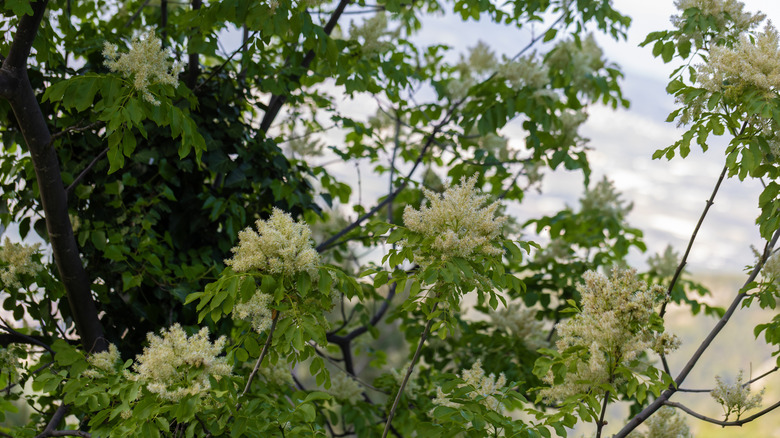
You can use Japanese tree lilac (Syringa reticulata) to create light shade around patios, decks, or sidewalks during the summer without worrying about mess or suckers. Their creamy white flowers look beautiful against the green foliage, though they don't smell the best — not that it stops hummingbirds and butterflies from hanging around them. Dry, yellow fruits replace their flowers and remain suspended from the branches right through winter. Any flower or leaf litter can be easily handled with an occasional sweep of the blower. Deer-resistant, Japanese tree lilacs may be grown in zones 3 to 7.
Eastern hop-hornbeam
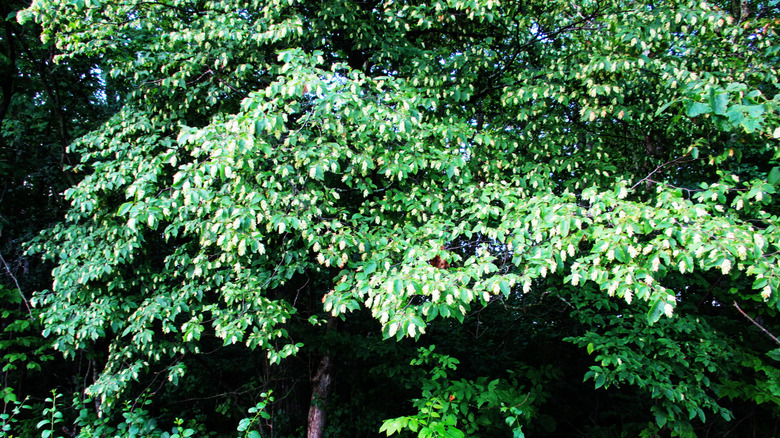
Eastern hop-hornbeam (Ostrya virginiana) is a beautiful shade tree that doesn't get too messy. Dense canopies formed of birch-like leaves can be 30 feet wide by maturity and provide ample shade. They've a strong structure, which can withstand heavy winds, storms, and ice. Other than the typical deciduous leaf drop, you may've to contend with nutlets, though critters and birds like pheasants, woodpeckers, cardinals, mockingbirds, and grosbeaks will finish off most of them. Eastern hop-hornbeams are ideal for the darkest corners, as they prefer moderate to heavy shade. They grow successfully in zones 3 through 9.
'Raywood' ash
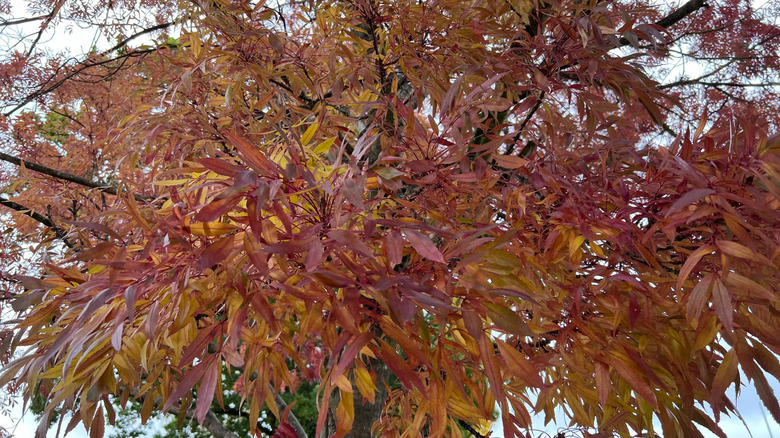
Standard ash trees tend to be messy because of the fruit litter, but 'Raywood' ash (Fraxinus oxycarpa 'Raywood') is an exception. That's because it only produces male flowers, so it doesn't fruit or set seeds. However, you must plant it in sheltered areas where it's not exposed to high winds or heavy ice loads, or you may find smatterings of small twigs. Also, avoid growing them in poorly-draining or wet soils, or you may have to grapple with lots of shallow roots, which may complicate mowing in yards. Raywood ash can spread 30 feet across and is hardy in zones 5 to 8.
Fruitless olives
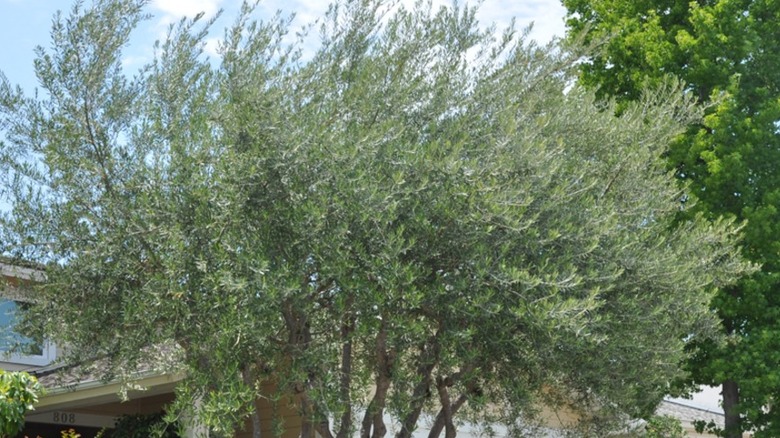
How about an Italian olive grove, sans the messy fruit? Consider 'Wilsonii' or 'Swan Hill.' Bred from European olives (Olea europaea), these cultivars are flowerless, and won't produce the irritating pollen or leave your driveway stained with fruit droppings. But if you'd like some supply without taking on too much maintenance, choose 'Majestic Beauty,' or 'Bonita,' instead, as they bear olives in limited amounts. Fruitless olives grow best with full sun exposure and fertile soils in zones 8 to 10. They can grow about 25 feet across and are drought-tolerant after establishment. The best part, though? Now you can literally extend an olive branch to your neighbor.
'Frontier' elm
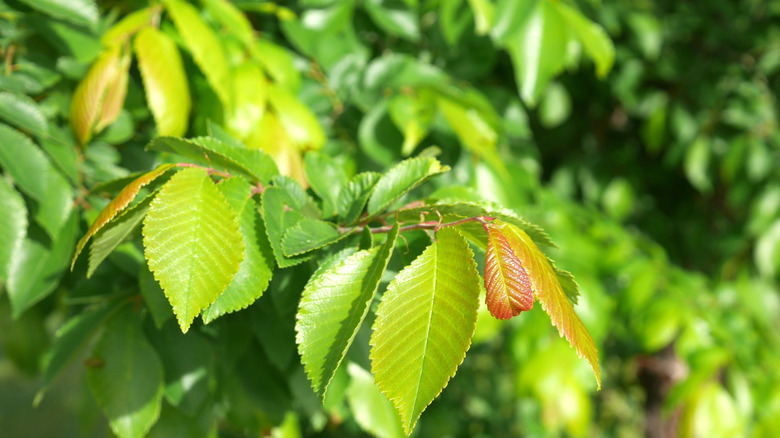
Unlike standard elm specimens, Frontier elm (Ulmus 'Frontier') won't create much mess. Since it doesn't produce seeds, you won't have to spend your precious time weeding out baby seedlings. Moreover, it shows high resistance to the deadly Dutch elm disease and elm yellows. It also remains unbothered in front of elm leaf beetles — insects notorious for defoliating elm groves. Better yet, they'll fire up your autumn landscapes with their outstanding reddish-purple foliage, which is a rarity in this family. Frontier elms grow with full sun or moderate shade in zones 4 to 10.