

The Winter Garden Watering Tip You Need For Healthier Plants Next Spring
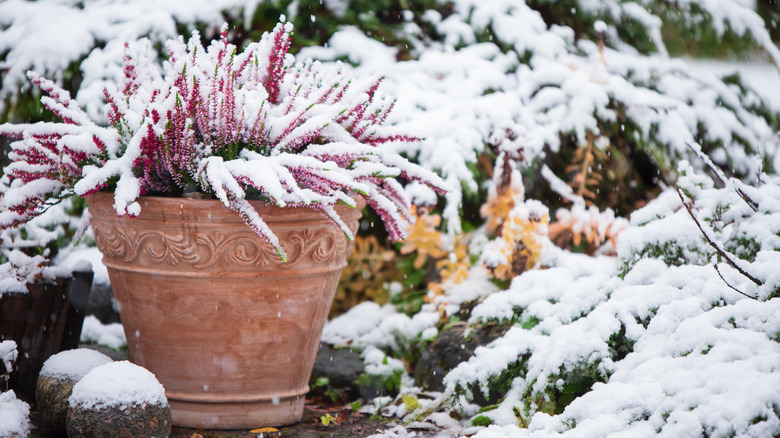
As the leaves continue dropping and the first sharp frost arrives, many home gardeners assume it's time to pack away the hose for good. Many folks believe that plants enter a state of total dormancy and don't need any watering or other attention until spring. However, this common assumption is the single biggest mistake you could make for your newly planted shrubs, trees, and evergreens. Really, you need to keep watering until the ground freezes to help your yard thrive during colder months.
If you planted any foundation plants, shade trees, or perennials this past autumn, their young root systems have not had enough time to get fully anchored into the soil. Since that's how they pull in water and nutrients, stopping watering them before the ground freezes leaves them running on reserves. This can cause them to die before you get a chance to enjoy them next year.
This oversight also threatens those plants because winter weather is deceptively drying. It's not just the low temps that will get your plants, it's also the frigid winds and super dry air that strip moisture right out of the stems and foliage (especially on evergreens, in a process called transpiration). While the plant is losing water, the cold or frozen soil acts like a locked vault and blocks the roots from getting any moisture, even if the surrounding soil isn't totally dry. This leads to what botanists call physiological drought. When a plant can't replace its moisture, its tissues dry out, causing winter burn (browning).
How to safely water your plants for healthy spring blooms
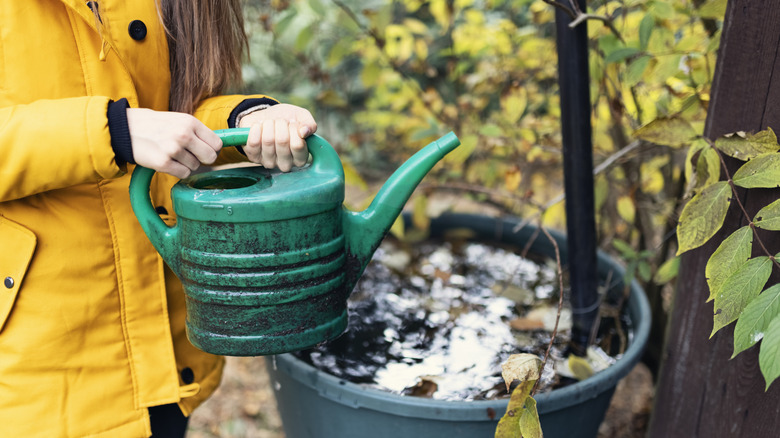
Fortunately, the solution is super simple and only asks you to invest a few minutes to keep your new garden buddies strong until spring, especially if you just planted some winter bulbs. So, what do you need to do? Just continue deep-watering these new plants until the ground is completely frozen. Go with a slow, deep saturation right over each plant's root ball and use a slow trickle or a soaker hose for at least five to 10 minutes per plant. How much water will vary by plant; check the soil moisture around each, then note recent water and wind levels. It's also best to do this in the late morning before an incoming freeze. This allows the most time possible for the water to sink into the soil.
Water also helps insulate your plants against the cold. Dry soil is airy and (you guessed it) lets in chilly winds, whereas wet soil seals those spaces with water, which will also collect heat during the daytime. Of course, watering also helps ensure your plants have the max amount of water reserves available to them to help them survive the harsh freeze-thaw cycles the winter season will bring. Making this small and easy effort now, before an inevitable ground freeze, gives your plants a fighting chance to survive winter and then thrive in your yard in spring. Now, just make sure you know how to winterize your lawn before it gets colder.