

Forget Poinsettias: This Long-Blooming Flower Brings A Splash Of Color Year After Year

Poinsettias (Euphorbia pulcherrima) and winter go together like peanut butter and jelly. Still, despite their popularity there are a few downsides to the plant. The main issue is that most poinsettias are used as holiday decorations and then discarded at the end of the season. Even if you take steps to keep your poinsettia plants thriving, getting the foliage to turn red again takes a bit of extra effort. So, if you're looking for all of the festive holiday color without as much of the work, it might be time to make amaryllis (Hippeastrum) your go-to winter flower.
Amaryllis are ornamental, herbaceous perennials that produce beautiful red, pink, white, orange, or salmon blossoms. The flowers can be easily maintained for multiple seasons and produce a more prominent flower than the poinsettia. Amaryllis bulbs are often available well before the holiday season and some varieties grow as fast as 6 to 12 weeks after planting. If you're ready to make the switch to amaryllis, here's everything you should know before planting.
Plant amaryllis instead of poinsettia for recurring blooms
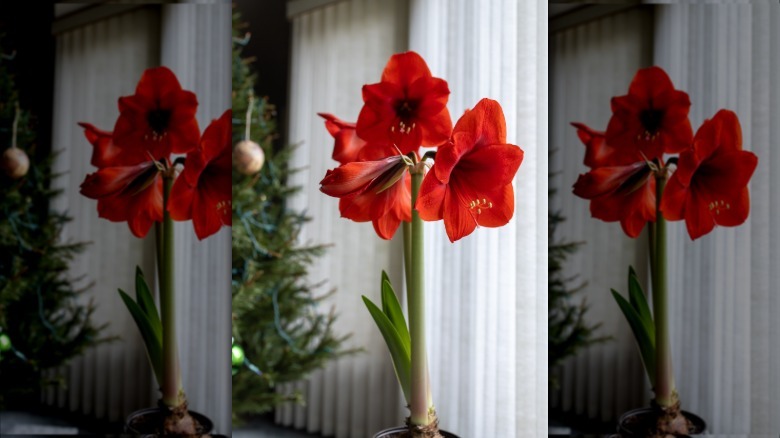
In hardiness zones 8 through 10, amaryllis can be planted outdoors year round. In colder climates, you'll need to bring the flowering plant indoors in the fall and winter. However, in any climate, amaryllis grow best in narrow containers that are about one inch wider than the fattest part of your bulb. In order to save amaryllis bulbs for more gorgeous blooms next season, there are a few post-bloom care tips to consider.
Essentially, you'll need to force the bulbs into a dormant period for a few weeks. To do this wait until your plant is nearly done flowering for the season, typically around the end of summer. Place them in a sunny area indoors and withhold food and water to make the plant go dormant. When the foliage starts yellowing, cut it off and move your plant to a cool, dark area. Leave the plant alone for roughly eight weeks, checking occasionally for mold or pests. Finally, move the plant back to a sunny area, add a fresh layer of soil, and resume regular care. If all goes well, you should get beautiful, vibrant flowers again just in time for Christmas.