

How Hard Is It To Add A Sunken Living Room To An Existing House?
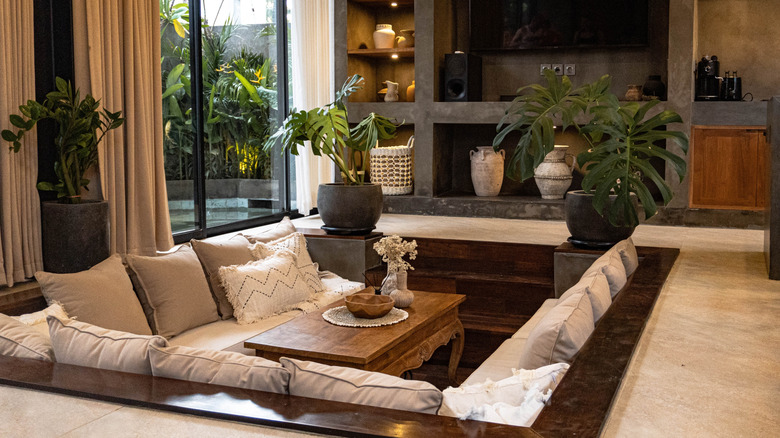
The mid-century saw a noticeable spike in at-home dinner parties and lively celebrations with dancing, drinking, and a lot of in-person connection. This modern hosting trend gave rise to sunken living rooms, also known as conversation pits or recessed living rooms. The purpose of the sunken living room was to create a separate entertaining space that was submerged below the rest of a house's foundation, making your large living room feel cozier. This created an intimate area that was perfect for hosting guests, sipping drinks, engaging in meaningful conversation, and enjoying each other's company. While you can still find sunken living rooms in some homes today, they were more common in the '60s and '70s before housing prices skyrocketed and modern connections turned to more virtual spaces.
As home design evolved to keep up with societal norms, the cons of recessed living areas also because more apparent. They required a specific layout, often not allowing for much rearranging of furniture or repurposing of the room, which didn't always evolve with a family's needs. After a few decades, the trend slowly faded. Now that this outdated living room trend is making a comeback, you may be considering adding it to your own home and wondering how difficult or pricey it is to incorporate it into an existing house. The simple answer is this: It's not easy. The construction of recessed living spaces requires altering the very foundation of your home, meaning hiring multiple professionals and taking on a massive internal project that can be more costly and time-consuming than one would imagine.
The breakdown of adding a sunken living room
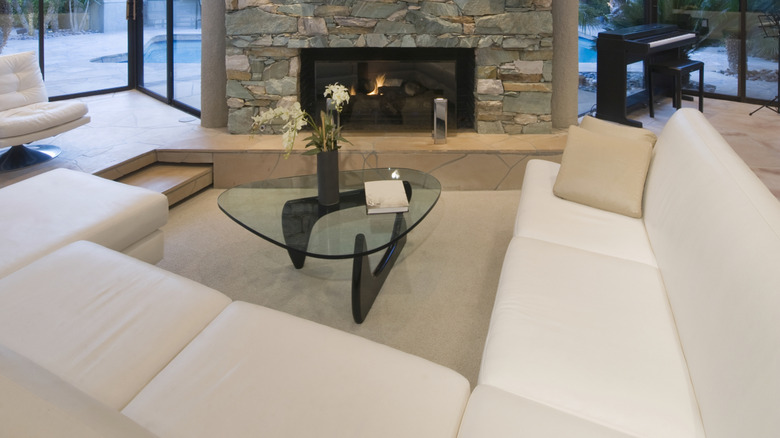
Remodeling your current home to include this recessed feature requires getting necessary permits, not to mention hiring a contractor that can sufficiently assess your house's foundation before altering its weight bearing structure to construct the conversation pit. For this reason, sunken living rooms work best in homes with concrete slab or crawl space foundations, and they are rarely found in homes with basements. The cost of adding this feature to an existing home varies based on the size of the room and how the remodel is approached. You will need to take into consideration the structural work, subflooring, additional framing, electrical or HVAC adjustments, among other factors — meaning the project can cost you anywhere from $15,000 to $30,000 or more.
If the cost to add the feature isn't enough to make you hesitate, you should also consider that this major structural change is not easily undone — raising a sunken living room can also cost anywhere from $5,000 to $25,000. The cons of the design are also worth noting before you commit. Sunken living rooms can disrupt the flow of traffic in an otherwise open floor plan, as well as presenting a hazard for small infants or people with mobility issues. Without even considering the cost, you may wish to think about the long-term goals you have for your home and how this trend might impact them. While we exist in a time where creating spaces for entertaining and optimizing them for real-life connection is becoming more necessary, take a moment to weigh the pros and cons before you chip away at your existing floor plan. If a major home renovation is not in the cards, you might instead consider adding a faux conversation pit without digging into the floor.