

One Of The Best Winter Plants For Birds & Wildlife Is An Easy-To-Grow Native Stunner
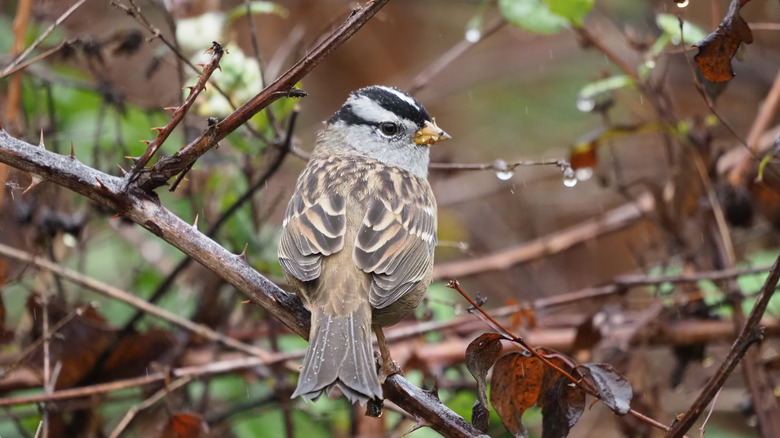
Winter is tough on birds and wildlife in many parts of the country. Food becomes increasingly scarce, and as it does, animals' fat reserves decline, making it harder for them to survive the cold. You can play your part in feeding the fauna with native plants that provide food that persists throughout the winter. One such plant, snowberry (Symphoricarpos albus), is a two-fer, delighting humans with pinkish-white bell-shaped flowers that turn into a profusion of berry-like drupes beloved by birds and small mammals. It's an excellent four-season favorite, a companion plant that attracts hummingbirds, butterflies, and other pollinators from May to August, while songbirds, game birds, and small mammals will flock to it in winter.
Snowberry is native to Canada and the northern half of the United States, but can be found as far south as Virginia and Tennessee and mountainous areas of the Southwest. It's hardy in USDA hardiness zones 3 to 7. Snowberry can be prolific, growing up to 6-feet high and wide, making it an excellent privacy hedge or natural fence. Its thickets also provide important year-round shelter to wildlife. Unlike evergreen hedges and shrubs that provide privacy in winter, snowberry is deciduous, but its thick clusters of pure white fruits add some cover and year-round interest. The density of its root system also makes it excellent for banks and slopes by preventing soil erosion.
Care and maintenance for snowberry
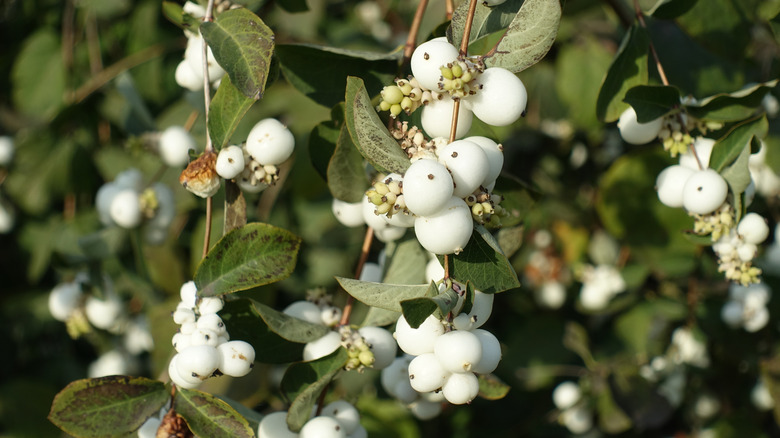
Snowberry is an adaptable shrub that does well in both full shade and full sun — the more sun, the more fruits — and pH-neutral, clay soil. Water it after planting, but once established, snowberry can handle a wide range of moisture levels, from occasionally wet to occasionally dry soils — even drought — as long as the soil drains well. It can thrive even in poor soil, so it doesn't require fertilizing, though you'll grow hardier plants and a better harvest of fruits with a spring application of fertilizer. While it's mostly disease- and pest-free, it can sometimes develop powdery mildew and other fungal and bacterial diseases.
Snowberry is an easy-to-grow shrub — sometimes too easy. By definition, this native shrub is not an invasive species, but it can be an aggressive spreader. It sends suckers out from its root system, which is why it makes an excellent privacy hedge, but you may want to cut back the suckers to prevent the shrub from crowding out other plants in your garden. You can prune the plant in late winter or early spring, before it starts to produce its flower buds. Cutting it back in summer or fall means losing the drupes that birds and mammals rely on. Also note that while birds and small mammals love its fruit, humans find the toxins in it mildly poisonous, which can induce mild gastric distress.