

The Truth About How The Christmas Cactus Got Its Name
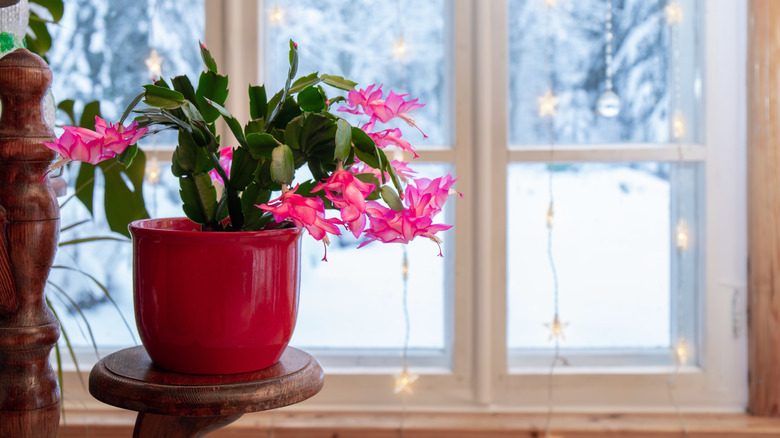
Fans of succulents might already be familiar with Christmas cacti (Schlumbergera × buckleyi), a popular houseplant. It's low-maintenance but gorgeous to look at, particularly in the colder months, when its sleek leaves come alive with long-lasting red or pink blooms. Curious about how this plant got its memorable name? The answer is simple.
Although Christmas cactus is native to the humid rainforests of Brazil, Christmas cacti tend to flower around Christmas time here in the northern hemisphere. Botanists first collected wild Schlumbergera species, including Schlumbergera truncata (now known as the Thanksgiving cactus), in Brazil during the 1800s. These discoveries later led to the development of today's Christmas cactus hybrids, which are "designed" to flower in November and December so these eye-catching plants can be marketed as holiday gifts.
Giving a Christmas cactus as a festive present
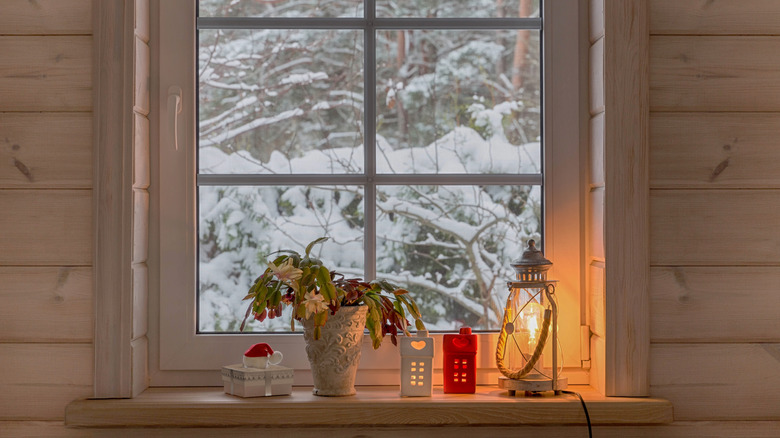
It's easy to see why this specific type of holiday cactus is so popular: It lacks pointy spines, isn't toxic to pets, and adds a cheery pop of color to your space during a season when many other plants aren't flowering. They're a suitable pick (and festive gift!) for most households. Plant one in a ceramic pot with porous, well-draining soil. This plant generally does well in homes with average humidity and warmth, though it can get fussy near drafty windows or in chilly rooms. Keep yours somewhere temperature-controlled with exposure to bright, indirect light. You'll want to fertilize it generously, too, particularly as it's getting ready to bloom in the fall.
Keep in mind is that Christmas cacti are light-sensitive and only bloom during the dark winter. To get yours to re-bloom, you'll need to be proactive in late summer and fall and move your plant into a dark room or closet for about 12 hours each day over the span of 6 to 8 weeks. That may sound like a lot of work, but once your Christmas cactus blooms, you'll hardly have to do anything to keep it happy and healthy. With proper maintenance year after year, this cheerful plant can stay alive for decades.