

The Indoor Plant That Thrives Even In Windowless Rooms
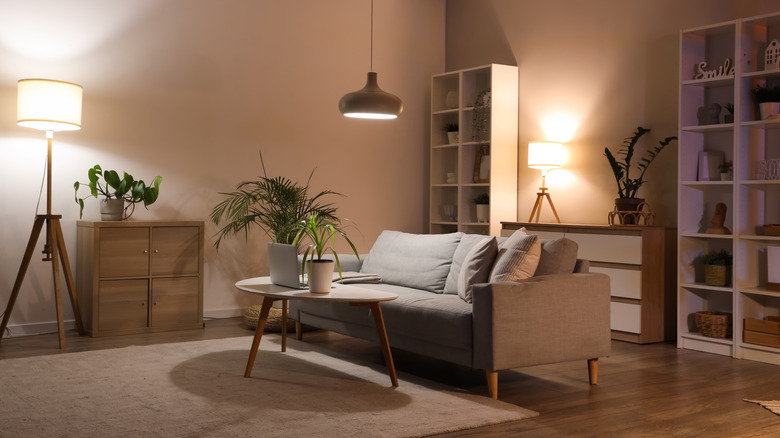
If you have a room that is crying out for houseplants but has little to no natural light, you may think you're out of luck. After all, so many of the plants we cultivate indoors hail from tropical climes, where they live out their days under rainforest canopies. Therefore, they often need bright, indirect light rather than shade. Happily, there are also a surprising number of houseplants you can grow in low light. One such plant is the corn plant (Dracaena fragrans). It's not only tolerant of low light, but it's also easy to maintain. It's perfect for new houseplant parents in windowless city apartments or busy homeowners looking for the best plants to beautify an dimly lit entryway.
In warm climates, corn plants will grow as tall as 50 feet outdoors. However, 4 to 6 feet is the height range you can expect for your indoor potted corn plant. There are several cultivars of this tropical plant, with something to suit everyone's tastes and needs. 'Lemon Lime' has sword-like leaves with yellow and lime stripes, while 'Bausei' boasts green foliage with a white center. A diminutive cultivar called 'Compacta' has short, wavy leaves. While renowned for its low to medium light tolerance (depending on the species or cultivar), the leaves may narrow a little in the shade or lose some of their variegation. If you're not a fan of thinner leaves, move it into a spot with bright, indirect light until the foliage broadens. Keep this houseplant out of direct sunlight, or you risk leaf-scorch.
How to grow a corn plant in low-light conditions indoors
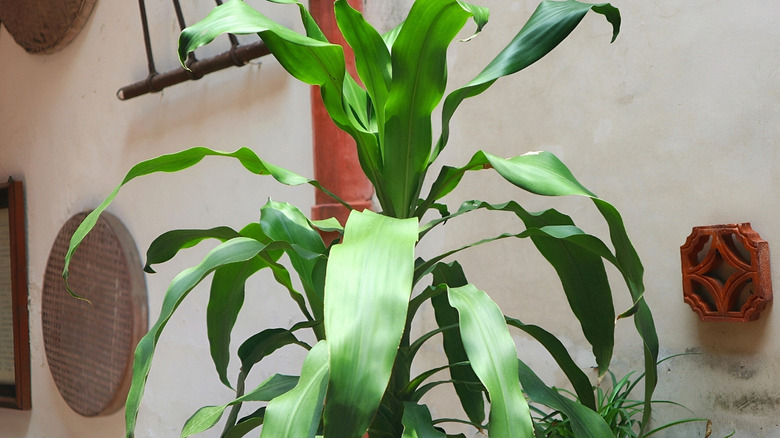
Properly caring for a dracaena plant at home couldn't be easier. Grow it in a rich, well-draining potting mix containing peat (or an alternative medium if you're worried about sustainability). Make sure the planter has lots of drainage holes. Corn plants prefer indoor temperatures between 70 and 80 degrees Fahrenheit, though they will tolerate temperatures down to 50 degrees Fahrenheit. If the humidity drops too low, the leaf tips may turn brown. You can boost moisture in the air by running a humidifier. Maintain uniform moisture in the soil, allowing it to dry slightly between waterings. Do not let the soil dry out completely. You can, however, cut back on watering from fall through late winter when the plant's growth naturally slows. Set it up in an interior room, like your home office or bathroom, or a dim corner of your living room or bedroom.
Location may be dependent on who you share your house with because dracaenas are mildly toxic to dogs, cats, and humans when ingested. Once your new houseplant is set up in its new home, you might be wondering how to grow and take care of corn plants long term. Check regularly for pests — in particular, mealybugs and thrips love corn plants — and treat them with handpicking or insecticidal soap. If you see roots poking out of the drainage holes or your plant starts lifting out of its pot, it's time to transplant it into a larger container. If you're very lucky, your corn plant may bloom. Its botanical name was born of the strong aroma of the rarely seen flowers.