

Your Ultimate Guide For Decluttering A Messy Bookshelf In 11 Steps
We may receive a commission on purchases made from links.
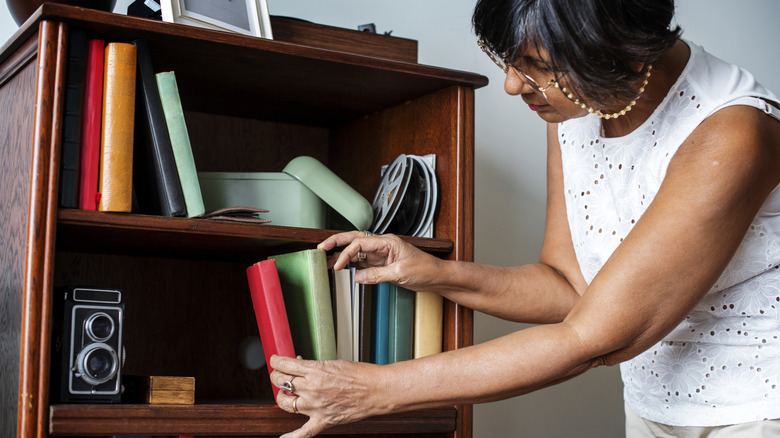
Bookshelves are a classic example of overlooked storage solutions that need to be decluttered, since they can make rooms appear messier than they actually are. Not to mention the state of overwhelm you might find yourself in when trying to find a specific novel. In fact, packed shelves might turn you off from reading altogether, causing your TBR pile to sit and collect dust. That's where creative decluttering methods come in handy, such as using fabric boxes to break up rows of books or creating open space with savvy display schemes.
Visual clutter can have an impact on how a person's brain processes information, including accuracy and perception. So reducing clutter within the home, such as on bookshelves, can potentially help with brain function and your ability to absorb information and identify what's around you. It could also be why you feel stressed when trying to select a book. Luckily, there are ample ways to declutter bookcases so you can find enjoyment in perusing them once more.
Empty the shelves and clean every nook

The first declutter step requires that you take everything off and clean both the shelves and all of the items present. This is a crucial action since your bookshelves could be hiding mold or dust made up of pollen, pet dander, or skin cells. These pollutants can contribute to poor air quality and even cause allergic reactions — all the more reason why they should be part of your cleaning regime. Dust is known to gather on reading materials and attract moisture, creating an invitation for mold spores. If left unchecked, these contaminants can cause books to deteriorate and become unusable.
To properly clean this area, you'll need a mask, like this one from Honeywell on Amazon (to keep dust or potential mold spores out of your lungs), a duster tool of your choice, and cleaning cloths like these Microfiber Pack by Amazon Basics. Before removing everything, use a Swiffer pad to clean the nooks of the shelves and to get rid of dust and dirt along the tops of books and along the spines. Next, take off all the books so you can give the shelves a deep cleaning. Depending on how dirty they are, you may only need to go over them with a duster. For high bookshelves, consider a tool like the Swiffer Heavy Duty Extendable Handle Dusting Kit, since it gives you more reach without the need for a ladder. If visible stains or mildew are present, go back over them with a multi-surface cleaner. Lastly, use microfiber cloths to individually dust each of your books and check for mold spores.
Sort books into specific piles to get organized

Now that your books are clean, it's time to sort them to ensure you actually declutter your shelves. You'll need a pile for books you want to donate, gift, keep, or store. This process will help you limit the number of reading materials on your bookshelves and finally make you give up on that one novel you just can't finish (it's all good; everyone has been there). It will also make reorganizing your bookcase(s) a breeze.
To start, pick up each book one at a time and apply the following criteria: If you know you'll never read it again, or never finish it, put it in the 'donate' pile. If you have duplicates that are in good shape, toss them in the 'gift' pile. The 'keep' pile is for titles you still plan to read or ones that you reread occasionally. These will go back on your shelves. If you have a series that you've already read but consider important, toss them in the 'keep' pile. Finally, any books that have sentimental value or are based around a holiday or a season that you reread on occasion can go in the 'store' pile.
Once you've sorted through them all, box them up. Use cardboard boxes, such as The Home Depot's Moving, Shipping, and Packing boxes with Handles, for books you want to donate or gift. For books you plan to store, make sure you put them in a container that can preserve their condition over time, like these IRIS Tight Latch Weatherproof Totes.
Decide on the best way to reorganize your bookshelf
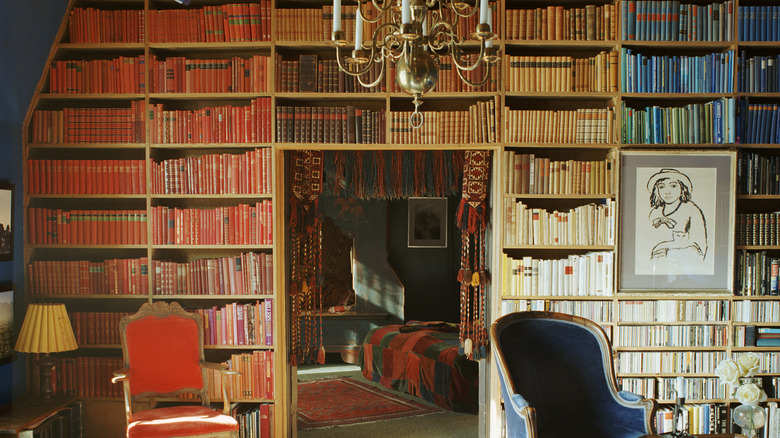
Next, decide exactly how you want to reorganize your books. You can make your bookshelf so much better looking and organized by arranging reading materials by color, series, genre, alphabetical order, or even size. You should also consider the placement of your books. Ones you don't read as often but still love can go on higher levels, while those you frequently reread or have yet to read should be on the lower, more accessible shelves.
Starting with a game plan will help you make intentional decisions and stay on track with your book organization goals. But give yourself permission to play around with different display methods. The key is to make it clutter-free and aesthetically pleasing to the eye. It's okay to start over if a shelf's layout isn't working for you or seems too crowded.
Disperse your collection to minimize too much in one spot
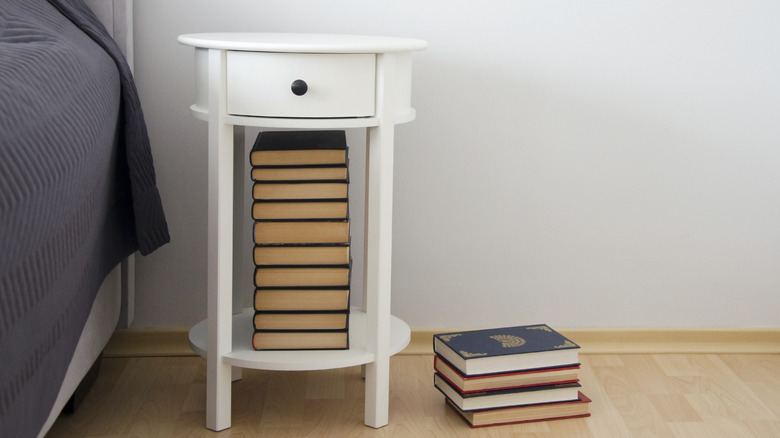
In order to make bookshelves more clutter-free, consider dispersing some of your books to other areas in your home. This way, they aren't confined to one bookcase. This will also encourage you to read no matter what room you're in, while freeing up shelf space. In fact, storing them throughout your home can actually enhance your home decor and your interior style.
Set aside two or three books for your coffee table — these could be about photography, art, travel destinations, or anything you want guests to see that helps define your personality. Other book-worthy spots include your bedside nightstand or decorative fireplace mantels (placing them in close proximity to real fireplaces could expose them to heat or smoke damage). Cookbooks can be displayed on countertops or stored in kitchen cabinets — just be careful about proximity to sinks, stoves, and ovens. You could even designate a few inexpensive paperbacks to a basket or bathroom shelf. Just be mindful of humidity levels and watch for mold on the pages if the bathroom has a shower.
Employ baskets or decorative boxes to visually declutter

If you have a large 'keep' pile, and you live in a small space with minimal storage, or you only have one bookcase, don't panic. There are a number of ways to hide cluttered shelves while maximizing book storage. Well-placed decorative boxes or baskets can give bookshelves a complete makeover while providing plenty of storage for reading materials. One perk of using storage containers is that they help divide book rows and create a visually cleaner feel.
To complete this step, you'll need approximately one storage box or basket per shelf. However, you can always add more to fill out wider shelving units. Before you purchase anything, make sure to measure the depth of each shelf, along with the height between shelves. Use these measurements to determine the proper size of storage bins to choose. Once you have your measurements, look for storage bins that have labels, like these Artsdi Fabric Storage Cubes, so you can easily label boxes by the genre, author, or series being stored inside. They also work well since they aren't see-through, further minimizing visual clutter, even though you can stuff them full of books.
Use decorative objects or art prints to break up the shelves
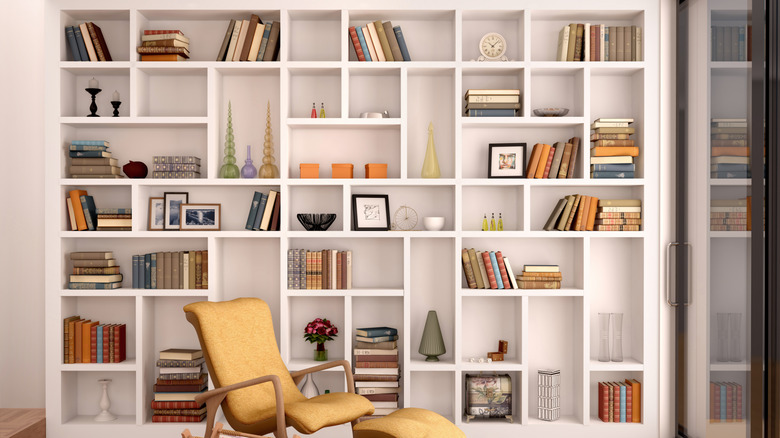
Another way to keep your shelves free of clutter is by using well-placed decor to separate large sections of books. Doing this creates more space and keeps you from overfilling bookcases since the decor pieces fill in the gaps. Decor also provides a visual anchor to focus on, which is helpful if there are a lot of novels with distracting color schemes or spine motifs.
The triangle method is an easy formula for successfully decorating bookcase shelves. It uses strategically-positioned decor on different levels to create visual triangles that connect the display and spark intrigue. As for types of decor to include, a framed picture or art print can be a central focal point when flanked on either side by rows of books. You can even use a framed art print at one end instead of more reading materials to make it feel more open. Decorative objects can be used in the same ways, whether it's a cool sculpture, a mini globe, a battery-operated lamp, or a houseplant. Choose artwork or decor that has similar themes to nearby genres for a thoughtful presentation.
Focus on small groupings to prevent overcrowding
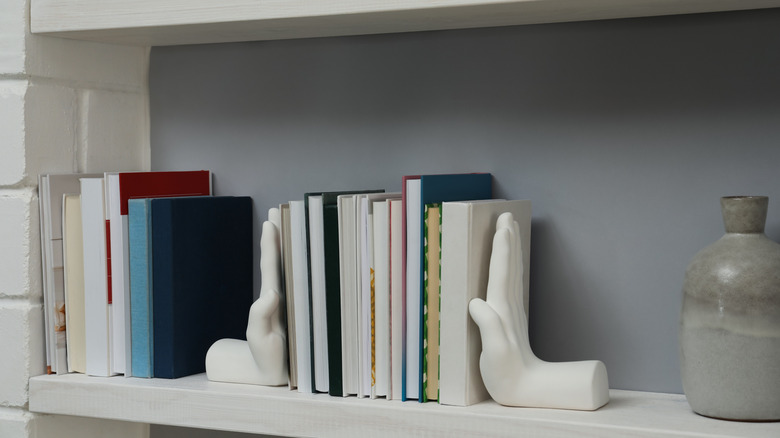
In addition to using decor to your advantage, arrange books in smaller groups to declutter shelves and encourage blank space. Feel free to increase or decrease the number of books you pair together, depending on the width of the spines or to accommodate a large series. Focusing on groups instead of rows ultimately makes bookcases look less cramped and more orderly.
The number of groups you feature per shelf depends on the width of the shelves and how many decorative items you plan to include. Narrow ones may only be able to fit one or two groups, while wider surfaces can potentially fit three to four groups or more. Play around with the layout of each shelf until you strike the right balance. For a clean look and to ensure each group stays in place, consider using bookends with a streamlined design. For example, this Set of Four Acrylic Bookends has a sleek silhouette and anti-slip pads for stability.
Give a book series its own shelf
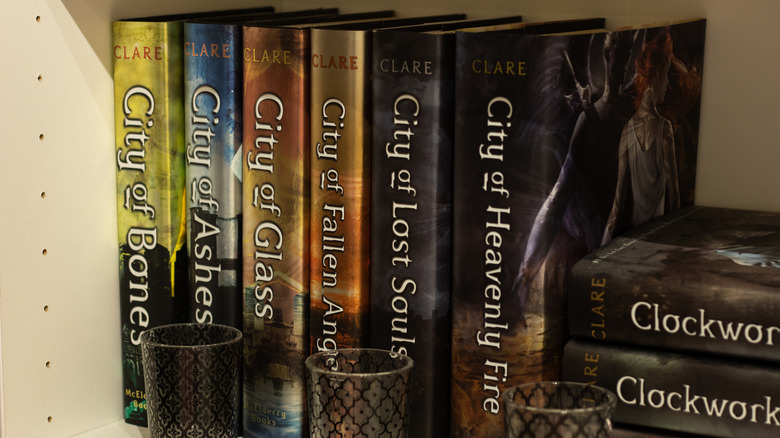
Large series can take up a lot of space, so why not give them their own shelves? That way, you can properly show them off without worrying about them getting lost amidst the rest of your collection. Also, this frees up more space on your main book display, so it's a win-win.
If you have the space, devote an entire shelf to one series or add a small bookcase with a narrow design, like the Furinno Luder Book Shelf that can fit a small table lamp on top. Compact shelving units can fit almost anywhere, making them a must to house your favorite series or all of the novels you've collected by a particular author. As an alternative, use floating wall shelves to transform a cluttered book collection and make more room on your bookcase. You'll need heavy-duty ones that can house multiple books without adding to the clutter in the space. For example, the Eapele Floating Book Shelves are highly-rated due to their barely-there design, which draws all the attention to the titles and spine layouts.
If you have the space, expand upon your bookshelves
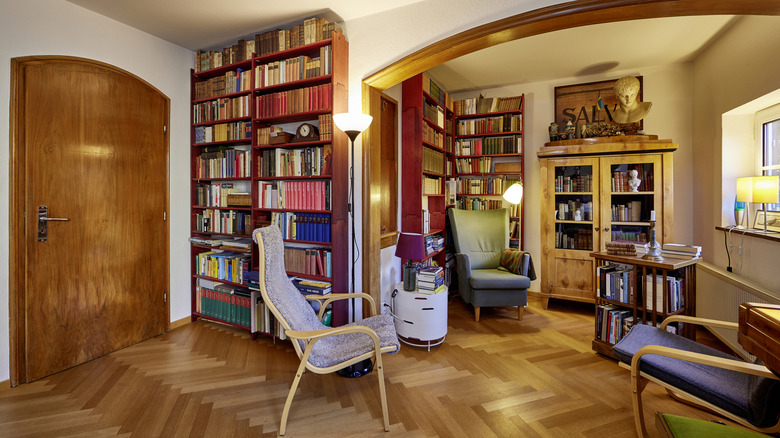
On a similar note, you can eliminate crowded bookshelves by expanding the number of bookcases you use. Having more than one spot will make it easy to disperse your collection across more shelves. This strategy is the ultimate workaround to combat clutter and give you ample room for all the books you desire.
For this step, you'll need to consider the amount of space you have and the type of display you want to achieve. Library-style bookcases offer a ton of storage and create a built-in look — perfect if you have the room and an ever-growing collection. To expand upon your current system, shop for units in the same height, color, and number of shelves. Or, upgrade to a matching set, such as the IRONCK Bookshelves and Bookcases Set on Amazon. For small spaces or apartments, install wall-mounted options like these Floating Bookshelves by Heimlove to make use of vertical space and increase storage.
Prioritize displaying hardcover or classics over paperbacks
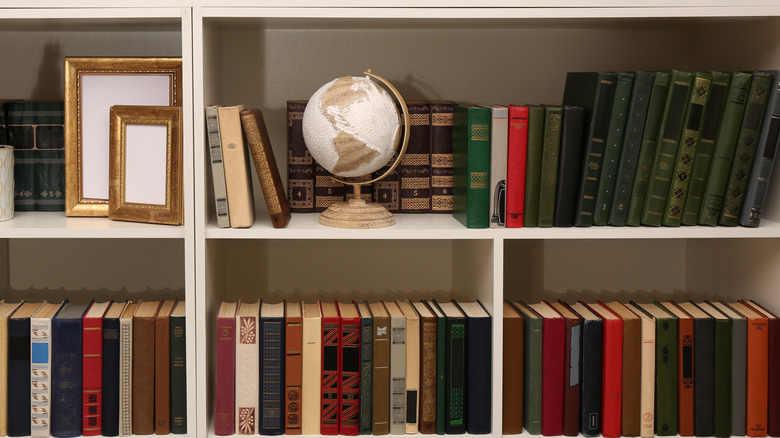
You should stop displaying paperback books on shelves because they can easily contribute to a cluttered feel with their mismatched sizes, cover art, and title fonts. Instead, prioritize filling your shelves with hardcovers or classics for a quality over quantity approach. Doing this will help streamline your collection, create more open space, and let your most prized works shine.
To start, remove all of the paperbacks from your shelves, especially those that are torn or that have unsightly spine lettering. From here, place paperbacks in decorative boxes or baskets to go back on the bookcase or simply move them to more private areas of your home. If there's a title you absolutely want to feature, consider using it like decor by neatly displaying it using something like this Acrylic Book Stand.
Fully stock select shelves, and leave some empty
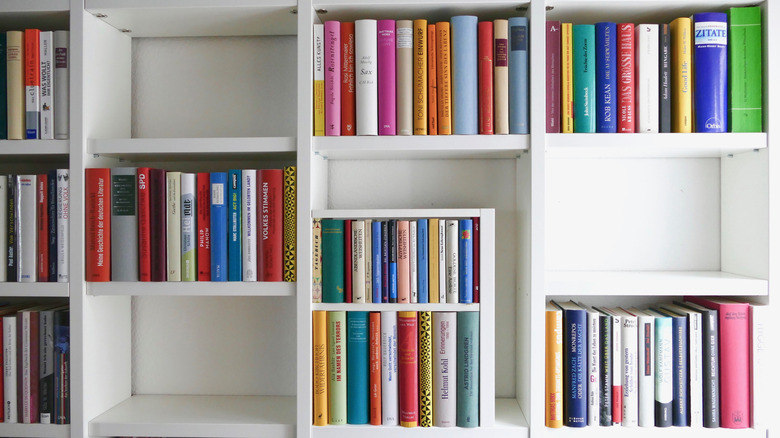
This compromise allows you to max out your storage while still promoting a clean look. The idea is that you get the best of both worlds by allowing a few shelves to be filled with books, while the rest stay clean and spacious. The result is a well-balanced arrangement of open space and your go-to reads. Ultimately, this decluttering tip acknowledges that it's not always reasonable to purchase a whole new bookcase or force books into storage, and that sometimes, intentional clutter in the right spots is okay.
To make this work, you should stagger the display so only certain shelves are full. The in-between shelves can be left blank, used for smaller groupings, or to display minimal decor. These are important since they help balance out the overall look and reduce visual clutter.