

8 Of The Best Places To Hang A Bird Feeder To Keep Feathered Friends Safe
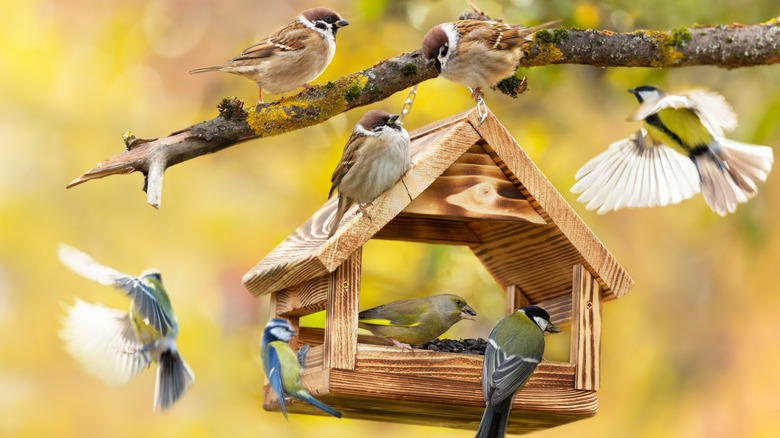
If you're looking for one of the best ways to attract more birds to your yard, few additions can do the trick like a bird feeder can. Whether you want to tend to your regular visitors, those backyard birds whose calls you know like the back of your hand, or invite unusual species that may only be in the area for a short spell, bird feeders can create a welcoming environment by offering an all-you-can-eat buffet. However, in order to make the most of your bird feeder, it's essential to think about safety.
Imagine sitting down to eat with all your favorite foods laid in front of you, no limits. Your awareness may not be the sharpest. The same goes for visiting birds: They can be the most vulnerable when eating, leading to concerns about predators. So, while it's tempting to search for the best places to hang a bird feeder to attract the most birds, you may also want to research the best spots for safety purposes.
Fortunately, choosing the right spot doesn't have to be difficult. Safe spots for bird feeders include those that keep your feathered friends safe from predators while also keeping them sheltered from the elements, such as away from windows. To help you get started, here are eight of the best spots to hang a bird feeder to keep your backyard birds safer.
The right distance from windows
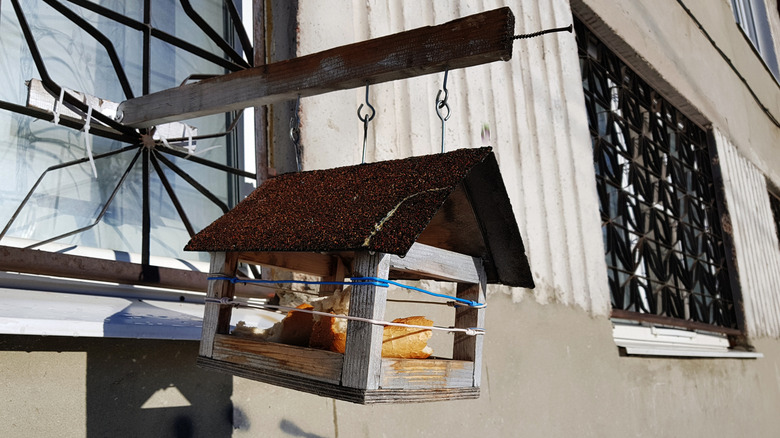
Millions of birds die from window collisions each year. This is why it's so important to consider your bird feeder's location in comparison to any nearby windows when choosing a safe space in your yard. While it may seem surprising at first, it's actually better to have your bird feeder closer to a window than further away, aiming for less than three feet away. When your feeder is this close, even a frightened bird won't be able to pick up enough speed for a serious injury. Otherwise, aim for over 30 feet away.
Near plants and natural cover
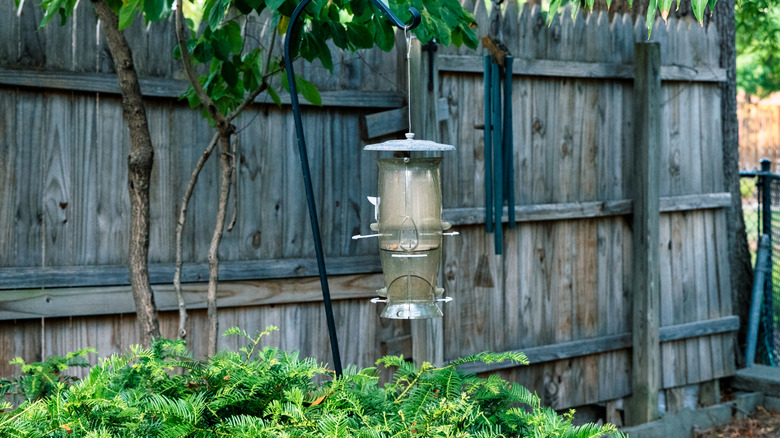
Speaking of frightened feathered friends, when birds become startled, their instinct leads them to flee to safety and cover. Aside from this, birds also fare well when they have a nearby spot to rest and wait for their turn at the feeder. This makes one of the best places to hang a bird feeder in your yard near plants or other natural cover that birds recognize. Just make sure that your feeder isn't so close to nearby bushes and shrubbery that predators or pests can use it to their advantage.
From a tree branch
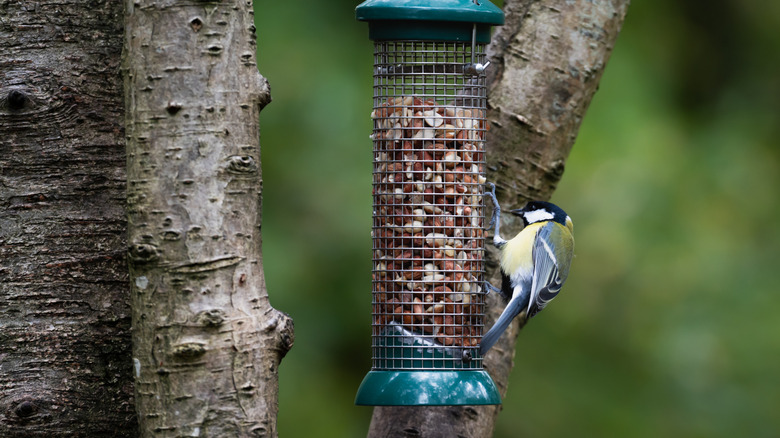
If you're more worried about predators than pests, then a tree branch can be a solid choice for hanging your bird feeder. If the branch is high enough, predators won't be able to access it by jumping, and birds can easily flee to nearby branches and leaves for protection. However, if you're having a problem with squirrels eating all your bird seed, this may not be the best option. You may also want to avoid using large, sturdy branches for bird feeders, as predators may be able to access the feeder that way.
On a pole by itself
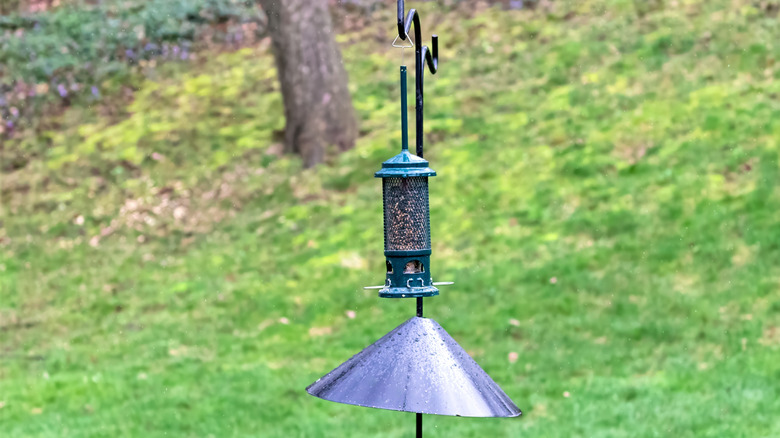
As mentioned above, when choosing a safe spot for a bird feeder in your yard, it's important to avoid areas where predators can easily access any visiting birds. This includes any branches or similar spots where predators could leap to reach your feeders. Hanging your bird feeder from its own pole gives you more control over where it's placed in your yard. You can also install a baffle to help keep common bird feeder pests like squirrels or raccoons away. For the best results, keep other key spot characteristics, like natural cover, in mind.
Sheltered from the elements
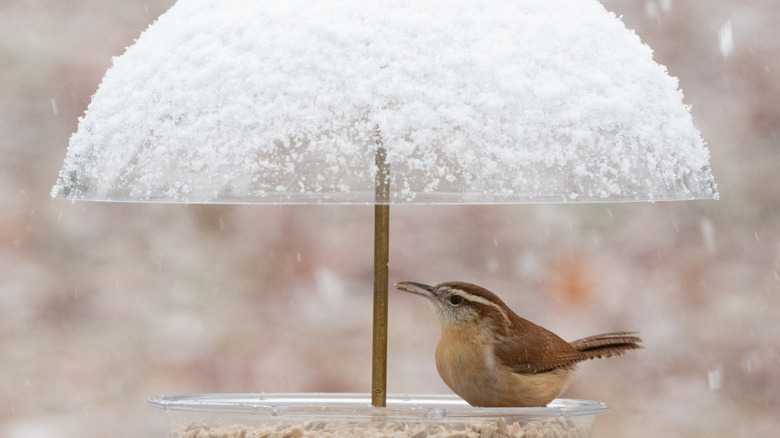
Imagine sitting at a picnic table, enjoying your meal, when all of a sudden you're met with torrential downpours, blazing sunlight, or heavy winds. Choosing a sheltered location can provide a more comfortable dining experience for your feathered friends. It also helps protect their food, keeping seeds from growing moldy faster with heavy rain or hummingbird nectar from spilling in the wind.
Near other food sources
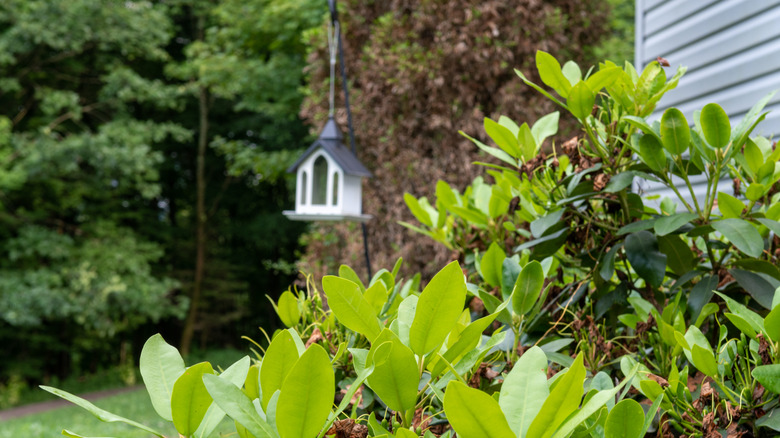
If your goal is to attract a diverse variety of birds to your yard, then you may be growing specific plants with your feathered friends in mind. In that case, placing your bird feeder near these spots can be a clever way to draw in local species. By setting up your bird feeder near another natural food source, such as a berry bush or fruit tree, you're combining a varied buffet with an additional offer of shelter — boosting your chances of seeing more birds.
In shade (for hummingbirds)
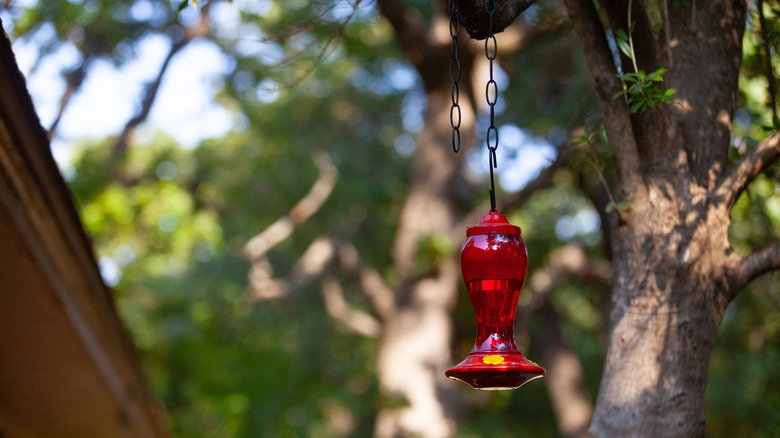
When you're looking for the best place to hang a hummingbird feeder, it's best to opt for a location that offers ample shade. This is especially true during the hotter summer months. When left to heat up in the warm sun, hummingbird nectar spoils faster, which can harm local birds. While frequent cleaning and refilling is still a must with these feeders, choosing a shaded spot in your yard can help. As an added plus, it will also be more comfortable for you to clean and change out the nectar in the shade.
An easily accessible location
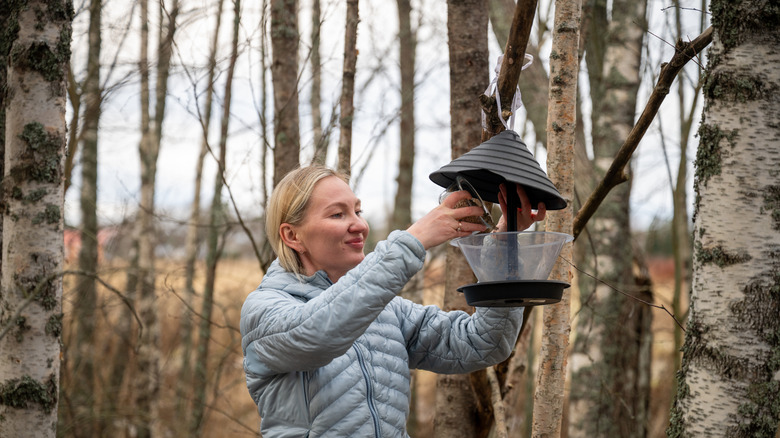
One of the best spots to hang a bird feeder to ensure the safety of visiting birds is in an area you can easily access. This is because it's important to clean your bird feeders often, otherwise they could pose a health risk to your feathered friends. If bird seed is left for too long, it can become moldy, which means that a deep clean is needed at least once every two weeks, though occasionally more often. Hummingbird feeders need to be cleaned and refilled as often as once a day.