

Help Your Houseplants Thrive All Winter With A Simple Lighting Tip
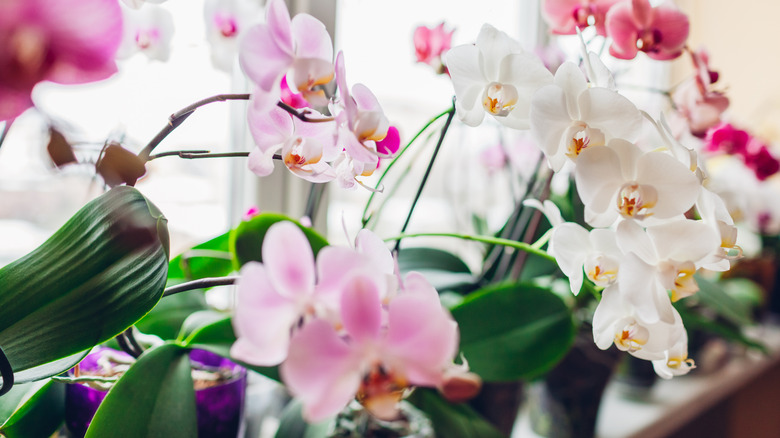
Hours of daylight are short in the winter, and that can be a real problem for your houseplants, especially those with high light needs. Some houseplants simply need more hours of sunlight than are available on short winter days.
How do you know your houseplants aren't getting enough light in winter? Insufficient sunlight means chlorophyll production shuts down, so the green pigment in plants fades, and foliage looks bleached out. Bud production may also diminish on your flowering houseplants, and leaves may drop. Long, spindly stems may physically yearn for the light. Leaf nodes on stems may become few and far between.
The way to help your houseplants thrive in winter is to provide them with supplemental illumination via grow lights. You may be skeptical about whether grow lights help houseplants flourish. The truth is, for many houseplants, supplemental winter lighting is the key to survival and one of the ways to tweak your houseplant care routine for winter. Let's look at the details.
Give your houseplants supplemental lighting in the winter
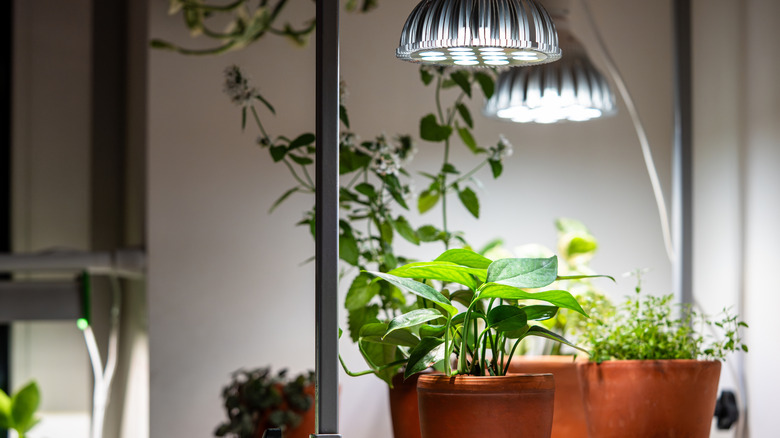
The design of grow lights is especially beneficial to plants because many of them provide full-spectrum light for your plants, which helps them grow better. Sunlight emits wavelengths in a spectrum of colors, of which red and blue are the most important for plants. Not all grow bulbs provide this full spectrum, so look for those labeled "broad spectrum."
Place grow lights for your foliage houseplants 12-24 inches above your plants, and provide 12-14 hours daily of supplemental light. For flowering houseplants, place them 6-12 inches above for 14-16 hours. Luckily, you don't need to constantly be monitoring these stretches of time and turning lights on and off because you can obtain a programmable timer for your lights or even a light controller with dimming capability.
You're probably wondering which plants especially need grow lights. Plants with high light needs and the greatest requirements for supplemental light include cacti and succulents (high light intensity needed), indoor citrus plants, tropical plants like monstera, carnivorous plants like venus flytraps, and culinary herbs (lavender, thyme, basil). If you are growing plants especially for their flowers, chances are they have high light needs and will benefit from grow lights. These include gardenias, geraniums, kalanchoes, poinsettias, jasmines, orchids, birds of paradise, African violets, and more. It's important to check plant labels for light needs and suitability for supplemental lighting. Conduct additional research if necessary, especially on your plant's color-spectrum needs. As long as you have matched plants with lighting needs, you can keep them flourishing in the winter, even with grow lights alone. You can also check out the best grow lights for indoor plants, according to reviews.