

Don't Do This! The Christmas Decor Mistake That Could Burn Down Your Home
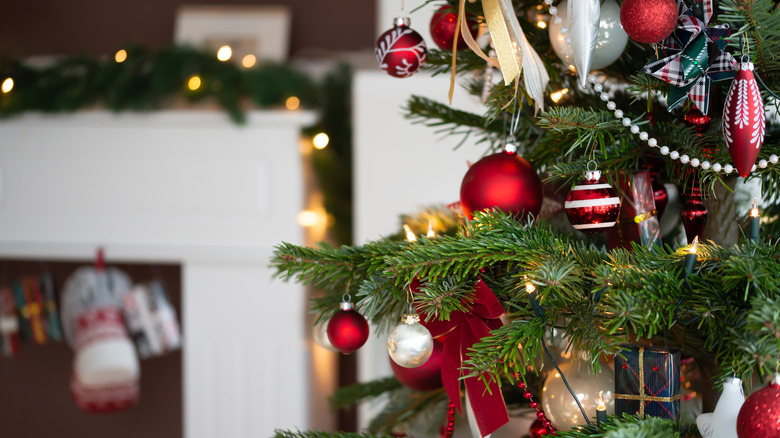
Artificial trees have their merits, but buying a live Christmas tree for the holiday season adds both a bit of charm and that coveted pine scent most of us can't get enough of. As beautiful as they are, they can also pose a serious hazard, especially depending on where you place your Christmas tree and how well you care for it. Once they're brought indoors, these trees begin to dry out, which is exactly why the National Fire Protection Association (NFPA) recommends watering the tree's stand daily. Because the drier a tree gets, the easier it is for it to catch fire.
According to the NFPA, an estimated $15 million in property damage occurred over a four-year period due to fires involving fresh Christmas trees. And the most common causes included electrical distribution or lighting equipment and lamps or bulbs — and yes, that includes the string lights you wrap around your tree. This brings us to the Christmas decor mistake you don't want to make, because it could literally burn your house down: not unplugging your tree lights overnight or when you leave your home.
If your string lights spark or short-circuit and create enough heat or electrical transfer, your tree can catch fire. If you're sleeping, you might not notice it until it's too late, and if you're not home, you won't even know there's a fire. While Christmas tree lights and other decorative lighting are designed with safety in mind, unpredictable things can happen that turn your lights into an ignition source. But the good news is there are steps you can take to make sure the lighting you choose for your live tree is as safe as possible.
Use lights with caution to prevent Christmas tree fires
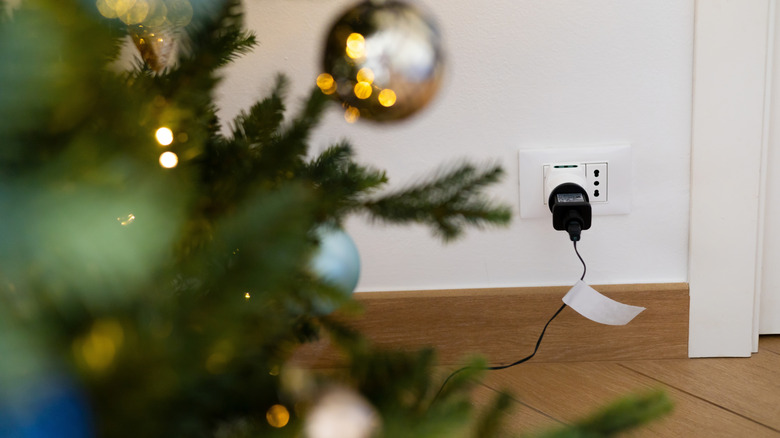
Not only should you unplug your Christmas tree lights when you're not home or heading to bed, but there are a few other safety steps you should take to make sure your decorative lighting doesn't pose a risk to your live tree. For starters, make sure your Christmas lights are UL approved, meaning they've been tested and certified for safety by Underwriters Laboratory. You should also double-check that your lights are labeled for indoor use, since some lighting is designed for outdoor only use. Outdoor lights may run at a hotter temperature, and they're designed with open air ventilation in mind.
Replacing any decorative lights that are broken, have loose bulb connections, or show signs of malfunction is also a good idea. If the cords are damaged, replace the entire strand immediately, as exposed wiring can pose a serious risk to a live Christmas tree. And since Christmas tree lights come with manufacturer instructions, go ahead and take a moment to read them so you know how many strands you can safely plug together.
Most household wall outlets can handle 15 to 20 amps, which translates to about 1,800 to 2,400 watts – more than enough to support a string or two of tree lights. For example, a 20-foot, 100-count incandescent clear Christmas tree light strand uses about 40 watts, which means you could safely connect multiple strands and plug them into a standard outlet. However, it's always better to err on the side of caution and consult the instructions before plugging in multiple light sets.