

What Is The Best Parsley Variety In A Kitchen Garden?
We may receive a commission on purchases made from links.
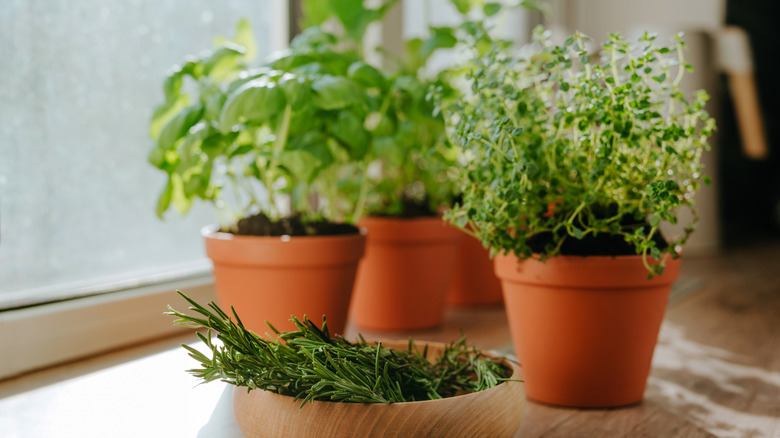
Parsley deserves a spot in any indoor kitchen garden. This nutritionally-dense culinary herb can elevate even the plainest soups and stews, and is a staple in Mediterranean and Middle Eastern cuisines. But to experience that rich, savory elevation, you must choose the right parsley variety, as they all can taste quite different. To help you decide, we exclusively interviewed Tiffany Selvey, House Digest's Garden Editor and in-house Master Gardener. Her advice? "Of the three primary types of parsley (flat, curly, and Hamburg), you'll get the most out of your limited indoor space by growing the flat type."
Although curly leaf parsley and Hamburg parsley have their place in cooking, they offer limited utility. "Curly parsley is most often used as a garnish because it has a lovely texture, but its flavor is pretty bland and bitter. Hamburg is harvested for its roots at maturity," explains Selvey. In contrast, flat leaf parsley, being the most flavorful of the three, can be used in a variety of dishes, and at times, even as a celery substitute. Its finely sliced stems pack a flavorful punch, too. "Flat leaf parsley is more widely used in cooking thanks to its stronger, more pleasant flavor. Of course, you can also use flat leaf parsley as a garnish, like on charcuterie boards, so it does double duty in the kitchen," she elaborates. So, how can you grow parsley in your kitchen garden? Here's what we know.
Growing flat leaf parsley successfully indoors
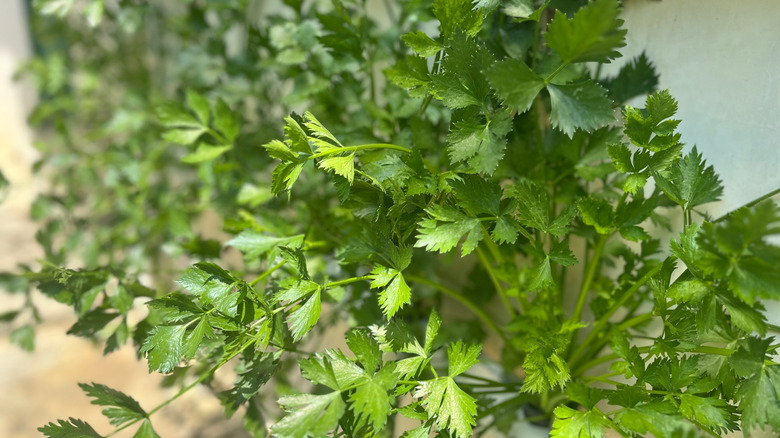
Herbs like parsley are perfect for a luscious kitchen garden, but there are a few considerations you must take into account for a successful harvest. To kick off, start with young plants, rather than seeds. "Parsley takes a lot of time to grow from seed to harvest, so it's best to start with a young, healthy plant," Selvey mentions in her exclusive House Digest interview. You must also provide them with excellent drainage. For that, "Use a high-quality planting medium suitable for growing edible plants, and keep it consistently moist, but not soggy, for steady growth without risking root rot," she details. Espoma's Organic Potting Soil Mix is one such option.
Selvey also warns against making some common mistakes when trying to grow parsley in the winter — inadequate sun exposure being foremost. She enlightens thus, "Perhaps the biggest mistake people make when growing indoors is not offering enough light for flat parsley to thrive. Most windows, especially in the winter, simply do not provide enough sun for plants to thrive. An inexpensive LED grow light can make all the difference in the health of a parsley plant." Just be sure to leave it on for at least eight hours a day. You also shouldn't compromise on soil and fertilizer quality if you want a good harvest.
Harvesting flat leaf parsley and other care tips
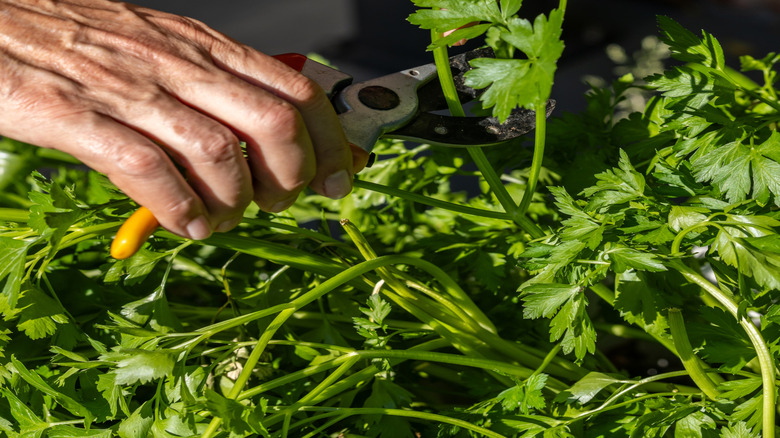
The beauty of growing flat leaf parsley is that you don't need many plants to give wings to your culinary dreams. "A single plant can grow quickly in an 8-inch planter with good drainage, producing lots of flavorful leaves," agrees Selvey during her exclusive conversation with House Digest. Picking up the green leaves to dash your dishes is a breeze, too, according to our in-house master gardener. "To harvest parsley, simply use a pair of kitchen scissors and cut each leaf just above the soil." Even though parsley is among garden herbs you can harvest and store in the freezer, it does tend to lose its flavor over time. For this reason, Selvey recommends harvesting parsley when you're about to use it, "...only harvest what you need as you need it."
That being said, if you're a proud cat parent, move the potted parsley where your feline's sharp claws can't reach. "If you have cats, they may enjoy nibbling your flat parsley if you're keeping it within reach," mentions Selvey. "Although it's not seriously toxic, it can have negative effects if they eat a lot of it, so keep it away from curious felines." Other than your kittens, you must also monitor your indoor herbs for fungus gnats. "If you notice them, take action quickly to keep them from spreading," she advises. Inexpensive sticky traps, such as Mosqueda's Yellow Sticky Bug Traps, can be skewered into potting soil for quick capture.