

How To Protect Your Home Against WiFi Jammers (And Why It's So Important)
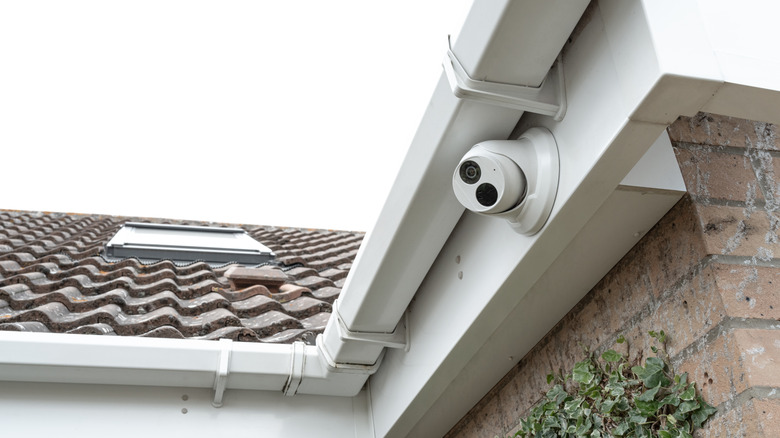
Wi-Fi technology is everywhere, especially in home security systems. If you have any wireless security devices, they may be vulnerable to a technology rising in popularity: Wi-Fi jammers. These small, portable devices interrupt Wi-Fi signals in your home and may be used to turn off your security camera before a burglary. By making a few changes to your security and smart home setup, you can add a layer of protection for your property.
Wi-Fi jammers overwhelm devices with a stronger signal on the same frequency your system uses, a tactic that requires knowledge of how a home's security setup works. Jammers aren't new, but they may be used more often by thieves who want to avoid being identified while they pilfer your belongings. One report by KPRC Click2Houston shares that a homeowner saw their security camera image distorted after thieves held a backpack up to the camera. Police believe the backpack contained a Wi-Fi jammer that disrupted the surveillance video, which blurred as the thieves approached. The thieves were then able to access the home anonymously and remove some of the homeowners' items. NBC Los Angeles reported similar incidents in an affluent neighborhood in Los Angeles, California.
Jammers are prohibited in the United States by the Communications Act of 1934. The Department of Justice, Homeland Security, and Federal Communications Commission investigate and prosecute violators who operate or sell them. States like Indiana and Oregon have expanded efforts to counteract their use by enacting laws for better enforcement. Your state may have such a law, but the fact is, jammers are still easy to attain, meaning you should take proactive measures to make your home safer.
Protecting your home against Wi-Fi jammers & why it pays to

While there's no telling if would-be thieves will use a Wi-Fi jammer to target your home, the truth about using smart home devices is that they are still vulnerable to signal disruption. According to CNET, smart-home encryption can help protect your data, but it won't stop a jammer. However, they note that casual use by thieves is unlikely because it would require studying your security setup and obtaining black-market equipment. That said, the incident reports in California and Texas demonstrate the importance of additional safeguards.
Multiple security system companies now offer high-grade encryption as part of their products for more comprehensive protection, and you can also consider choosing a wired security system for your home over a wireless model, which has no signal to disrupt. Some manufacturers recommend switching to a dual-band system using both 2.4 GHz and 5 GHz, since many jammers target only the 2.4 GHz frequency. Protecting your security cameras against signal jamming is wise in case your home is targeted for burglary. Even a brief disruption can determine whether police are able to identify a suspect from surveillance footage.