

Why Your Fridge Can Struggle With Functioning Properly During Winter

Winter has a sneaky way of throwing your fridge off its game. One day everything's running normally, and the next you're noticing partially thawed food in the freezer or milk that isn't as cold as it should be. Cold air around the appliance can cause confusion and make the thermostat think it's reached the optimal temperature, which is one of the common reasons your refrigerator isn't working. When that happens, the fridge may slow its cooling cycle. That's when the fresh food section starts warming up more than it should, leaving dairy and meat at risk of spoilage. Alternately, your fridge could freeze from the outside in and get overly cold, leading to freezer burn and refrigerated food and drinks that are unexpectedly frozen. These issues are especially prevalent in fridges kept in garages or unfinished basements — any areas that get cold in wintertime.
Cold air can also carry in moisture, and when it hits the slightly warmer air inside, you end up with condensation. At first it's subtle, but soon you're dealing with damp drawers, musty corners, and food that just isn't staying as fresh as it should. The uneven compressor cycles can also increase the energy use and put extra strain on the system, reducing efficiency.
How to prevent winter-related fridge issues
While keeping your fridge inside is ideal, you may not have the indoor space. If your fridge is in the garage, one way to help it survive the chilly weather is by keeping the garage temperature consistent. Adding a small heater to make sure the space stays a few degrees above freezing and sealing garage doors can work wonders. You can also purchase a garage-ready fridge, which is highly insulated to protect against outside temperatures, or simply buy a refrigerator heater kit, which runs around $10 to $30. Keeping the cold at bay will save energy, save your food, and prevent unnecessary repairs.
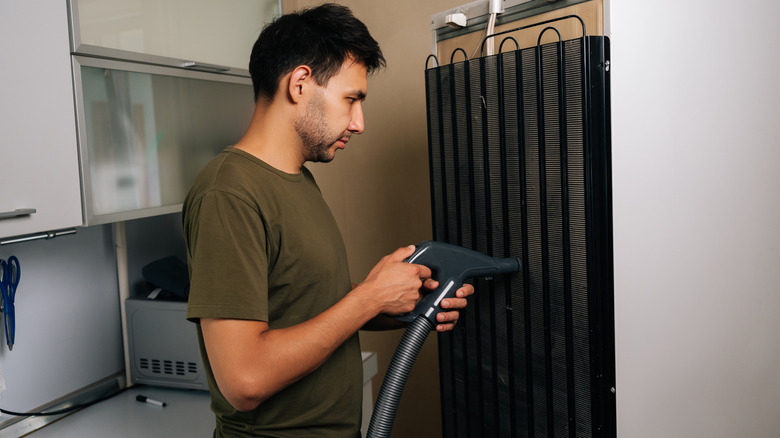
But even if your fridge is indoors, winter can still make it sweat a little. Dirty condenser coils force it to work harder, which can lead to energy waste and potential breakdowns. Cleaning this part of your fridge is more important than you probably realized, so a simple wipe-down every three to six months keeps things running smoothly. Setting a regular schedule for fridge check-ups helps you catch small issues before they turn into full-blown problems. And don't forget the little things like checking the door seals and evaporator fan. If the fan's not spinning properly, your fridge can't circulate cold air effectively, and you'll notice uneven cooling — or worse — spoiled food. Take steps to ensure your fridge is running smoothly this winter, and call a professional if necessary.