

Our Expert Gardener Answers How A Dwarf Apple Tree Compares To Standard Varieties
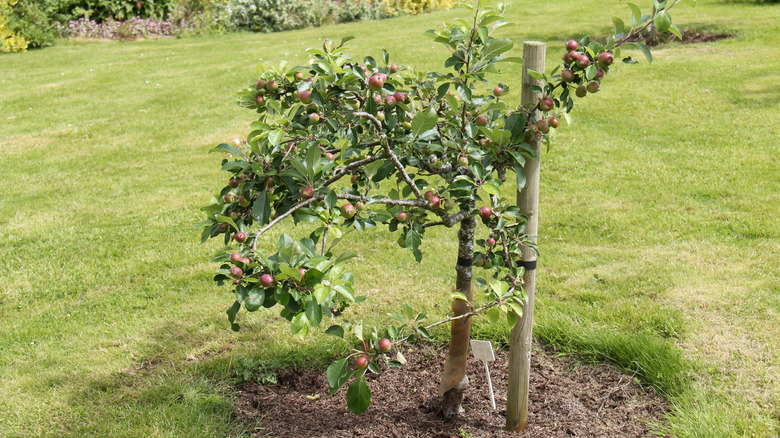
Could a dwarf apple tree be an option for your yard? If you're contemplating adding an apple tree, you'd probably like to know more about the varieties and how dwarf apple trees stand up against standard varieties. We asked House Digest's in-house Master gardener Tiffany Selvey for the lowdown on apple varieties, and especially how dwarf apple trees differ from other varieties. "The most obvious difference between a dwarf apple species and a standard type is its size at maturity," Selvey said, speaking exclusively to House Digest. "When it's fully grown, a dwarf cultivar generally stays under 10 feet tall," she added, noting that the trees can be kept even small depending on how and when they're pruned.
Still too big for your needs? "There are even some mini-dwarf trees that are perfect for containers that only grow to about 5 feet," Selvey noted. In contrast, Selvey observed, "although they're still on the small size for trees in general, standard apple trees reach about 30 feet tall, which makes it hard for the casual backyard gardener to harvest." The dwarf variety could be your best choice if you're impatient. Selvey noted that "dwarf species will produce fruit more quickly when planted as a sapling, within about three years. In contrast, a one or two year standard apple tree sapling will take about seven years to produce." Do you prefer earlier gratification or more fruit in the long run? Selvey remarked that ultimately you'll get a lot more fruit from a standard tree at maturity.
Our expert: Caring for dwarf apple trees
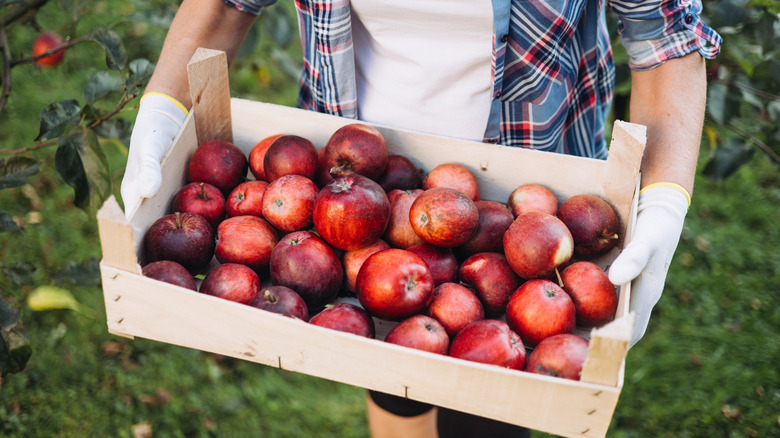
Knowing how to care for a dwarf apple tree is very slightly different from understanding the care of standard apple trees. Selvey brought the answers to her exclusive talk with House Digest. "General care for all apple trees is going to be the same, but there are some exceptions," she said, explaining that dwarf species grown in containers may require more water and fertilizer than standard apple trees grown in the ground.
Selvey also pointed out that pruning is a big part of apple tree care. "Standard apple trees need significant pruning in the first several years for shape and health, she said. "Likewise, if you're growing a dwarf species as an espalier, or if you're trying to keep it extra compact, that will also require frequent, specialized pruning." (You may want to arm yourself with some knowledge of how to prune apple trees). If one of your main concerns is disease, Selvey noted that you can consider cultivars of both growth habits that have been bred for disease-resistance. Pest management relates to "the overall health of the tree," Selvey said, adding that "weak trees attract more pests." That's why it's helpful to know tips and tricks to help the apple trees in your yard thrive.
How to choose the apple tree type that's right for your needs
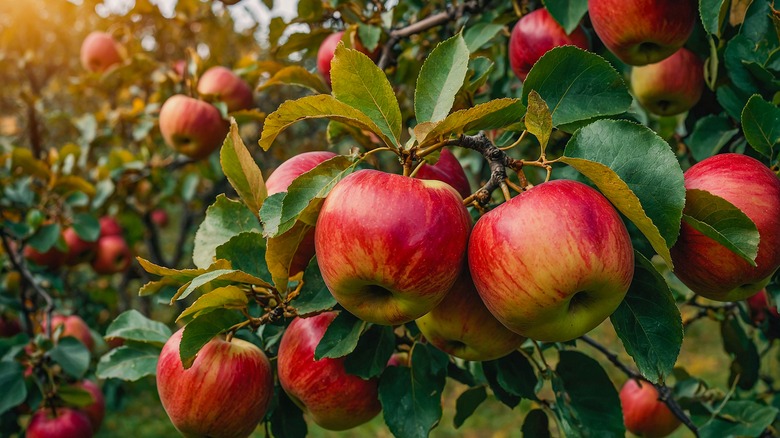
Getting down to the nitty-gritty choosing the right kind of apple tree for your needs, Selvey stated that "the first consideration you should make when choosing an apple tree, dwarf or standard, is whether or not it can thrive in your climate. Then, determine where you want to plant it. This will help you decide the best size of tree, and from there, you can choose a specific species." Speaking exclusively to House Digest, Selvey also pointed to the tendency for people to look for a tree that will grow the apple varieties they're used to buying at the grocery store, like Fuji or Pink Lady, but this isn't always a good idea. Selvey shared that she loves Honeycrisp apples, "but this species isn't appropriate for my hot and humid southern garden."
Selvey stated that the best kind of apple tree to grow in a backyard depends on several factors. Selvey suggested asking yourself: Do you plan to harvest and preserve or store your apples? "If so," she said, "it might be worth planting a standard species and deal with the challenges of harvesting from a larger tree." Selvey also mentioned "pruning techniques that can make standard trees easier to harvest from." Heirloom species are available only in standard sizes, Selvey said, noting one of her favorites, "Arkansas Black, a flavorful storage apple that only comes in a full-sized tree." In closing, Selvey stated that "for those that have limited space or don't want to deal with harvesting or pruning a larger tree, dwarf options are wonderful. There are so many cultivars available now that you're sure to find something you like that fits your space requirements."