

How To Keep Your Real Christmas Tree Safe & Intact On The Drive Home
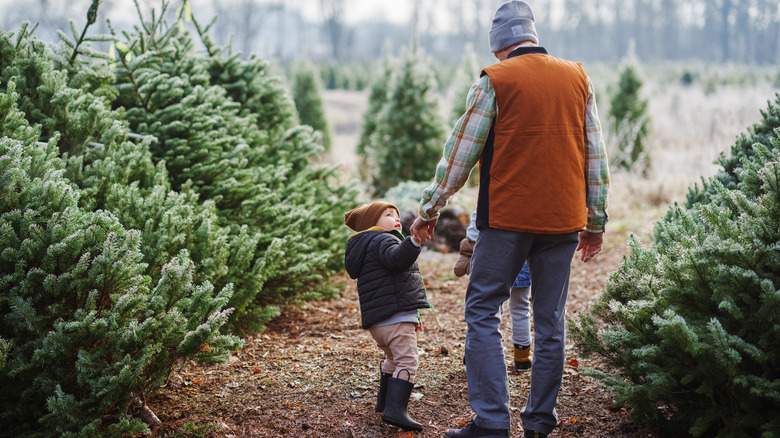
You just spent a wonderful afternoon finding the perfect Christmas tree, the one that's just the right height and has beautiful, full branches. Whether you found yours at a big-box store (one of the best places to buy a real Christmas tree), or at a local lot, now comes the moment of truth: the drive home. According to the National Highway Traffic Safety Administration (NHTSA), 81% of accidents involving items on the road are caused by objects that were improperly tied down on passenger cars.
Keeping your tree intact requires two things: giving it some protective wrapping and then safely securing it to your vehicle. It's worth it to take some time and protect both your car and tree from damage on the ride home and secure it so it won't fly off the roof and onto the road. Getting the tree home and into its stand is one of the riskiest parts of the whole process because exposing a live evergreen to the wind and vibration of a highway drive can cause needle loss and damage to the branches. All the effort you put into knowing what to look for when buying a live Christmas tree would be wasted if the tree is damaged on the way home.
Being prepared means having a plan on how to get the tree onto the roof, position it correctly, and tie it down securely. If you overlook these steps, you risk damage to your car's paint, needle loss for your Christmas tree, and even create a road hazard for other drivers. Luckily, protecting your tree and your vehicle only takes a few steps and some basic materials like rope, bungee cords, and an old blanket.
First, get the car and the tree ready for the trip
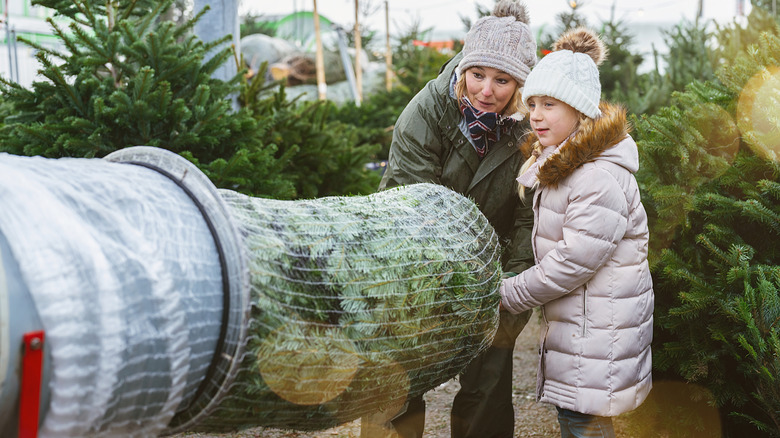
Before loading the tree onto or into your car, a few basic steps are needed for both the vehicle and the tree itself. If the tree is large or your car is small, the roof is likely the only option (if your tree is small enough to fit inside your car, that's usually the safest method). Following these tips to prolong the life of your real Christmas tree begins with proper transport. When you're buying a fresh tree, you should always ask to have it wrapped in netting if that service is available. Having the tree netted is helpful because it keeps the branches tucked in tight, preventing them from catching the wind, breaking, or shedding their needles. Netting also reduces the overall bulk, making the tree much easier to carry and maneuver.
The needles and trunk of the tree can scratch your car's paint very easily during the drive home. You can solve this problem by using a tarp or an old blanket as a protective barrier. Place the blanket or tarp on the vehicle's roof and carefully lay the Christmas tree on top. By using netting and a protective layer between the tree and the car, you can prevent scratches or sap damage — whether your tree was placed inside the car or out.
Tying down the tree correctly requires strong rope
Once the Christmas tree is wrapped and the car is protected, the final thing to do is strap it down, which includes knowing the right direction for the tree to face. For general safety and to keep the tree intact, you need to make sure the cut end of the tree is pointing toward the front of your car. This orientation is important because when you're driving, the force of the oncoming air will hit the tree trunk first. The wind then flows back over the tree branches, causing them to naturally trail behind and minimize the air resistance that could rip off the needles.
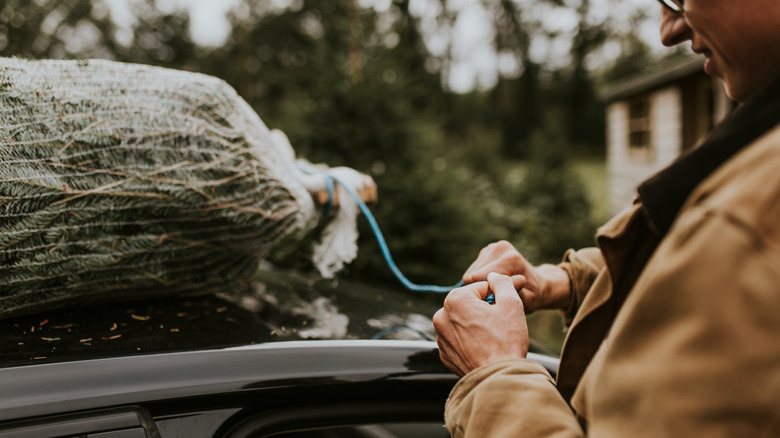
When it comes to the tie-down itself, you shouldn't trust the thin string provided by the tree seller. It's recommended to tie down the tree with three or more pieces of sturdy rope or bungee cords, wrapping them around the tree trunk and branches while tightening them down to your car's roof rack. If you don't have a roof rack, you can tie down the tree by running rope through the open car doors, over the tree, and securing them inside. Even when transporting the tree in a truck bed or inside a car, it still needs to be secured to prevent it from moving, shifting forward, or falling out of the back.
Before hitting the road, make sure you pull on the rope to see if the tree is tightly secured. If it moves more than a few inches, pull the cords tighter. And when driving, remember that you're moving an awkward, large item on the top of your car. Drive smoothly, avoid sudden braking, and make sure you keep a safe distance from the other drivers on the road.