

8 Handy Tools To Unclog Sinks Without Using Chemicals
We may receive a commission on purchases made from links.
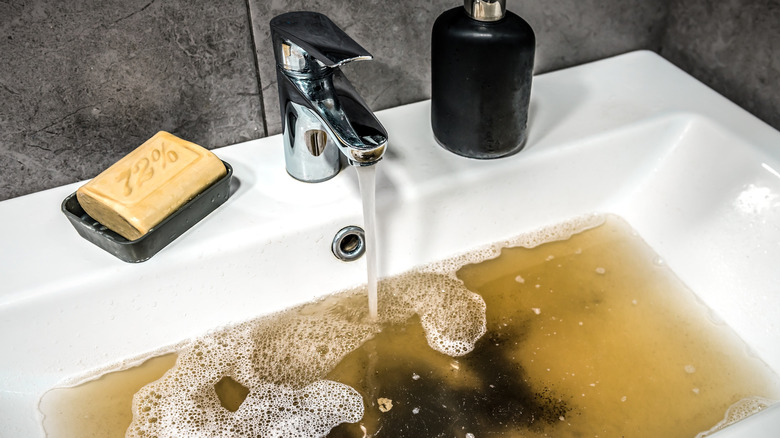
When it's your bathroom or kitchen sink, a clog can really disrupt your day. You can't wash dishes without backwash seeping out of the drain hole. Dirty water stays in the sink after you brush your teeth or wash your face. It's gross, sometimes stinky, and always inconvenient. Like many people, you might prefer to avoid using chemicals to unclog your sink. That's understandable. Thankfully, there are tools that can do the job, from drain snakes, plungers, and cable ties to wet-dry vacuums, augers, and drain brushes.
Drain cleaners like Liquid-Plumr or Drano work by creating a chemical reaction that produces heat inside the pipes. While there's no denying they clear blockages, the harsh chemicals can also melt plastic or weaken metal pipes over time. This can lead to cracks, leaks, or — in the worst case — a burst pipe. The other dangerous truth you need to know about chemical drain cleaners? Every time you pour the liquid cleaner down a drain hole, it releases toxic fumes into the air. If you're looking to remedy a clog without relying on cleaners, there are plenty of tools designed to clear all kinds of blockages in sinks.
Handheld drain snake
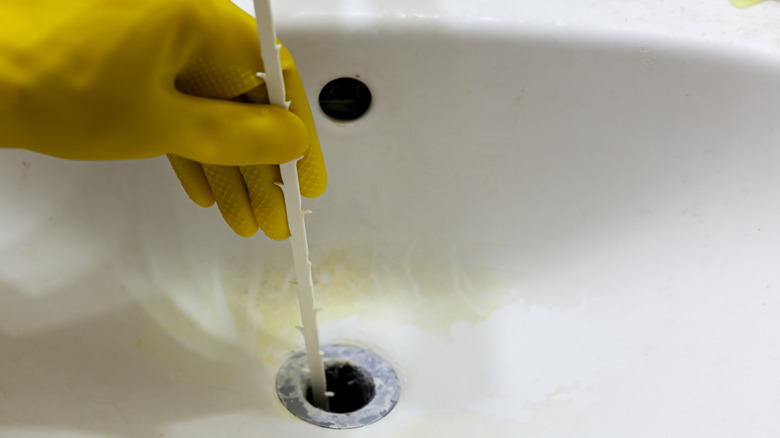
A drain snake is a long, slender tool with small rigid hooks along the sides that latch onto the gunk in your pipes. It's usually made of plastic. Drain snakes come in different styles and sizes, and are typically between 18 and 20 inches long. They're cheap: the FlexiSnake Drain Weasel from Lowe's and the Dr. Rooter Drain Snake at Walmart both cost less than $5. To use one to clear a clogged sink, insert the snake deep into the drain and give it a gentle wiggle to hook the gunk. Then pull it out again.
Sink plunger
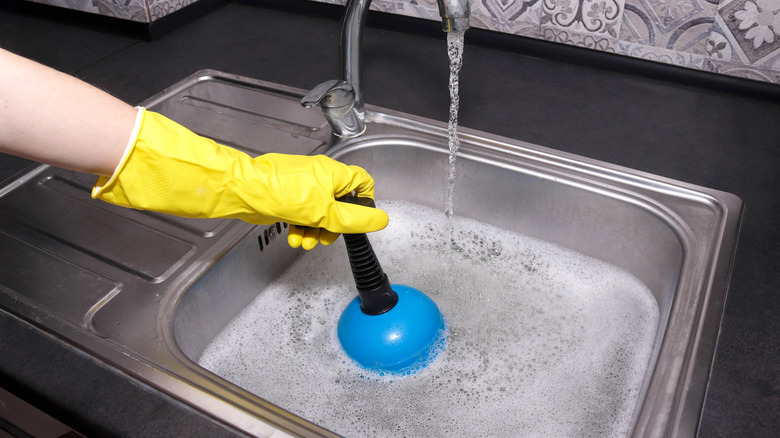
If you have a clog in your kitchen sink, a sink plunger can help clear it. Some are accordion-style, while others look similar to a toilet plunger. To plunge a blocked sink, fill it with some water and roll the plunger around the drain opening until you've created a tight seal. Push and pull the tool vigorously for about 20 seconds, which should loosen the blockage. Repeat as many times as you need. If you have a double sink, place your sink stopper into the drain hole you're not plunging, so dirty water doesn't splash out.
Claw grabber or claw pick-up tool
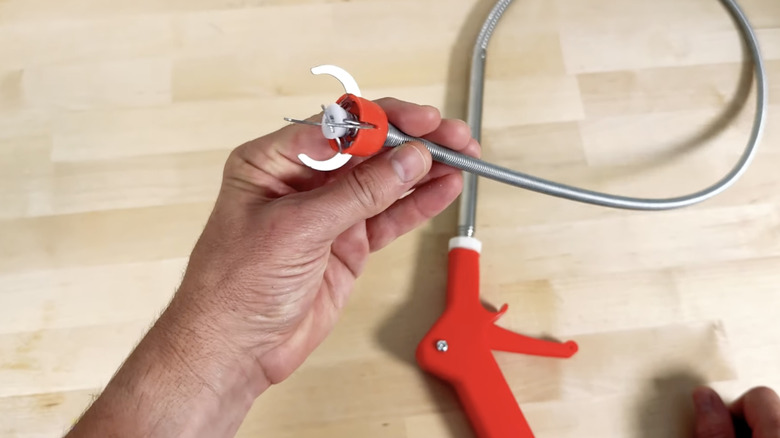
Looking for a simple tool that can unclog your bathroom sink — no plumber needed? Get yourself a four-claw pickup tool. You slide this flexible grabber down your drain, press the spring-loaded button that opens the metal claws at the end, snag the blockage, and pull it out. These tools are typically about 24 inches long — great for extra-long pipes — and they cost less than $10 at home improvement stores like Lowe's. They also come in different styles; make sure to choose one that bends, like the GreatNeck 24-Inch Pickup Tool from Ace.
Cable ties
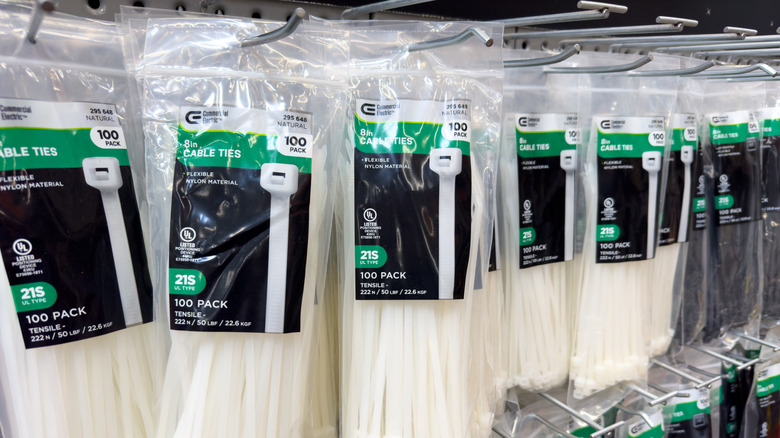
If you don't have a drain snake, don't rush out to buy one. There's an affordable way to unclog drains using a household essential: cable ties. Most drain snakes are about 18 inches long; you can attach several zip ties together until they reach that length. Once they're connected together firmly, make a few sharp cuts along the sides, mimicking the tough little hooks on a drain snake. Slide the chain of cable ties up and down the sink a few times. The gunk should attach itself to the ties. Run the water to test whether it worked.
Electric drain cleaner
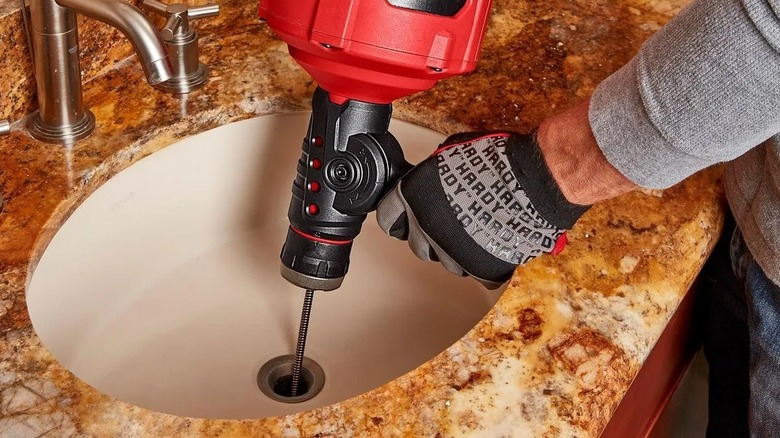
An electric drain cleaner is essentially a motorized drain snake. Hold it over the drain and turn it on, and a flexible coil will extend out of the machine and down into the pipe. Press a button or pull a lever to retract it. These tools are great for dislodging or breaking up large or stubborn clogs, especially ones deep inside the pipes, past the length of a standard manual drain snake. They're also ideal for clearing blockages in a main line. Just make sure you choose an electric drain cleaner that can accommodate your drain size.
Wet-dry vacuum
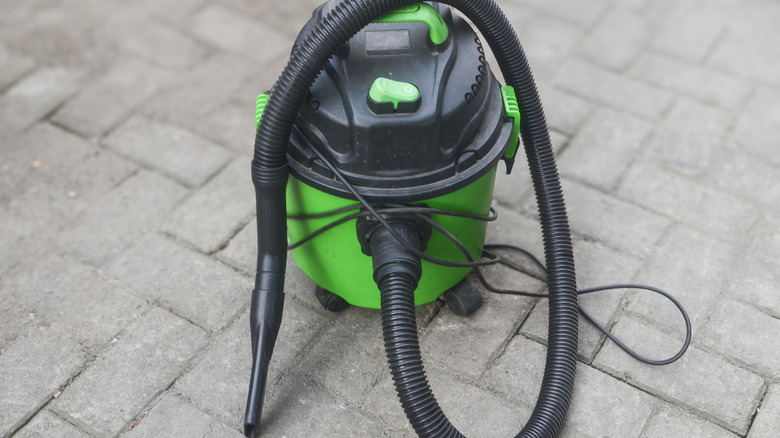
Is your kitchen or bathroom sink or floor drain clogged? You can try to suck it out using a wet-dry vacuum on the wet setting. They're relatively affordable — you can snag one for as low as $30, like this Hart 6-Gallon 5-Peak HP Stainless Steel Wet/Dry Vacuum at Walmart. You need to get as close to the clog as possible, so remove the drain cap if there is one. Position the hose nozzle over the drain. Use any appropriate attachment or a damp cloth to stop air escaping, create a tight seal, and turn the vacuum on.
Hand-crank plumber's auger
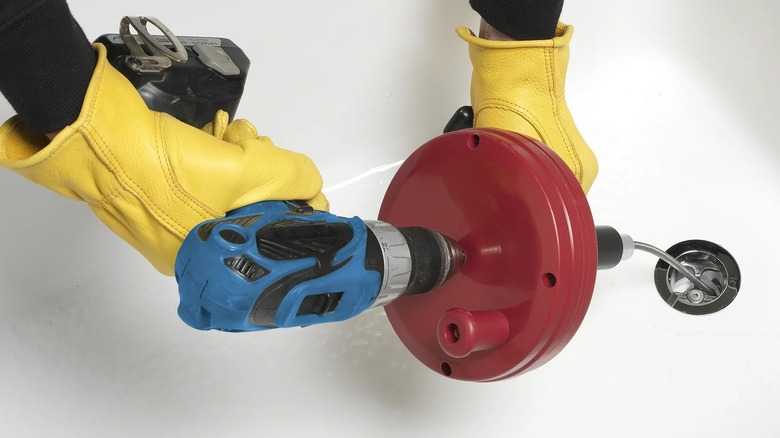
Hand-crank plumber's augers have a wind-up handle and a coiled metal cable that's typically about 25 feet long, depending on the model. You can find this tool for less than $100. A budget-quality Ktzctpca 32.8-Foot Hand Drain Auger costs about $26, while a Fabater Heavy-Duty Steel Drum Drain Auger goes for about $84. To use a drain auger, pull the cable out, feed it into the drain by hand, and then rotate the handle to loosen the debris before pulling the cable back out. Some hand-crank augers attach to a power drill for tackling tough clogs.
Sink drain brush
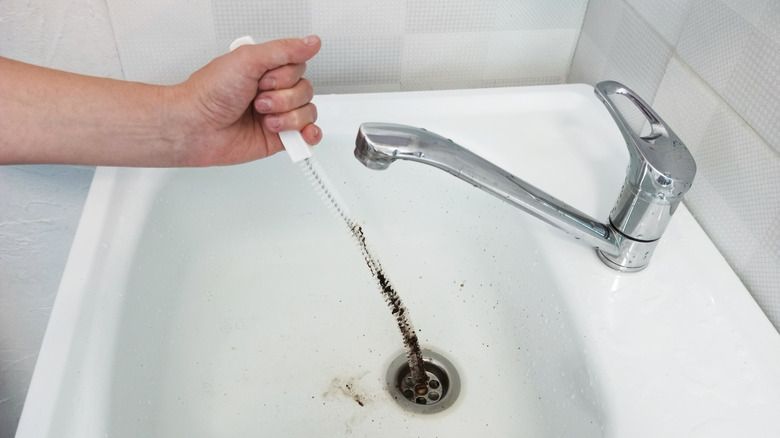
Some clogs are deep inside the drain, while others are caused by debris near the drain mouth. Hair, dirt, body lotion, and hand soap contribute to the buildup. You can squeeze a sink drain brush, like this Brushtech 48-Inch Drain Brush from Target, into the drain and wiggle it around to loosen the debris. Some of the gunk will be removed when you pull the brush out again. The rest will wash away once you mix equal parts baking soda and vinegar and pour the solution down the drain. Wait 15 minutes and run some hot water.