

The Telltale Sign It's Time To Say Goodbye To That Dying Houseplant
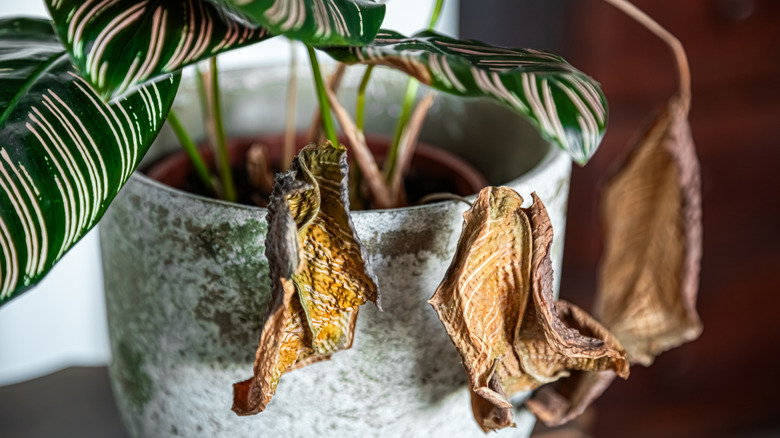
Consistent, worsening decline is the clearest sign that it's time to trash your plant. Importantly, this decline should persist even after several weeks of active troubleshooting. Most houseplants need time to respond to environmental changes, so give yourself a two-to-four-week window to allow it to adjust. When you've used every trick for saving your plants to no avail — moved it to brighter light, adjusted your watering schedule, fertilized, pruned, and repotted — sometimes you need to listen to what it's telling you, which is: "Please, throw me away." It's time to put you, and it, out of your collective misery. The same goes for plants that are clearly declining from disease or pest issues that never fully resolve. At that point, keeping the sick plant around can actually put your other plants at risk. Not to mention any room will certainly feel a whole lot merrier without the looming specter of death emitted by an enfeebled plant in the corner.
Yellowing or browning leaves are the most obvious indication that something is wrong. This is a sign that your plant is going through severe stress. There's a big and obvious difference between a few leaves on a plant reaching their natural life cycle and sloughing off, which is normal and healthy, or leaves dropping in a rapid descent toward leaflessness. Whether it's wilting stems, soil that stays soggy no matter what, or foliage that thins out week after week, all these indicators point to the same reality: The plant is no longer able to recover.
Why it's too late to save the plant and how you know it's past the point of no return
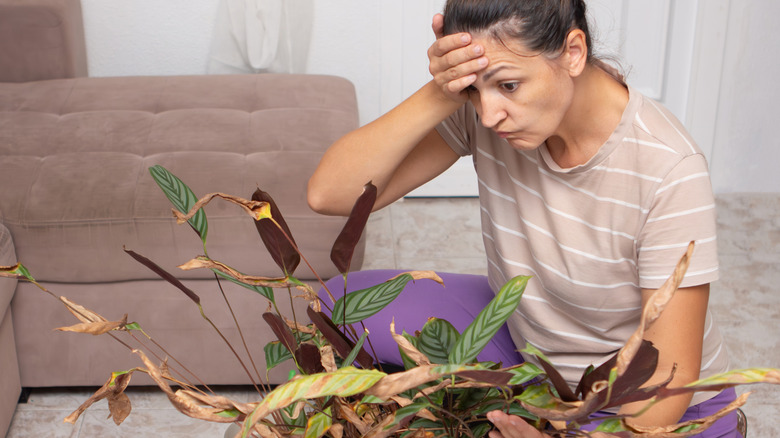
Once a plant's internal systems begin to fail it can't bounce back. Chronic overwatering, lack of oxygen in the soil, or prolonged nutrient stress can cause irreversible root damage. This is why symptoms such as mushy stems, foul-smelling soil, or leaves yellowing from the bottom up usually indicate that the plant is beyond saving.
Sometimes, a plant might seem dead, but it's actually just dormant. Dormancy is especially common in certain species during colder months, and a "dead-looking" plant may simply be conserving energy. Use these tips to determine if your plant is dead or just dormant.
Once you've determined the plant can't be revived, the final step is properly laying it to rest. If the plant is diseased or pest-infested, don't compost it — you may spread pathogens or invite infestations of unwanted insects. Pull it out of its pot and throw it straight into the trash. If you're concerned about pests escaping the garbage and infesting another area of your home, place the plant in a disposable bag, securely tie it shut, and then dispose of it. If that plant is simply old, dried out, or stressed but not diseased, you can safely compost it or place it with yard waste so its organic matter can break down naturally. Or, if you're feeling resourceful, you might try these other uses for that dying houseplant other than just throwing it away.