

The Common Snow Removal Mistake That May Be Damaging Your Roof
We may receive a commission on purchases made from links.
A light covering of crisp white snow on your roof can look pretty idyllic, especially during the holiday season. Once it starts to pile up, though, you'll probably start wondering about how much snow is too much for your roof to handle. Most experts say you should clear your roof when the depth gets to between 6 inches and a foot, which, apart from reducing the weight, should prevent ice dams. These are frozen ridges that stop melting snow from running off your roof properly, potentially causing it to seep through into your loft and damage ceilings and walls.
There are several safe and effective ways to clear snow from your roof, but there is one common mistake that may actually damage your roof: trying to clear too much snow. Attempting to get back to a bare roof can crack or dislodge shingles, leading to leaks, and the last thing you need to worry about during wintertime is how much a roof repair costs.
You'll also want to steer clear of steel shovels or tools with a sharp edge, and never try to melt roof-borne snow with heat guns or torches. Not only is there a fire risk, but you might cause an avalanche. Wet snow can weigh 20 pounds per cubic foot, and if that falls on you from your roofline, it may cause serious injury.
Safe and effective ways of clearing snow without damaging your roof
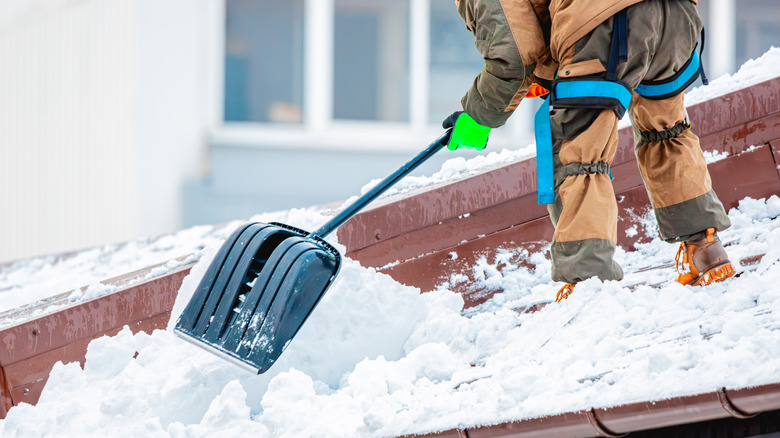
When clearing snow, dress warmly and with good gloves, and wear non-slip boots. If you get cold, it can slow your reactions, increasing the chances of an accident. So don't try to tough it out: Take a break, get warm, and come back to it. Getting a family member or friend to help out significantly increases your safety, too.
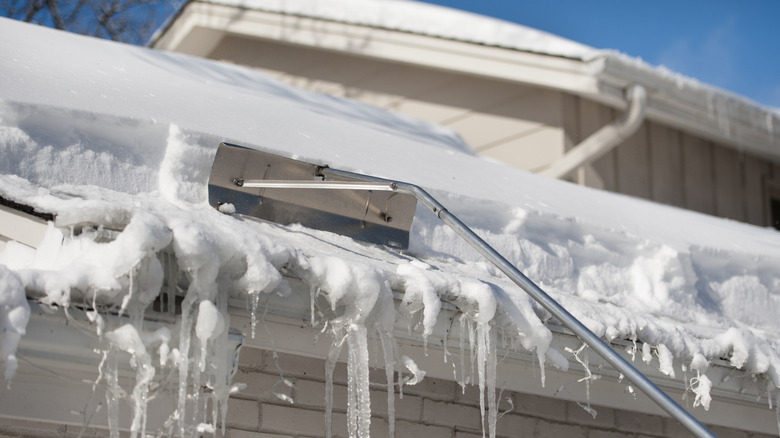
There's a simple rope hack that can save your roof from a snowy disaster, but the most common tool is a roof rake. The Eversprout Never-Scratch SnowBuster can give a reach of up to 18 feet and has a foam pad that won't damage roof surfaces. Start from the ground, pulling the near edge of the snow down first, then use a sturdy ladder that has been properly secured so it can't slip (it really is best to have a buddy for this).
If you can't reach the whole roof from a ladder, it's time to call in the pros, who will have the proper safety harnesses to tackle large, pitched roofs. Despite how confident you may be, it is not safe for you to go up there when it's so slippery. If an ice dam has formed and you can reach it from a ladder, try pouring boiling water over part of it to create a channel. You can also buy commercial ice melt products, but make sure they are calcium chloride (salt) based, rather than harsh chemicals that may harm your roof material.