

Keep Your Spider Plants Happy And Healthy With One Simple Gardening Tip
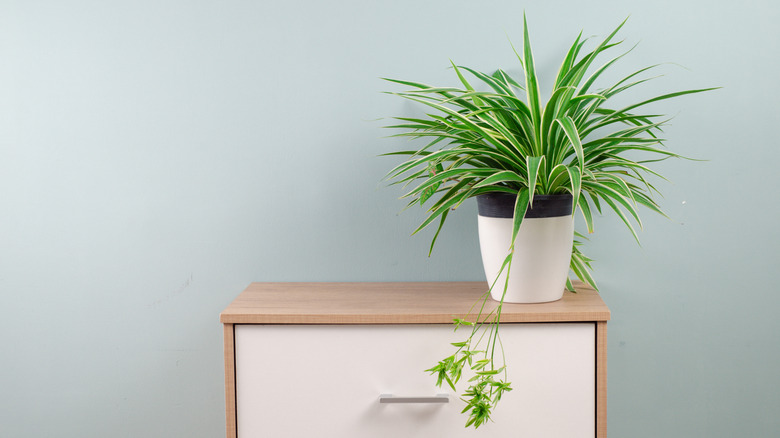
Spider plants are notoriously low-maintenance, adaptable, and forgiving, but even these easygoing plants benefit greatly from one strategic care practice: fertilizing during spring and summer, when growth is at its peak. There are several spider plant varieties, and all of them are great fuss-free plant options that can fit into the busiest (or most forgetful) of lifestyles. But giving your spider plant the right nutrients at the right time can make the difference between a plant that simply survives and one that flourishes.
How you feed your spider plant depends on what kind of fertilizer you use. A great choice for spider plants is a water-soluble fertilizer with an NPK ratio of 10-10-10 or 15-15-15, which provides even amounts of nitrogen, phosphorus, and potassium. Water-soluble formulas dissolve easily, allow roots to absorb nutrients safely, and let you combine watering and feeding in one step. You might also use a granular time-release fertilizer that you sprinkle directly into the soil — this choice would mean you'd feed your plant less often. For most water-soluble fertilizers, feeding your plant every two to four weeks while it's is growing is standard advice, but certain granular fertilizers might tell you to fertilize every three to four months. How often you feed your plant depends on the specific product you're using, so always double-check the label for brand-specific instructions.
Spider plants pull nutrients from the soil through their roots, but the supply in potting mix gradually diminishes as the plant grows. Once those nutrients are used up, regular feeding becomes an important part of keeping the foliage strong and vibrant. Providing a steady source of plant food helps replace what the soil can no longer offer and encourages your spider plant to stay full, lush, and leafy.
How to fertilize your spider plant
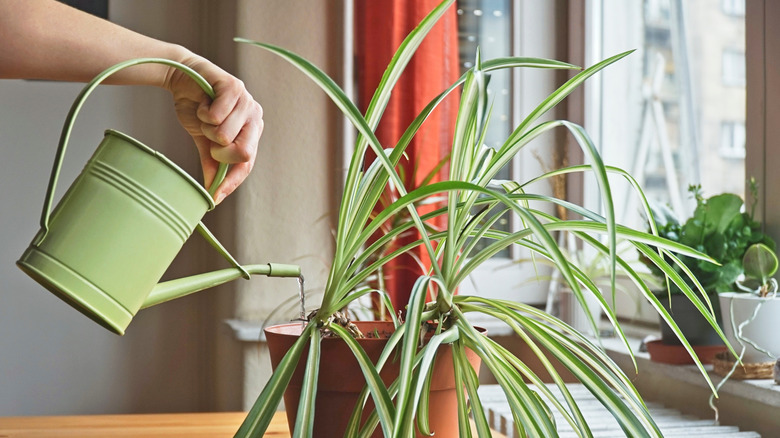
Regardless of which fertilizer option you choose, be careful not to over-fertilize your spider plant — it may not be as likely to reproduce and you could cause the tips of the leaves to turn brown. More is not better, and overdoing it with the fertilizer is actually worse for your plant than not feeding it at all. You'll also want to avoid feeding your plant during the fall and winter when growth slows, as spider plants go dormant in the cold weather.
Pair feeding with a consistent watering rhythm — let excess water drain freely — and ensure your potting mix and container size aren't holding onto more moisture than your spider plant can handle. If your spider plant's pot is too large for its size, the soil will stay damp for too long, which can increase risk of root rot. You want to pick a pot that's approximately 1 to 2 inches larger than the plant's root ball to ensure proper drainage. Seasonal changes affect how often to water a spider plant as well. During warmer months, when the plant is growing quickly, it will dry out faster and need more frequent watering. Once cooler weather arrives and growth slows, your spider plant will need far less water as it shifts into a semi-dormant state. During this time, use these tips to keep your spider plant happy all winter long. A well-fed, well-watered spider plant will reward you with the clearest sign of its happiness: plantlets. When your plant begins sending out long stems dotted with miniature spider plants, it's not just healthy — it's thriving.