

8 Types Of Salt That Can Melt Snow (& Which Is Best For You)
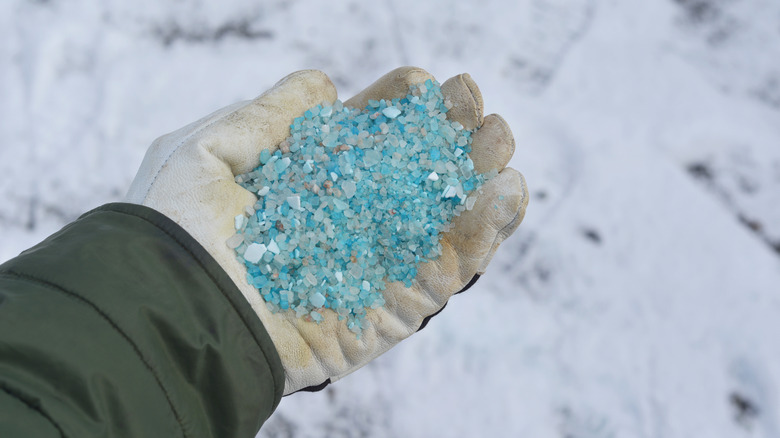
When temperatures drop and snow is on the way, salt becomes your best friend. Salt has the incredible ability to lower the freezing point of water, which essentially prevents ice from forming. Depending on which salt solution you use, it can lower the freezing point of water to 2 degrees Fahrenheit. However, not all road salt is created equal. There are two main families of deicing salt: Chloride-based ones and acetates.
Some salts are cheaper, like sodium chloride, and some are best for extreme cold, like calcium chloride. Some of them, like magnesium chloride, help offset one of the downsides of using deicing salt in the winter by being pet-safe. In any case, you've likely understood by now that we're not talking about basic table salt. Salt that's designed for cooking and eating is a purified form of salt, whereas road salt is not. Instead, these are full of impurities, and they don't have that same white, pristine color.
When temperatures get close to freezing, city officials start spreading salt on the roads to help prevent crashes. As a homeowner, you should also add some salt to your property. Removing ice when you don't have salt isn't easy, which makes it a must-have tool for snow removal and ice management at home. This can be helpful on the driveway to avoid cars driving on ice and also on walkways to protect your loved ones from falls. However, keep in mind that deicing salts can harm plants, so you should focus the application on walkways, driveways, and stairs and avoid overspreading into garden beds. In addition, road salt can also irritate the paw pads of pets, so consider investing in some booties for your dogs before winter hits.
Sodium chloride

The most common type of deicing salt is sodium chloride (NaCl), also sold under the names 'halite' and 'rock salt'. This is, actually, the same formulation as basic table salt, but it's not purified to make it consumable. As a result, you might notice that it has a darker brown or gray color, which is simply due to minerals and impurities still in the salt. It works in moderately cold temperatures, becomes less effective when the weather drops to below 20 degrees Fahrenheit. This is right for you if you're on a budget and don't experience extreme cold snaps.
Calcium chloride

Calcium chloride (CaCl2) is another form of road salt that's especially popular in states that get extreme cold in the winter. The benefit of calcium chloride is that it works even with temperatures as low as -25 degrees Fahrenheit. This is your best friend if you live up north and need a solution to prevent ice from forming, even on the coldest days of the year. It can be purchased as rock salt in flake form or as a liquid solution, both of which work extremely well and quickly when temperatures drop.
Magnesium chloride

While magnesium chloride (MgCl₂, often called MAG) isn't quite as powerful as calcium chloride, it also performs better than basic rock salt in temperatures as cold as 5 degrees Fahrenheit. This is your best option for an environmentally friendly deicing salt because it won't cause as much damage to fauna and flora (including pets) as other alternatives. It's also less corrosive to metal surfaces and damaging to concrete, and it doesn't cause as much irritation when it comes into contact with human skin either. All in all, this is a safe and reliable chloride-based option.
Potassium chloride

Potassium chloride (KCI, or muriate of potash) is also considered a rather environmentally-friendly form of deicing salt, though less so than magnesium chloride. Comparatively, it causes more damage to roads and metals, and it's not considered to be as pet-safe. This salt works well with temperatures down to 12 degrees Fahrenheit. It isn't quite as popular as other types of deicing salts, so you'll often find potassium chloride in mixes that use several types of salt, rather than on its own.
Calcium magnesium acetate
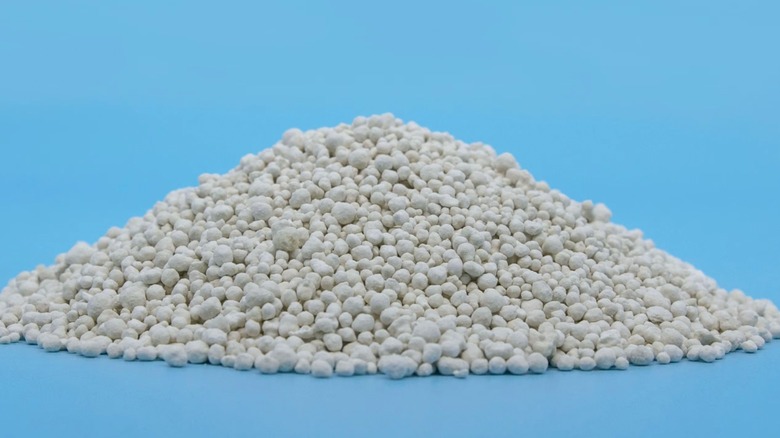
Calcium magnesium acetate (called CMA) is the least corrosive deicing salt on the market. This makes it a very safe option that won't damage concrete, and is biodegradable and environment friendly. It's considered one of the pet-friendly options, and it works in moderate winter temperatures like 15 degrees Fahrenheit. While this is a fine option for mild winters, the main inconvenience of calcium magnesium acetate is that it costs a lot more than its alternatives. That's because this solution is made by compounding two ingredients: Acetic acid and dolomitic lime.
Potassium acetate
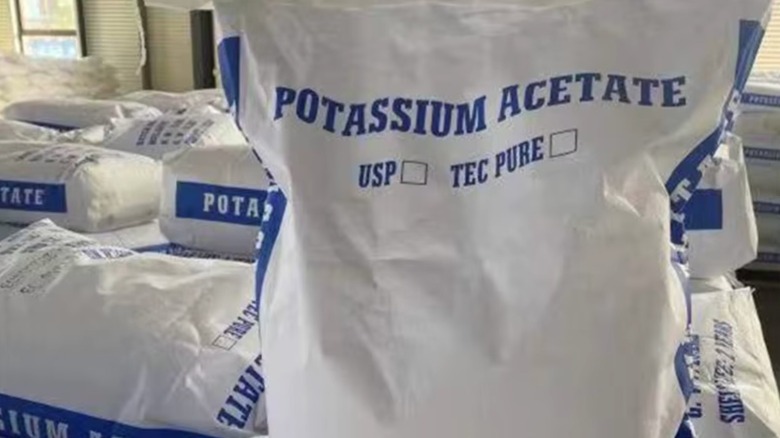
Potassium acetate is more expensive but less corrosive than chloride-based ice salts and is therefore used industrially in high-traffic areas, like airports. Potassium acetate is different from potassium chloride, which we discussed earlier. This specific chemical is made from potassium salt of acetic acid, while potassium chloride is a basic salt that contains chloride and potassium. While this option is considered relatively eco-friendly, recent studies have found that it's more toxic than we previously thought. This solution is the best non-chloride one for extreme cold temperatures, working at -30 degrees Fahrenheit.
Sodium acetate

Sodium acetate is another deicing salt that's environmentally friendly and noncorrosive. It works well, quickly, and lasts longer than some other salts. It can do its job in temperatures as low as 0 degrees Fahrenheit. However, it's hard to find and rather expensive, which makes it an uncommon choice for homeowners. You'll typically see this salt used in industrial and high-traffic areas, for example, on airport runways or bridges.
Ice melt blends
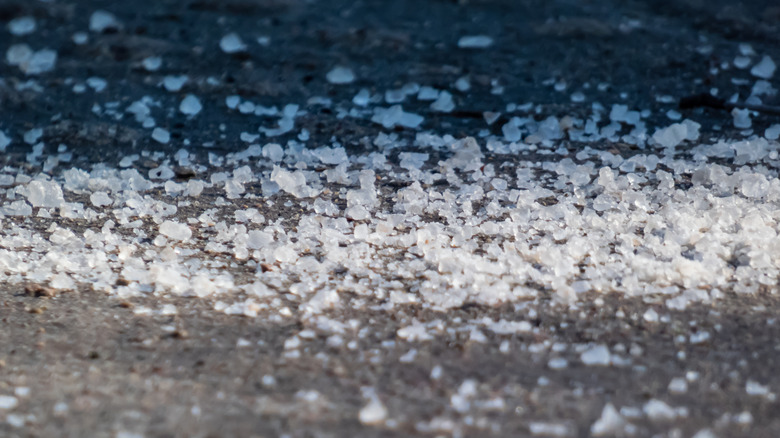
When looking for deicing salts, you might see something called "ice melt" and wonder whether that's a type of salt. Typically, these are a mixture of basic rock salt (sodium chloride) and some of the other salts, like potassium chloride, calcium chloride, and magnesium chloride. Manufacturers make these blends to use cheap rock salt as a basis and make it more effective at cool temperatures. Some formulations use salts that are gentler on the environment to lessen the mixture's impact on plants and animals. Unfortunately, these blends tend to be more expensive.