

Protect Your AC Unit This Winter By Using The Best Type Of Covers
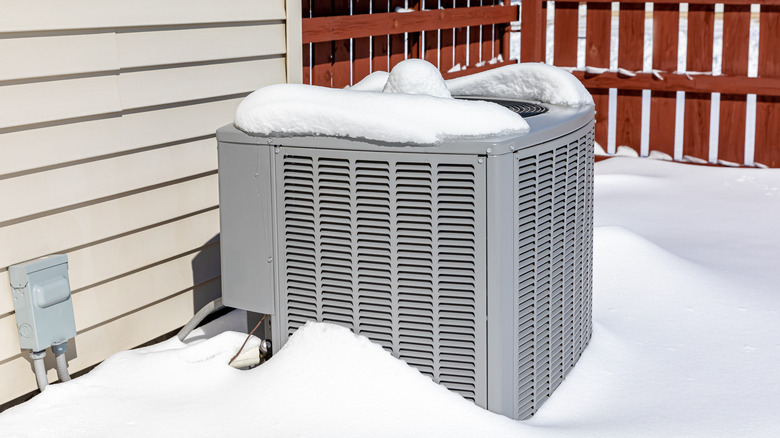
When the first snowflake of the winter season dusts our lawns, many homeowners rush to cover their central air conditioning unit, treating it like a piece of patio furniture that needs protection. While these machines are engineered to be tough and live outside year-round, they can still use protection from debris and moisture. And while there are things to know before covering up your AC unit, be careful when choosing to cover it.
The biggest threat to your AC unit in the winter isn't the cold air, but rather moisture issues and falling debris. Debris like leaves, pine needles, acorns, and twigs can settle into the sensitive coil fins, getting stuck and even blocking airflow when you fire it back up once the weather warms. Similarly, icicles that have formed right over your unit could fall and cause damage with their impact. The solution, then, is to keep that vulnerable top part of your AC unit covered. This protects it while still letting air circulate. Don't cover it fully to the ground, either; this can trap moisture and attract unwanted visitors. The best practice is to just keep the top half covered, or even just the very top where the fan is.
Before you purchase any cover, though, grab your tape measure and jot down your AC unit's dimensions so you get a cover that fits. If your cover is too loose, it may blow off in a particularly windy storm. The goal is a snug fit that secures the cover over the top portion and keeps the lower part open for airflow.
How to choose the best cover material for your AC unit
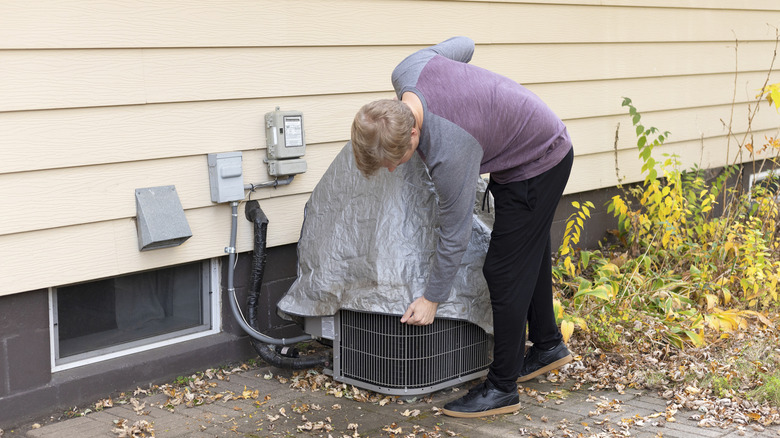
While it might not seem like the material you choose to cover your AC with matters, it does. The two most effective options are polyester and vinyl. Polyester is considered to be the more premium choice, as it's made from a lightweight, breathable, and water-resistant material. It also resists cracking and UV rays better than vinyl does in super cold temperatures, so it's the better pick as a long-lasting investment. Alternatively, vinyl covers are more budget-friendly and also offer pretty decent security against debris and any other winter issues. Both are readily available materials as well, so you won't need to splurge on anything specialized.
Other cover options, like mesh and standard tarps, simply don't work as well. Why? Mesh doesn't do as good a job keeping out moisture or smaller debris (beyond sticks and leaves), thanks to its small holes. And on the flip side, standard tarps have no breathability. Poor breathability makes it easy for a greenhouse effect to happen, causing issues with condensation and potentially leading to issues with mold and mildew.
Ultimately, using a high-quality top-only cover made of durable polyester or vinyl and knowing how to care for your AC unit in winter will give you some peace of mind. It will help your unit stay dry, debris-free, and ready to keep your home nice and cool once summer arrives.