

Move Over Open Kitchens: Layout Trends That Are Taking Over

Open-concept kitchens have this magical feel to them. They seem ideal for entertaining guests, keeping an eye on your whole family, and making your home feel large and welcoming. However, like many things, the reality of these kitchens isn't so pleasant. There are a lot of downsides that can make open-concept rooms feel less charming and a lot more frustrating. Because of this, people are slowly moving away from the open trend. Thankfully, there are a few options to choose from instead, including a closed concept, a broken-plan layout, and even a hidden kitchen, depending on your needs.
There are a lot of reasons you might want to avoid an open floor plan, not only in your kitchen, but in your whole house. One flaw with this style is that noise is always going to be an issue. Not only do you have to hear the sounds from the living room while you are trying to cook, but all the noise you make carries into other rooms, too. It's hard to relax and enjoy a movie when dishes and pots are clashing around. Smell is another issue. Whenever you cook, the smells will permeate most of the rest of your home. While making sure everyone can smell the amazing pie you made doesn't sound bad, getting a whiff of old bacon grease every time you sit down on your couch and try to use a throw blanket isn't nearly as pleasant.
Closed kitchens are cozy and give you more space
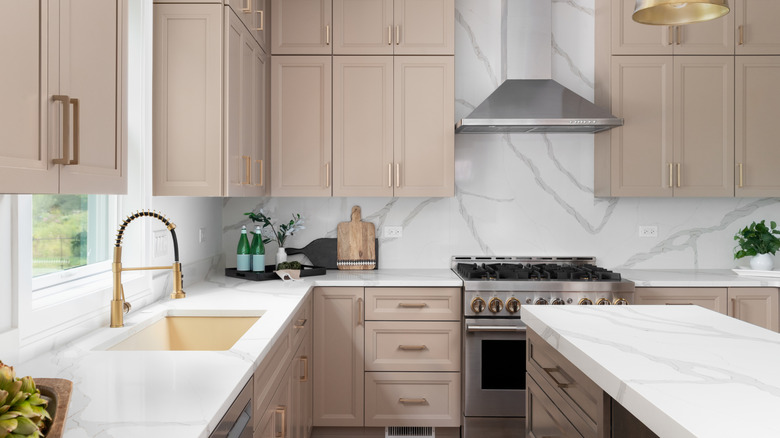
Obviously, the first alternative when discussing options other than open kitchens is to close it. This approach involves enclosing the kitchen with walls to separate it from adjoining spaces. Closed concepts involve making rooms more solitary. At first, this can sound a bit depressing, but there are quite a few benefits. In fact, these once-loathed design trends are making a comeback to replace open kitchens, thanks to all the benefits they provide.
The first is that it reduces noise. You also get a bit of privacy, so you can fix up some food without everyone being around to watch you, and it feels a little cozier. More practical benefits include additional wall space, which means you can have extra counters and storage spaces, plus extra spaces to display decor, if you want. Also, with an open concept kitchen, your space often has to be perfect, since everyone will be looking at it all the time.
If you are a messy or chaotic cook, it may feel overwhelming to try and keep everything under control when everyone is able to see you from most of the rest of the house, but with the closed concept, you can make a mess and have time to clean it up without everyone seeing. Not only other people, but it's hard to relax after a long day when you can see a messy kitchen from the living room.
Hidden kitchens don't attract as much attention
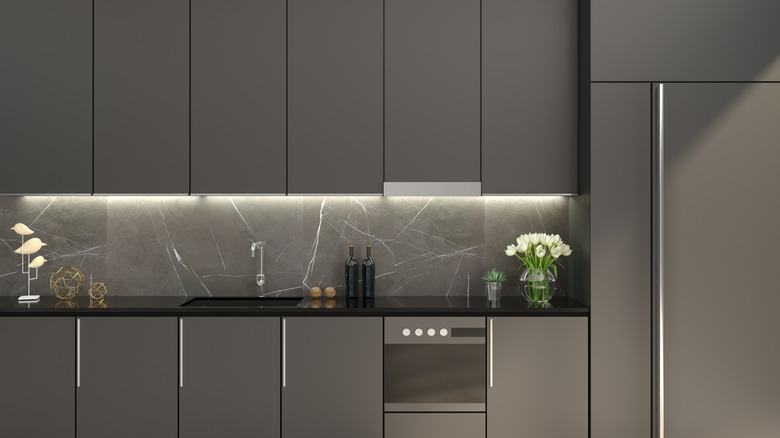
Of course, even if you don't like the concept of your open kitchen anymore, it's not easy to just redesign your home to accommodate a whole new look. In these cases, you can kind of meet in the middle. One of the easiest ways to do that is to go with a hidden kitchen. Also known as a "no-kitchen" design, it helps to hide some of the less attractive parts of your space.
This approach combines simplifying design elements with materials that help appliances blend into the background. For example, some people suggest getting rid of upper cabinets altogether. Instead, adding one long-running shelf across your kitchen wall and using it for a mix of dishes and decor is a recommended option.
If you prefer to keep your cabinets, you can use tall ones similar to a wall or half-wall, with doors that blend in so they look like a textured feature, more than actual cabinets. You can get these kinds of panels and coverings for your fridge, dishwasher, and other appliances to allow them to blend in a little better as well. Another way to help hide some of your kitchen is to distract from it. Adding a few big statement pieces to your space, such as bold lighting, big decor, or very unique counters, islands, and chairs, can help hide some of the kitchen-focused elements of the room.
Broken-plan kitchens add a distinct barrier
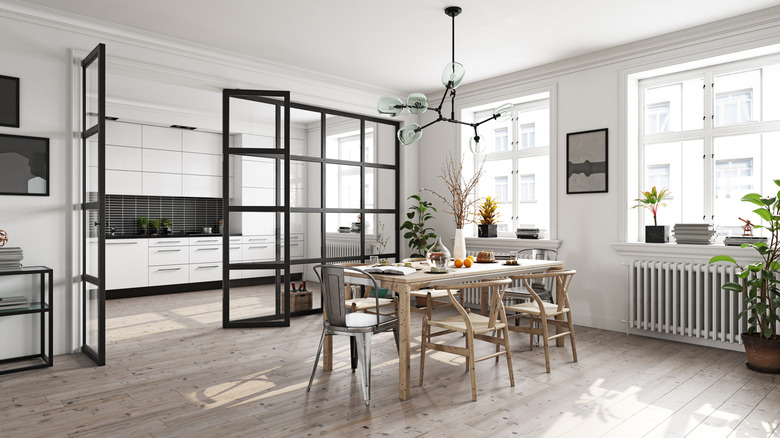
If you are looking to make your kitchen more closed off, but you don't want to entirely shut it out from the rest of your home, a broken-plan layout may be a great option as well. It's a design that meets in the middle of open and closed layouts by using partial or clear walls to signal a separated space, but still letting you see the rest of the house.
These layouts work well because partial walls don't have to be traditional barriers. Double-sided fireplaces, standing cabinets, bookshelves, long and tall bars, and other furniture can all act as the division between two areas of your home. Even using glass dividers can help you to separate your kitchen from your living room.
While you can design your space with a broken-plan layout in mind, you can also convert a few kitchens into something similar using a bit of creativity. Reposition bookshelves to reduce openness or add a decorative screen. Bulky furniture or curtains can also act as a divider. Implementing other changes as well, such as flooring, lighting, and room color schemes can also set a strong line to signal where one area begins and one ends, even if they are in the same space.
Hybrid kitchens let you make small adjustments over time
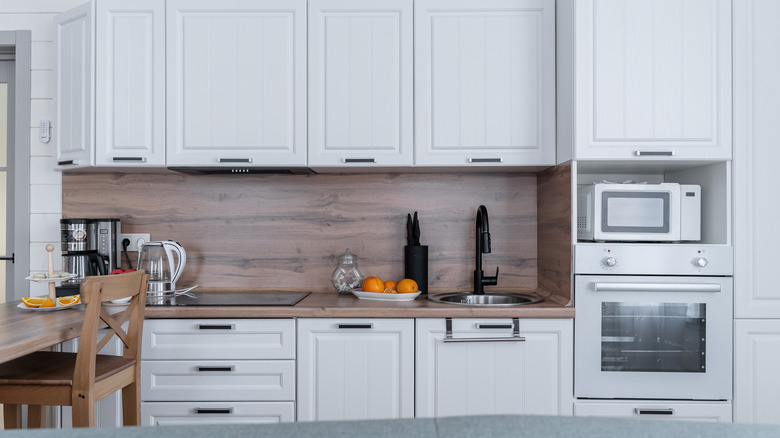
If you still want a kitchen that offers a lot of opportunities, but not necessarily an open layout, another option is to go with a hybrid. In 2025, and now into 2026, these kitchens are perfect for homeowners looking for ways to maximize spaces. This style is designed to be multifunctional. You can use the space as a lounge, a meeting area, an office, and — of course — a place to cook.
The benefit of these is that they allow you to also blend old and new. You can add in some new modern features to help you make the most of the space, but you don't have to completely revamp your kitchen and invest thousands of dollars into your space. It allows you to enjoy the benefits now while gradually updating the space to fit your dream design.
This can be things like keeping the cabinets, but painting them to better match your counter material, or replacing your counters completely with something that fits your cabinet's style best. It's usually pretty easy to do and can be as expensive or affordable as you want it. You also get the chance to renovate small spots that give you what you need. For example, if you want more storage, you can find new places to add cabinets, or better adjust the space you have to make it more accessible.