

Should You Toss Used Garden Straw, Or Is It Better To Let It Decompose?
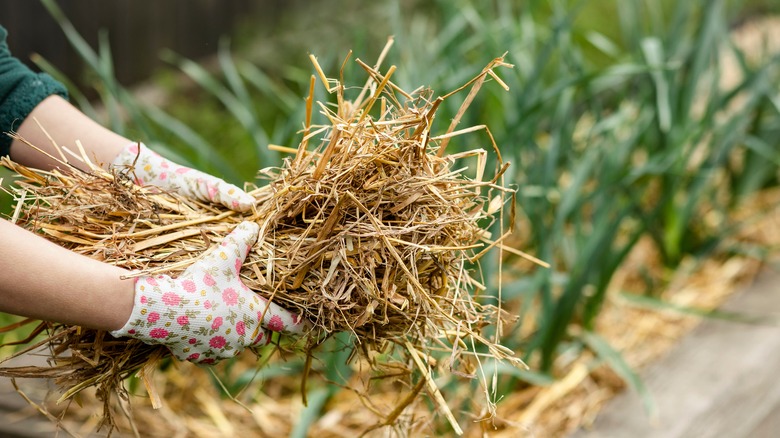
Whether it's in a fruit patch or a vegetable bed, that golden straw from oats or wheat makes a really good mulch. It helps retain moisture in the soil, reduce disease, and suppress weeds in the garden. But as soon as the growing season ends, many gardeners face a critical decision: whether to toss away the used straw or let it decompose. Generally speaking, most of the time it's beneficial to let the straw decompose or add it to your compost pile. However, there are situations when it's better to discard it.
Straw is a valuable soil-building resource. When it decomposes, it can add valuable nutrients to the soil and improve soil quality. But at the same time, it can serve as a hiding site for snails and slugs. Plus, straw can create a mess in your garden and make it look unkept, especially when the wind blows it around. The ultimate decision depends on carefully assessing the condition of the straw as well as the benefits and drawbacks of letting it decompose in the yard. If you end up concluding that allowing decomposition isn't a good option, there are still a number of ways you can use straw in your yard and garden.
Letting straw decompose or composting it is often beneficial
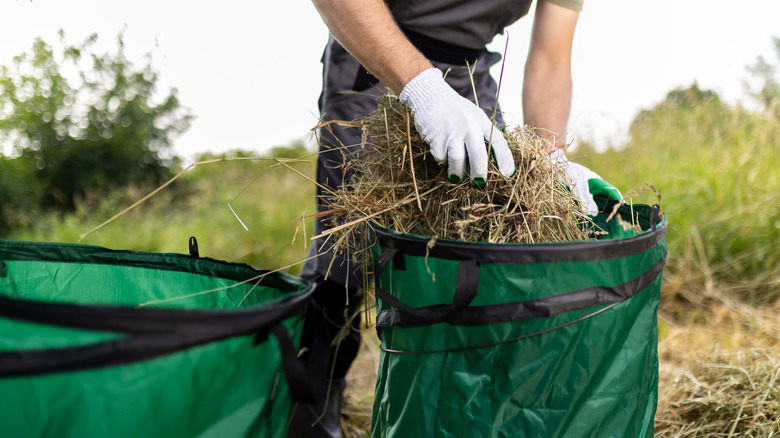
If the straw comes from a known source that was herbicide-free and wasn't overrun by weeds, it usually is safe to let it decompose. Over time, fungi and bacteria will chew through the straw, and it will naturally get incorporated into the topsoil. Since this decomposition process is gradual, it not only ensures a continuous supply of nutrients but also improves soil properties like structure and infiltration.
You can also add straw to your compost pile. Cold and hot composting are both good options, but hot composting is usually the best thing to do, if possible. It can get rid of most weed seeds and diseases that might otherwise survive the composting process. Also, it is generally a good idea to mix straw with some green materials, such as grass clippings, fresh leaves, and kitchen leftovers like vegetable scraps, as this adds nitrogen to the mix. Since straw is naturally high in carbon, these green materials will lower the overall carbon-to-nitrogen ratio of your compost, which will speed up the breakdown of the compost.
Some straw shouldn't be left to decompose
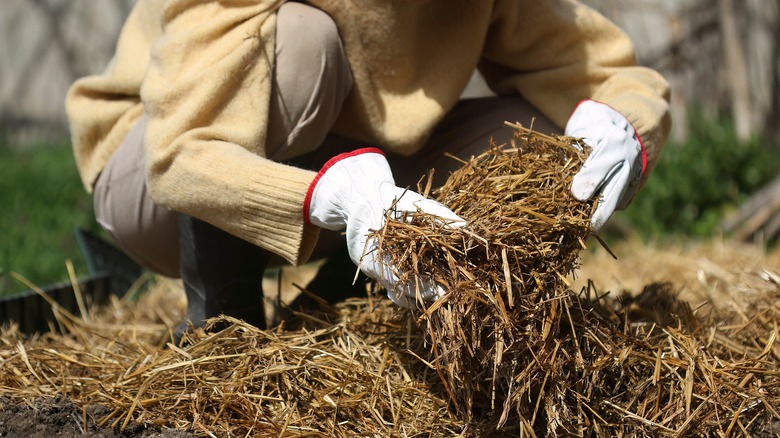
Despite the benefits, there are some situations in which tossing away the straw is better than letting it decompose. For instance, oat and wheat straw often have residual seed heads. If left to decompose, these seeds might germinate and become troublesome weeds. Similarly, if your straw has been sourced from a heavily herbicide-treated source, it might have chemicals that can get incorporated into the soil and become problematic later.
If your garden is prone to snail or slug damage, you shouldn't leave mulching materials like straw on the ground. There are many invasive garden snails you never want to find in your garden, and a thick layer of straw can provide safe hiding spots and a habitat for these creatures. Other than that, if the used straw in your yard previously came in contact with a crop that suffered from a disease, it is probably a good idea to toss the straw. Many pathogens stick around in straw and can even survive composting, so throwing the stuff out is usually safest.