

9 Compact Cherry Tree Varieties That Will Thrive In Your Small Garden
We may receive a commission on purchases made from links.
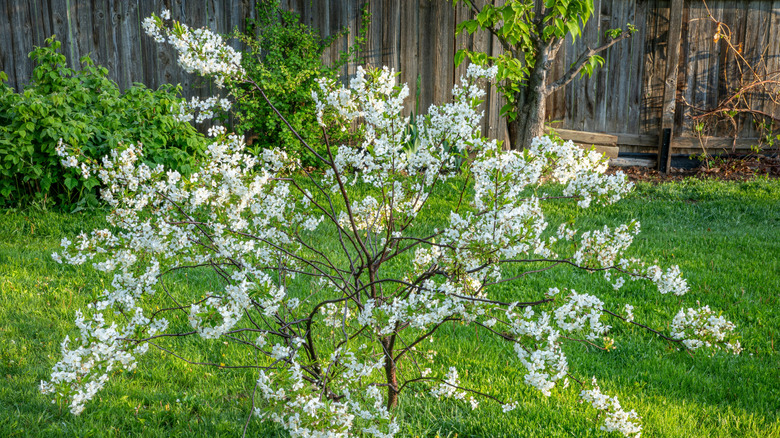
Cherry trees are probably one of the prettiest and yummiest fruit trees you can grow in your garden. They boast a stunning cascade of colorful blossoms and produce delicious fruit. But the problem is that many cherry tree varieties grow large. They might not work for gardeners working with narrow lots, courtyards, or small gardens. And that is where compact cherry tree varieties can help. Some good options include Romeo and Juliet for those living in colder regions, Stella and Lapins for mid-chill zones, and Royal Crimson and Minnie Royal for gardens in low-chill zones or warmer climates. These compact cherries can easily slip into small spaces and gardens.
But size isn't the only thing that matters when choosing. For instance, you need to match the variety with your USDA Plant Hardiness Zone. Also, you need to take chilling hours into consideration when selecting a cherry tree for your small garden. For instance, most sweet and tart cherries need roughly about 800 to 1,000 hours of cool winter temperatures to break dormancy and set fruit. Similarly, confirming pollination needs is also vital. Some compact cherry tree varieties are self-fruitful and ideal when there is only room for one tree. However, others need cross-pollination and will not produce fruit if you only have space for one plant.
Carmine Jewel Dwarf Cherry
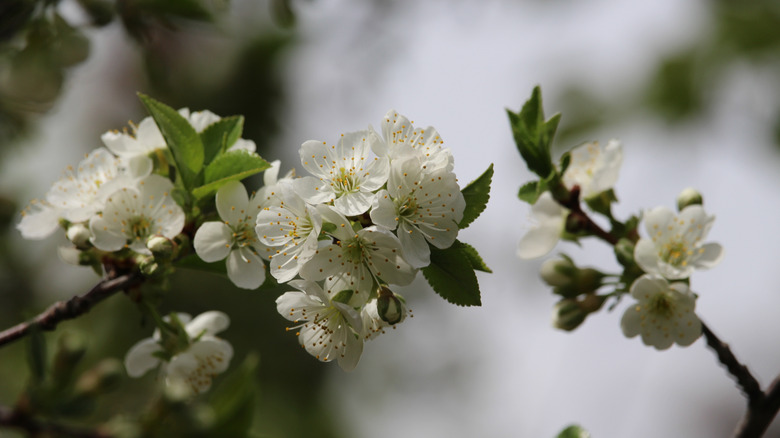
Carmine Jewel (Prunus fruticosa x Prunus cerasus 'Carmine Jewel') is the compact cherry variety you want if you like to dry and freeze your cherries. They have firm flesh and only reach about 6 to 8 feet in size at maturity. Its cherries are dark red, almost black, and you can grow it from USDA zone 3 to 8. As for pollination needs, Carmine Jewel is self-fertile, but if you have another cherry plant nearby, it can significantly increase its yield. Lastly, for best results, plant it in moist, well-drained loamy soil in a sunny spot.
Juliet Bush Cherry

If you have a sweet tooth and want to grow the sweetest bush cherry in your yard, Juliet Bush Cherry (Prunus cerasus x fruitcosa 'Juliet') is probably the perfect choice. It is extremely cold-hardy, and you can grow it anywhere from zone 2 to 7. Furthermore, it only reaches about 6 to 9 feet in height and 4 to 8 feet in spread, so it is perfect for growing in those tight corners. And while you can add another cherry tree like Romeo with it to increase its yield, it produces sufficient yield on its own, too.
Romeo Dwarf Cherry Tree
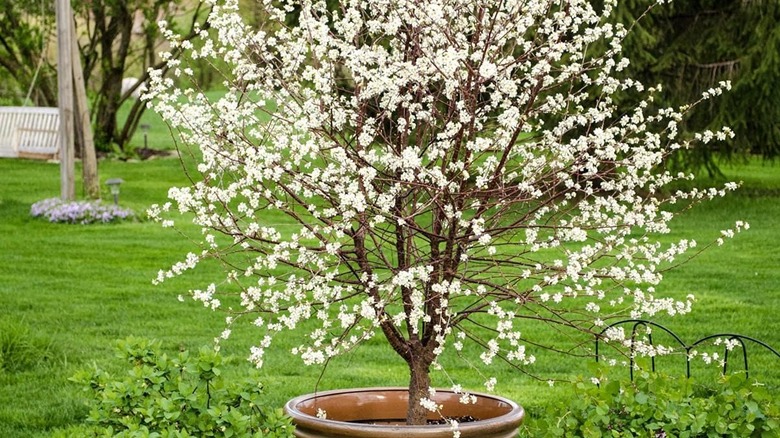
Romeo Dwarf Cherry Tree (Prunus cerasus 'Romeo') is another dwarf fruit tree that is perfect for a smaller yard. It measures only about 6 feet on average in height and width, grows well from zone 3 to 7, blooms in late spring with white fragrant flowers, and has green and yellow leaves, which turn red and orange in the fall. But despite its small size, it produces a heavy yield, and if you plant it with the Juliet cherry cultivar, the yield will be even higher. Just make sure to prune it when needed.
Crimson Passion Bush Cherry
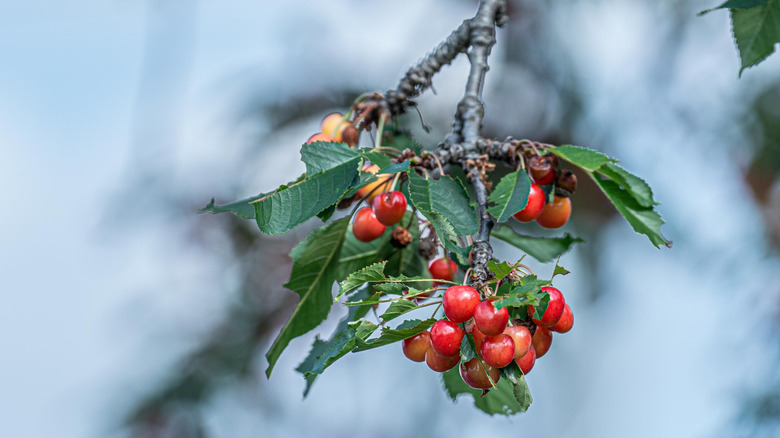
Do you like making juice and pies from your cherries? If yes, Crimson Passion Bush Cherry (Prunus x kerrasis 'Crimson Passion') might be the perfect choice for you. It produces bigger cherries than most varieties and in excess. Yield from a single tree, measuring only a few feet in height and width, can reach up to 15 lbs. And these larger and plentiful cherries will attract birds, so make sure to cover it with a net. You can grow it reliably in USDA zones 2 to 7 as long as you plant it in full sun.
Cutie Pie Sour Cherry
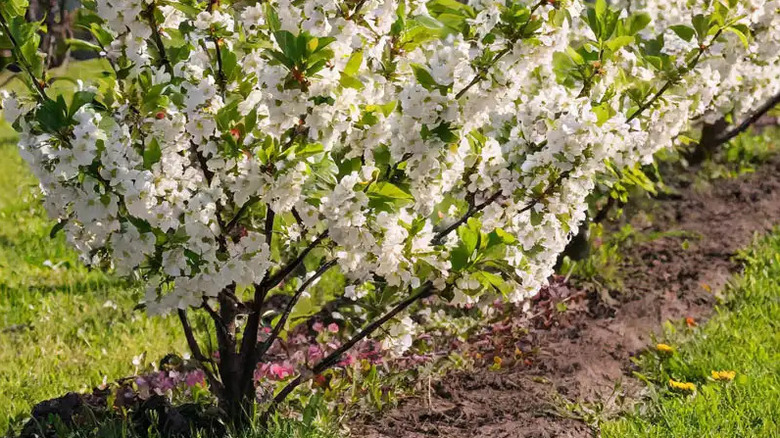
The Cutie Pie cherry tree (Prunus cerasus 'Cutie Pie') is exactly what you'd expect when you hear its name. It tops out at just 4 feet. So, it will fit perfectly in small gardens, making even the narrowest border feel like home. You can grow it reliably from zone 2 to 7 in sandy or loamy soil. You can expect it to bear fruit in two to three years after planting. The fruits are ready to harvest, usually in July. And if you want, you can use it to create a micro-orchard in your home.
Stella Sweet Cherry Tree
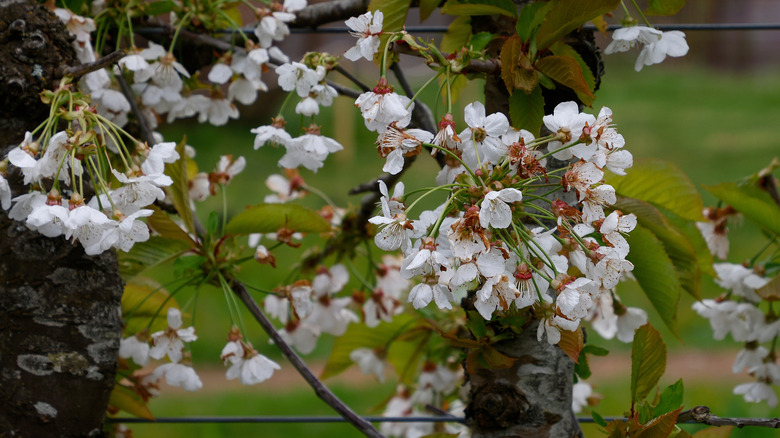
If you have space for growing just one small cherry tree, the Stella cherry tree (Prunus avium 'Stella') is the one you want. It is self-fertile and makes an excellent pollinator for other cherry trees as well. You can grow it in zones 5 to 8, and it is adaptable to most soil types and has good drought tolerance. However, it is slightly larger than other cherry trees on the list and can be about 10 to 15 feet in length and spread. Its pretty and fragrant flowers might be worth the extra space, though.
Lapins Sweet Cherry Tree
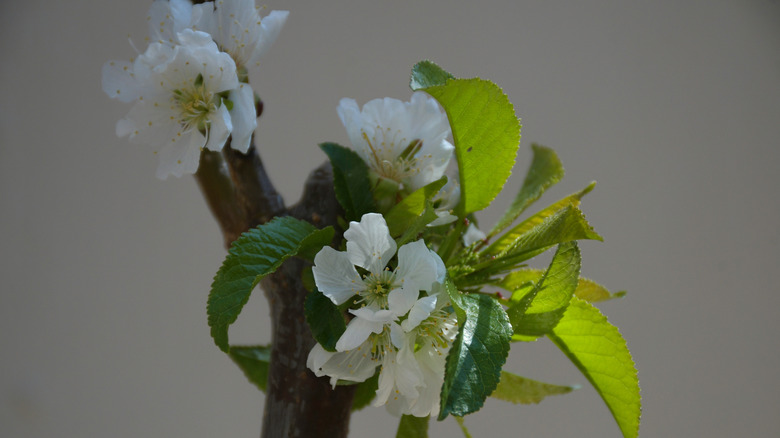
If you have ample space in your small garden and want to extend your harvest time, consider planting a Lapin cherry tree (Prunus avium 'Lapins') with the Stella cultivar. It sets fruit two weeks after Stella and a month later than other early-fruiting kinds. Its cherries are also the largest and most fleshy of all cherry trees. Other than that, it is quite easy to grow, produces fruit from a young age, and grows well in a wide range of soil types. You can plant it across USDA zones 4 to 8.
Minnie Royal Cherry
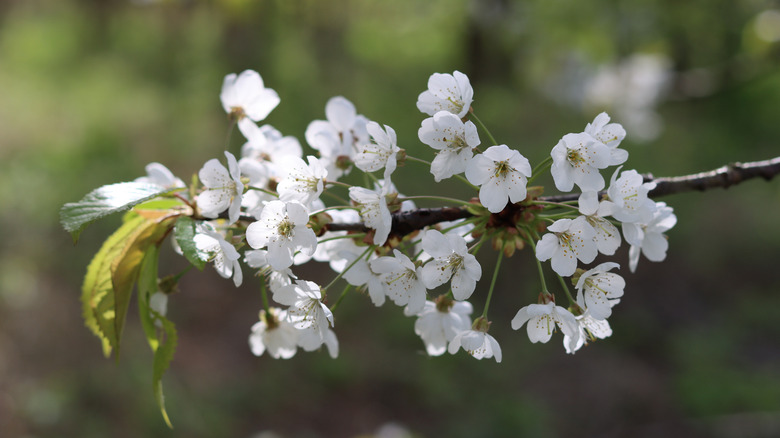
If you live in the warmer zones, the Minnie Royal cherry tree (Prunus avium 'Minnie Royal') might be perfect for you. It only needs about 200 to 300 chilling hours to set fruit and grows well in USDA zones 8 to 10. You can harvest cherries from it in May, and they have crisp flesh and good taste. For the sweetest harvest possible, just make sure to pick the right time to prune your cherry tree. It is self-fertile too, but if you plant it with a Royal Lee cherry tree, the yield will increase.
Royal Crimson Cherry Tree
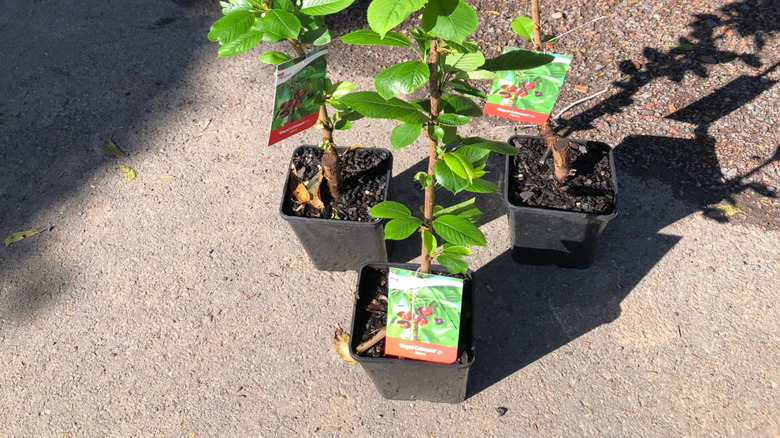
Royal Crimson Cherry Tree (Prunus avium 'Royal Crimson') is another excellent option for the USDA zones 7 to 10. Just like Minnie Royal, it also only needs about 200 to 300 chilling hours. It reaches about 12 to 15 feet in size and is greatly prized for its ornamental value. The tree gets filled with crimson flowers in the spring, giving the tree and the landscape it is planted in an exquisite and graceful look. It has low self-fertility, so planting it with cultivars like Minnie Royal and Royal Lee is highly suggested.