

The Fast-Growing Tree To Prune In December To Remove Overgrowth & Create A Nice Shape
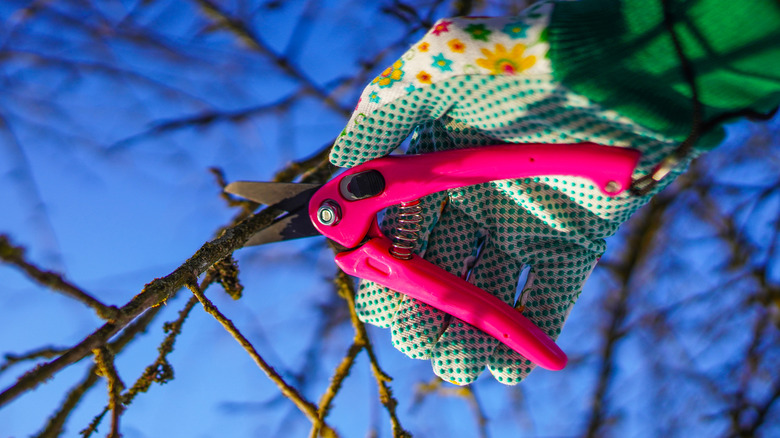
Don't put away your gardening tools just yet! While winter may mean that activity in your garden is slowing down for the year, there may be a few tasks left to cross off your chore list before hanging up your gloves and storing away your shovels and shears — including pruning your willow tree.
Willows (Salix spp.) are beautiful trees that pair cascading branches of lush greenery with an eye-catching silhouette that can brighten any yard. However, reaping the benefits of adding this tree to your garden requires a bit of TLC, which means breaking out your shears one last time to prune your willow trees this winter. If you're not a fan of the cold (no judgment here), then pruning your willow trees in December may feel like a task you can put off until the warmer days of spring. Not only does skipping tree pruning increase the risk of structural damage, but it can also do your willow tree a disservice.
Willow trees are dormant during the winter, which means there's less risk for disease or damage due to pruning. As a result, taking the time in December to prune this tree can help remove any damaged branches that could cause issues later down the road, while also elevating the silhouette of this beautiful tree even further. Pruning your willow tree doesn't have to be a hassle, though. All you need to get started is a sanitized pair of shears and the right steps.
How to prune willow trees in December
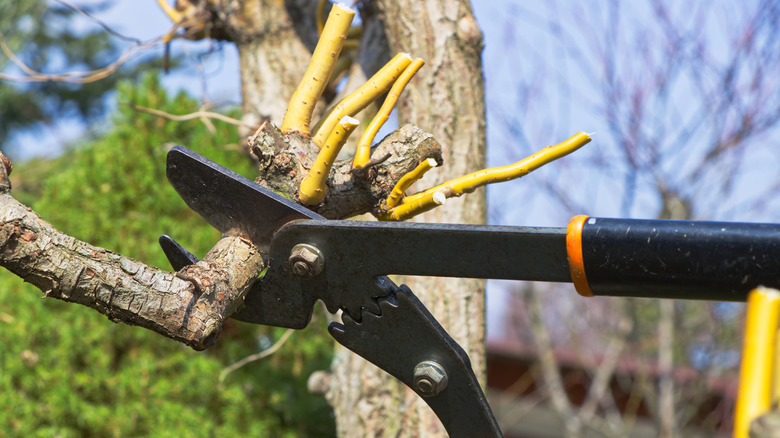
Now that you know why to prune willows in December, you may be wondering how to prune your trees yourself. Whether you're pruning for health-related reasons or for shape-related purposes, you can start by considering the three D rule of pruning: dead, diseased, and damage. This means that, before cutting any healthy branches to produce your preferred silhouette, you want to start by addressing the branches that could harm your tree's health in the long run.
Remove any branches that are dead or dying from disease or damage first. This will help reduce the likelihood of issues spreading to the rest of the tree. It can also help reduce pests that may fester in rotten wood. During this time, you can also focus on preventive pruning by cutting away any branches that rub against each other or have poor airflow that can contribute to problems over time.
Once you've worked your way through the three Ds of pruning, you can address the shape of your tree – which can be a necessity with how fast willows grow. This is where care can differ for young saplings versus mature willows. A mature willow that was properly pruned as a sapling won't need nearly as much care as a young tree. When you prune a mature willow, tackling the three Ds and any unwanted new growth like suckers is often enough. However, with a sapling, you may choose to remove any branches growing at an unwanted angle or too far down the base of the tree.