

The Pencil Test You'll Want To Try To Keep Your Garage Critter-Free This Winter
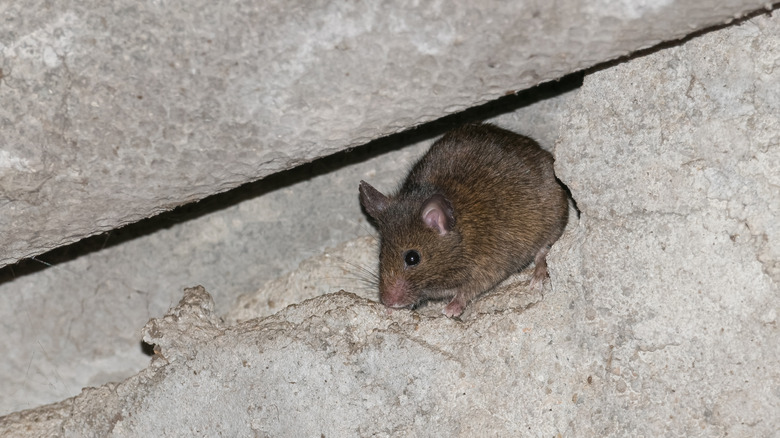
You probably think of your garage as a safe, enclosed space for your car and storage. But as temperatures continue to dip and snow keeps falling, it could also become a five-star hotel for mice. Rodents are relentless in their pursuit of warmth, shelter, and food, and they have a talent for finding easy entry points that humans might overlook. The old, failing seal of a garage door is a perfect entry point. Once in, mice will leave telltale signs of their presence, like scratches, their dangerous droppings, and chewed-through wiring in your car. The way to prevent this is to check your garage door seal for any gaps mice could sneak through, and by using a method called the pencil test.
This well-known test is super easy to do, and will help you find any breaches in your garage door's seal in less than a minute. Close your garage door completely and grab a standard unsharpened pencil (measuring about 1/4-inch thick). Try to slide the pencil under the bottom edge of the door, then do so again from one side of the seal to the other. If the pencil slips through with little to no resistance, you have a gap wide enough for a mouse. But aren't mice bigger than pencils? Technically, yes, but mice are masters of compression. They have super flexible skeletons, and if they can fit their skull through an opening, the rest can follow. So a 1/4-inch gap from a failing garage door seal is, unfortunately, a welcome mat for them.
How to replace your garage door seal for a secure perimeter
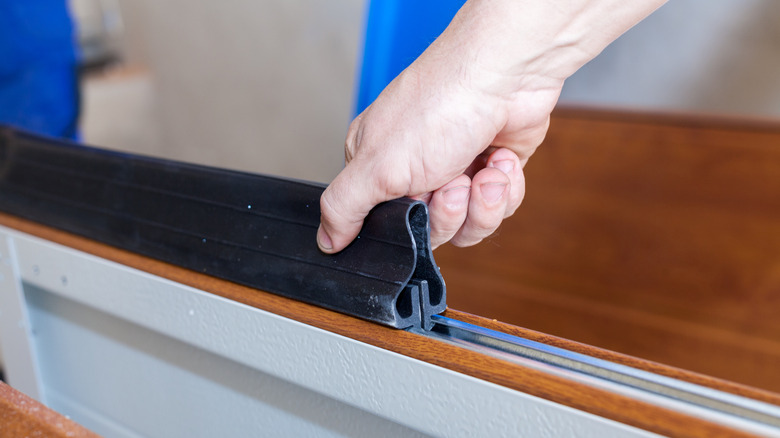
Garage doors do a good job at keeping out pests of all kinds, but their weakest link will always be that bottom seal. After years of rubbing against the concrete floor and being exposed to the elements year-round, that vinyl or rubber material eventually becomes brittle or flattens out. This lost resilience is how those tiny pockets of space form between the seal and the slab, and create mice-friendly entry points. Unfortunately, you can't just patch up the old seal, so you'll need to replace it with a new flexible strip.
Fortunately, doing so is a manageable DIY project for any handy homeowner. Seals come in different forms (like a T-seal, a nail- or screw-on version, or a bulb-style one that slides into the channel that's already on your door's bottom edge). Carefully measure your door first, and ensure your new seal is rated for extreme weather. And of course, if you're unsure about things (especially if the door is warping or really old), there's no shame in calling a professional garage door technician to do it and make sure the entire door sits perfectly flush to the floor when closed.
Finally, after making all the effort to replace your garage door's seal, we suggest taking a moment to inspect the rest of the door, including the weather stripping along the other borders. For any small holes or cracks you find, fill them immediately with caulk combined with steel wool, which is a material that rodents find difficult to chew through. By using the pencil test and following up with a seal replacement, you can be sure your garage stays critter-free this winter.