

How To Identify Mouse Damage In Your Home
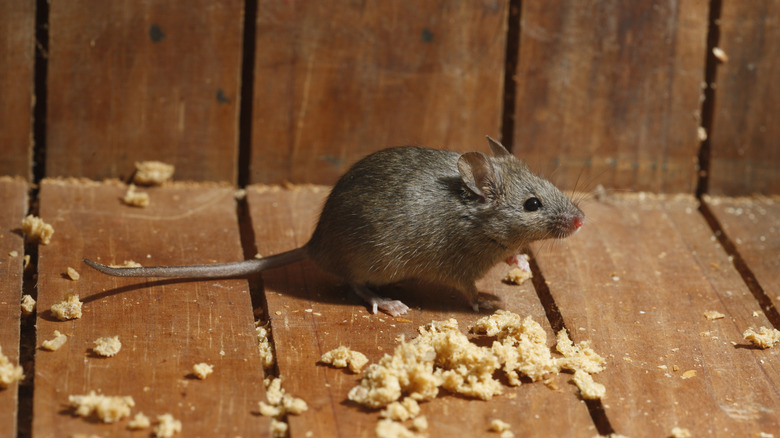
Small but mighty, a mouse infestation can cause a surprising amount of damage to your home and pose serious health risks to you and your family. These small pests chew through wiring, insulation, and household materials which can lead to costly repairs and fire hazards. Their droppings, urine, and nesting materials can contaminate food and surfaces; spreading harmful bacteria such as Salmonella and triggering symptoms like diarrhea, abdominal pain, and fever.
Mice also reproduce quickly, giving birth up to 10 times a year, with 6 to 12 mice per litter. What starts as a small problem can grow into a full infestation in a short period of time. Knowing how to identify mouse damage is the first step in ridding your home of unwanted guests. Luckily, signs of mice are pretty easy to spot if you know where to look. By recognizing early warning signs of a mouse problem such as droppings, gnaw marks, scratching noises, or shredded nesting materials, you can address the issue promptly, protect your home from structural damage, and maintain a safer, healthier living environment.
The telltale signs of mouse damage in your home

Once you understand mice behavior, it will be easy to determine if they've made themselves at home. A major sign that mice are present is gnaw marks on things like food containers. Mice also chew to enlarge entry points into your home, so look for signs on drywall and for cracks in your foundation. Once they're in, they'll keep chewing to access food sources. Mice also use their teeth to tear up nesting materials, so be on the lookout for shredded paper or fabric. Another sign that's hard to ignore is droppings. Mice droppings are tiny; about the size of a grain of rice. Look for them in your pantry as well as your bathrooms, as mice tend to stay near water sources.
More subtle signs that mice are present include noise and scent. Mice make lots of scratching and squeaking sounds when they forage for food, but you might miss it because they're mostly active at night. Mice are also known for having a musky odor in addition to the odor that comes from their urine and droppings.