

Stop! Don't Prune These Pollinator Plants In Winter, Wait For Spring
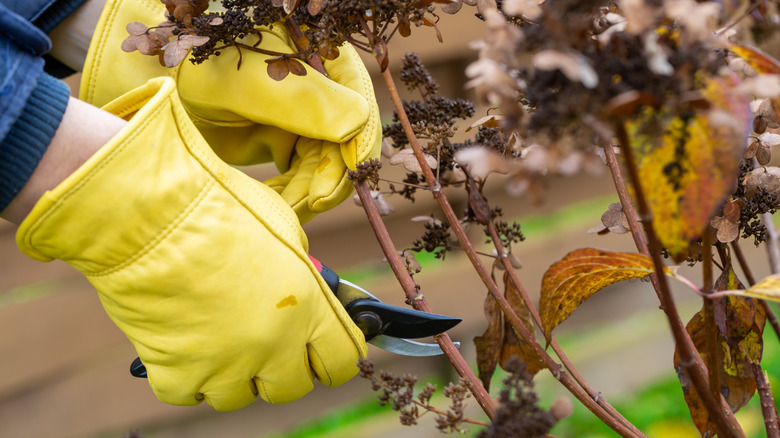
The strong urge to tidy up the garden when cold weather arrives is something that's familiar to every gardener. You want to clean up the entire space before spring returns, but holding back when it comes to certain perennial flowers is one of the kindest things you can do for your local pollinators. Letting go of having a neat garden during the winter months makes a significant difference for the birds and insects that rely on the old summer growth to survive the cold season. Many gardeners recommend you leave your garden perennials all winter, delaying all perennial cleanup until temperatures are regularly above 50 degrees Fahrenheit, which is well past the last frost.
Pruning too early in the cold months can inadvertently destroy entire populations of beneficial insect life. If your yard includes common milkweed (Asclepias syriaca), black-eyed Susan (Rudbeckia hirta), or coneflower (Echinacea), holding off on cutting them back until early spring has some life-saving benefits. The decision to wait protects both the food supply and the spaces that insects use for shelter during the months when resources are most scarce. This gardening choice transforms dead stems into overwintering spots, which helps keep insects safe until warmer weather returns.
Standing stalks provide shelter and insulation for garden guests
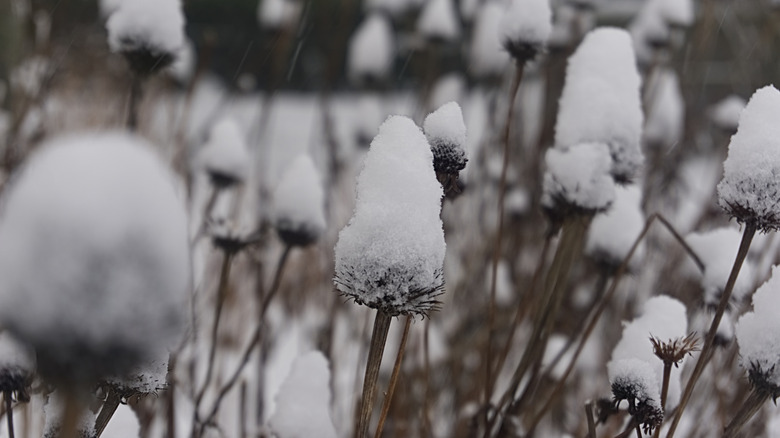
Beneficial insects and pollinators don't vanish just because the temperatures drop. They find shelter and settle in to wait for spring. Many species spend the entire winter as eggs, pupae, or dormant larvae, hiding in the dormant plants in your garden for protection. One of the ways to support wildlife before winter hits is to leave the old stems of flowers like the black-eyed Susan standing to provide this type of shelter. This tough perennial, which grows well across USDA Hardiness Zones 3 through 9, offers a safe space for various spiders and insects, including overwintering beetles and native bee larvae.
These dormant insects are often hidden inside hollow stalks or tucked deep within the dried foliage near the plant's base for insulation. Removing this natural cover takes away the bugs' built-in home and will expose them to freezing cold, strong winds, and hungry predators, which will reduce their chances of survival.
The remaining dead stems and dried leaves act as a natural insulating blanket for the root crown of the plant itself. This protective layer of organic material helps to regulate soil temperature, protecting the roots from the freeze-thaw cycle. Keeping those stems intact also helps hold snow in place, which provides another layer of insulation for a better start to the growing season.
Dried seed heads provide food for birds in the colder months
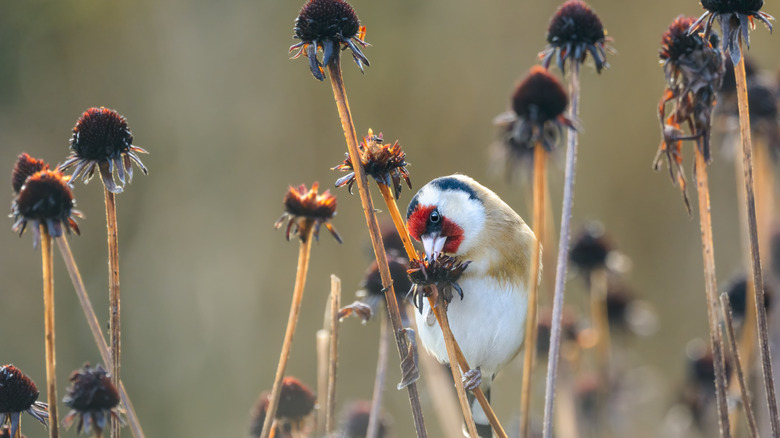
Aside from providing shelter for hibernating insects, allowing perennial seed heads to stay on the plant throughout the winter provides an accessible food source for birds when other food is hard to find. Perennial plants you should avoid pruning in the fall include those with prominent seed heads, like the large, dried cones of the coneflower, which are loved by smaller birds like goldfinches. These perennials, which thrive across USDA Hardiness Zones 3 through 9, produce a large number of seeds that stay attached to the dried cones, creating a natural bird feeder.
Songbirds will perch right on the stalks to eat the seeds from the flowerheads. This feeding process also serves another important function in that the birds will scatter some seeds across the soil, supporting the next generation of plants through self-seeding.
Native milkweed also has similar value. While gardeners in warmer regions need to cut back tropical milkweed to prevent the spread of parasites, native species like common milkweed, a perennial in USDA Hardiness Zones 3 through 9, should be left standing. The mature seed pods will eventually open, offering seeds and the fibers that some bird species use as soft nesting material. Delaying your final garden cleanup until early spring stretches out the time pollinators can benefit from your wintertime garden.