

Why You Should Be Pruning Your Christmas Tree (And The Best Way To Do It)
We may receive a commission on purchases made from links.
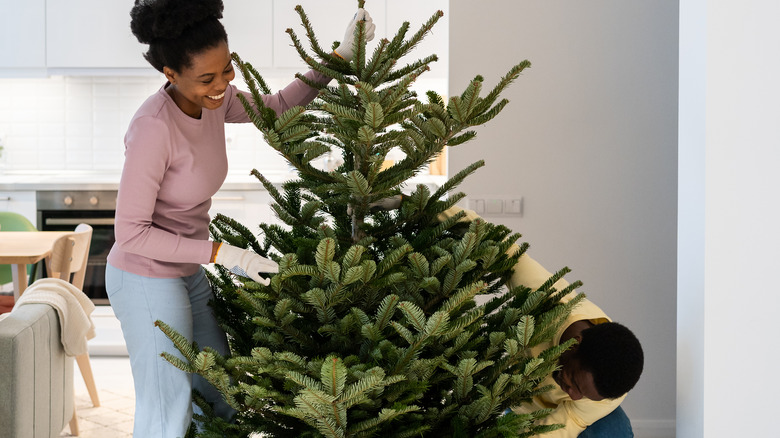
Having a live Christmas tree brings a special quality to the holiday season. The scent of evergreen boughs filling the air is its own magic. Plus, the knowledge that you've supported a local farm can add to the warm fuzzy feeling. But when you decide on a real Christmas tree over an artificial one, this includes signing up for some extra care tasks. You may be aware of the consistent watering they require to stay healthy and green, but there's something else not everyone remembers to do. You should prune your Christmas tree to give it a nice, symmetrical look, or even to ensure healthy growth. For the best results, use clean hand pruners to cut off dried branches and then shape the rest of the tree, being careful not to cut more than a third of every branch.
The approach you take to pruning your tree will vary a little depending on the type of setup you have. Most Christmas trees are cut, but there's also the option to care for (and decorate) a potted Christmas tree inside, then plant it outside when the celebration is over. Pruning is important for both types — trees that are potted should be pruned regularly to promote healthy, organized growth, and cut trees in stands should be given a trim to keep them in shape and looking neat — but when it's potted, a lighter touch is needed. In either case, your tools should be sharp and easy to handle. Some Fiskars Bypass Pruning Shears will work well.
How to properly prune cut and potted Christmas trees
If you bring a cut Christmas tree home, get it set up and primed to take in water before you start pruning. This often involves cutting about 1/2 to 1 inch from the bottom with a hand saw, then fitting it into a tree stand with a reservoir, a step that can prolong the life of your real Christmas tree. The tree will now be ready to soak up the water.
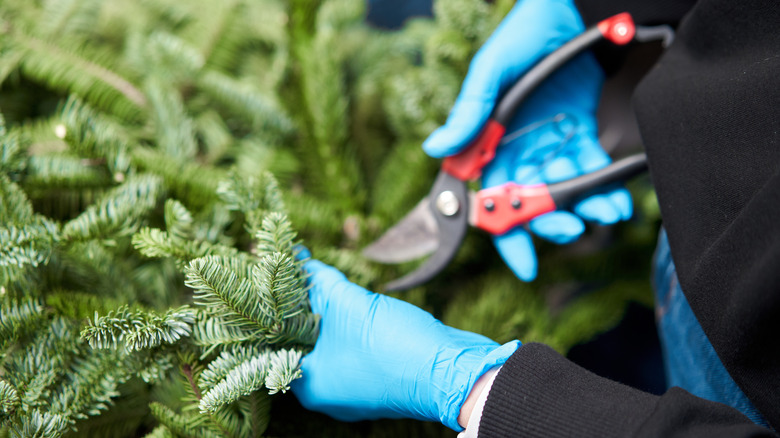
A good pruning is what gives a Christmas tree its iconic shape, and while the farmers will have already done most of the work, you can take care of any awkward branches that interrupt the look. With your pruners, lop off damaged or overly dry branches first, then trim with an eye toward maintaining the conical shape. As you go through the process, don't trim off more than a third from each branch, which could be harmful to the tree.
While you can trim to the top of a cut tree, more care is required with potted Christmas trees. They have a whole life after the holidays, so it's best to use the recommended pruning practices for your tree species. For example, some types of Christmas trees, like the Colorado blue spruce (Picea pungens), need their "leader" branches intact to keep growing straight, and with most conifers, you shouldn't prune old, inactive wood since branches won't grow back to fill in the empty spaces. Since cut trees cannot be pruned as liberally, when buying a live Christmas tree that's potted, take stock of the available space first by measuring the distance between your floor and ceiling and leaving room for the tree topper. Of course, you can still remove dead branches from a potted tree as needed.