

Cherry Bush Vs Cherry Tree: Only One Is Better Suited To Grow In Colder Climates
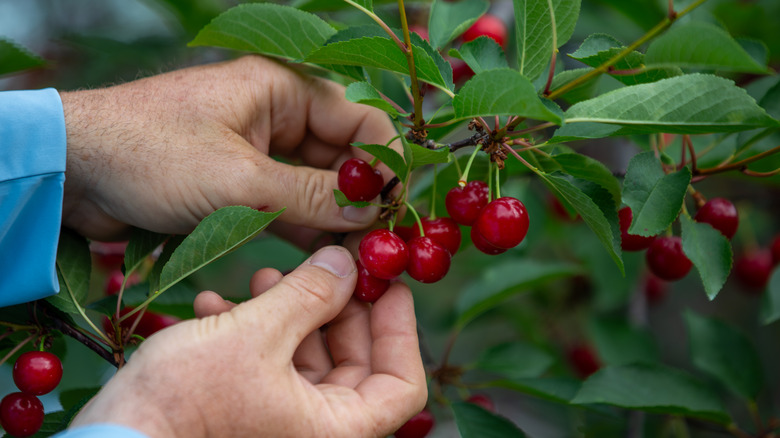
Cherries are often associated with summer drinks and treats, and for good reason. Cherry tree (Prunus) varieties thrive in warm climates with all four seasons. Fruiting depends on accumulating enough cold winter hours to break dormancy, followed by a warm enough growing season for blossoms to form and fruit to ripen. If you live in a colder climate, however, you can still grow cherries in your garden. While cherry trees are suited to temperate climates with longer growing seasons, cherry bushes are often the better choice for cold climates.
Cherry bushes, like Nanking cherry (Prunus tomentosa), are cold hardy all the way down to zones 2 to 3. Their smaller stature, hardy nature, and early fruiting make them more resilient and manageable when winters are long and growing seasons short. These shrubs are much smaller, reaching only 4 to 10 feet tall, meaning they fit perfectly in a small garden and stand up to harsh winter winds. Nanking cherries produce refreshingly tart fruit from July to August.
How to grow and care for Nanking cherry bushes
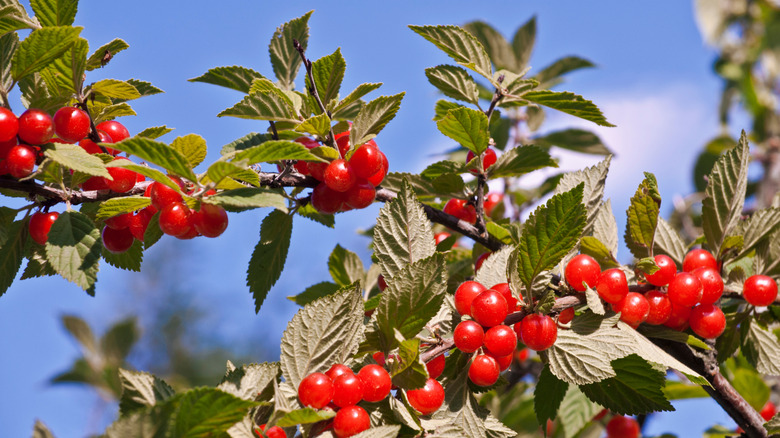
To grow cherry bushes, like Nanking cherries, first pick a sunny, well-drained spot with 4 to 5 feet of space to grow. Cold-hardy Nanking cherry bushes thrive in full sunlight, about 6 to 8 hours daily. They also do best in loamy or sandy, slightly acidic to neutral soil. A pH level of around 6 to 7.5 is ideal. After planting, thoroughly water your new plant to settle the soil around the roots. In the first year, keep the soil consistently moist but not waterlogged. You can also add light layer of mulch to help retain moisture, suppress weeds, and moderate soil temperature.
Once they're established, cherry bushes are relatively drought-tolerant, though they'll still need occasional watering during prolonged dry periods. Cherry bushes are also relatively low-maintenance perennials and hardly need any attention. Light pruning in late winter to early spring helps maintain their shape. Avoid heavy pruning, which can reduce fruit production. Instead, stick to pruning dead and crossing branches. It's not required, but adding compost or well-rotted manure at planting can help build soil fertility and increase fruit yield.