

Gas Fireplace Won't Turn On? It Could Be Your Pilot Light, And Here's How To Fix It
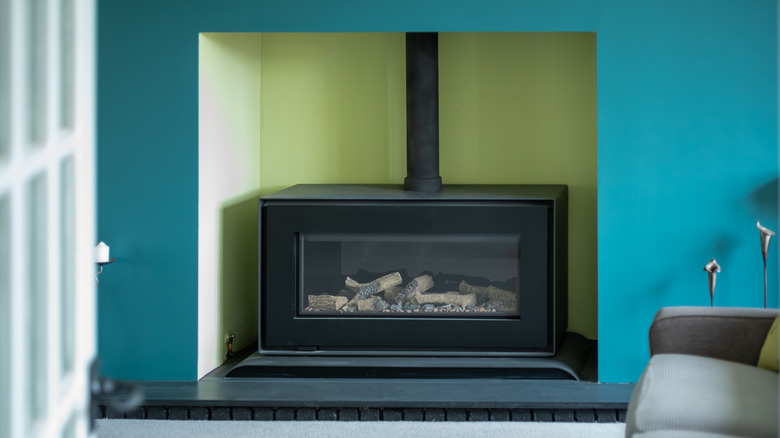
A gas fireplace that suddenly refuses to light can derail plans for a cozy experience, turning what should be as easy as pushing a button into an unexpected troubleshooting moment. According to Tyler Cooper, Virtual Handyperson Expert at American Home Shield, it's probably your pilot light. In an exclusive interview with House Digest, Cooper shared some key information about gas fireplace pilot lights and several tips for how to fix yours when it goes out.
It helps to understand exactly how this key part of a gas fireplace functions. According to Cooper, "A pilot light works by providing an ignition source – like a flame or spark which is used to ignite the main burner of a system." He explained that standing pilots use a small amount of gas to constantly ignite a burner when your gas fireplace thermostat is turned up. "These are normally equipped with a thermocouple, which is a safety device that senses the pilot's heat," the expert said. "If the pilot goes out, or if the thermocouple sensor is dirty or faulty, it will automatically shut off gas supply from the main valve to prevent any hazardous buildup of gas inside the firebox."
Your exact pilot light system will vary depending on the age of your gas fireplace. Cooper explained that older models don't require external power but are less energy efficient since they constantly burn gas even when the fireplace isn't in use. Meanwhile, modern models rely on an electronic ignition source that creates a spark only when the thermostat is turned on, a more energy efficient solution that also reduces gas consumption.
Understanding pilot lights in today's fireplaces
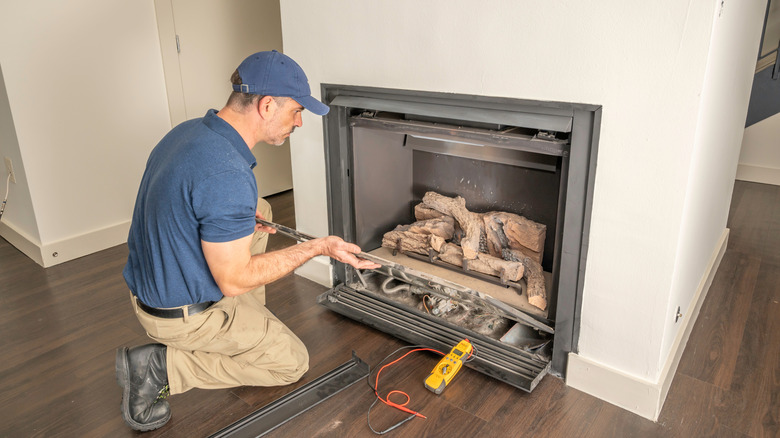
"Between the 1920s and 1980s, standing pilot systems became the standard feature in gas furnaces and other appliances," Tyler Cooper told House Digest during his exclusive interview. "Between 1980 and 2000, standing pilots started to be phased out." The expert attributed this to stricter regulations that pushed standing pilots out of favor due to their inefficiency, paving the way for electrically-triggered intermittent pilot ignition (IPI) systems that became the new standard for most appliances. In other words, you won't just find IPIs on modern gas fireplaces. You'll also find them on newer furnaces and stoves.
According to Cooper, there are several reasons your gas pilot light may go out. "The most common faults associated with a standing pilot light include a faulty or dirty thermocouple, a dirty or clogged pilot tube, pilot hood and/or pilot orifice, low or no gas supply, [or] issues with the control knob or the valve itself." The expert shared several pointers for how to troubleshoot a faulty pilot light, but he emphasized that you must prioritize safety first. "As a homeowner, you can diagnose, clean, light or repair your own pilot light if you have the right tools and are comfortable doing so," Cooper said. But he added that "if you are uncomfortable or are unsure of the issue or how to fix it, it is best to call a professional." Before attempting any repair, turn your gas fireplace knob to the "off" position, and make sure the area is well ventilated. If you smell gas, open the windows, leave the area, and call a technician for help.
Troubleshooting your gas fireplace pilot light
"If the pilot won't light at all, the reason why can normally be narrowed down to a gas supply issue," Tyler Cooper explained during his exclusive exchange with House Digest. If you're able to eliminate that possibility, the expert suggested checking to see if the pilot hood, orifice, or tube are clogged with soot. "You can clean the pilot hood with a vacuum cleaner to remove debris, and/or compressed air to help dislodge stubborn clogs," he added.
If you're able to light a fire successfully, but it goes out just as you're getting comfy on the couch, you're probably looking at a different issue. "When a pilot light won't stay lit, it often indicates a dirty, faulty, or poorly positioned thermocouple," Cooper said. If it's off even just a little, the sensor won't function correctly. "You can clean the thermocouple with a soft bristle brush or fine grit sandpaper." But, he cautioned, if cleaning doesn't it fix the problem, the thermocouple may need to be replaced.
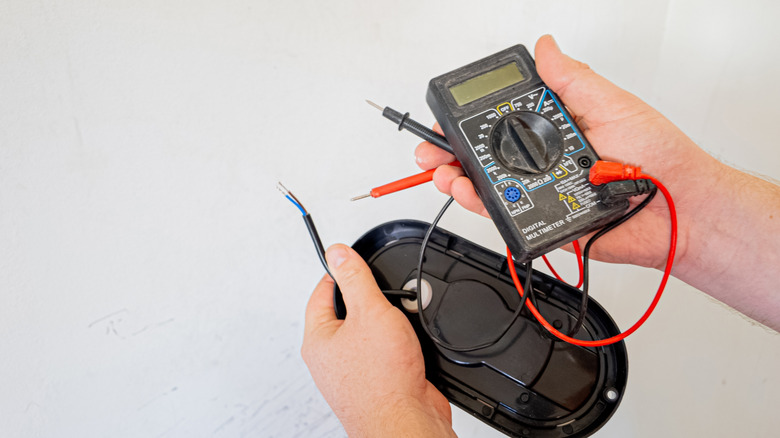
Cooper suggested a tool even beginners can master to determine if a thermocouple is good: a multimeter. "[This] small electronic instrument that measures electrical properties, including voltage, current, and resistance, is a quick and simple way to check what the problem is." First, set it to ohms. "Touch the probes to each of the thermocouples' two wires. Low resistance readings, around 5 ohms, indicate continuity." Then, switch to millivolts (mV). "Heat the tip of the thermocouple with a flame and check for a millivolt reading ... If the thermocouple is good, it will produce a measurable millivolt reading typically around 25mV or higher."