

The Forgotten Kitchen Liquid That Makes Shoveling Snow So Much Easier
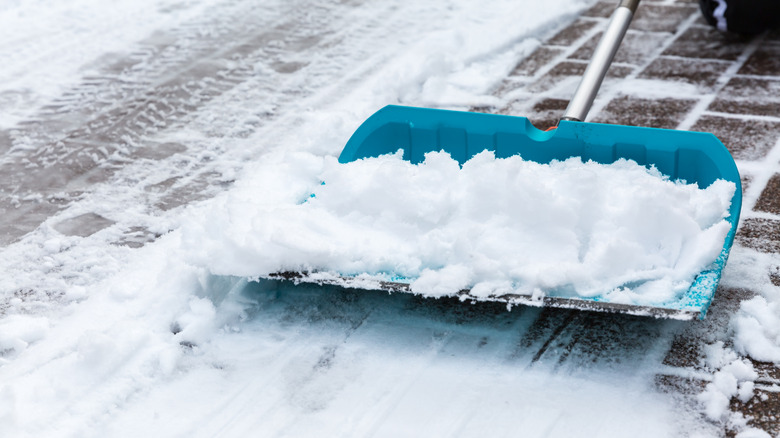
A surprise snowstorm is a treat for many folks. Schools close, it's the perfect excuse to work from home, and it's a great opportunity to dust off your cross-country skis. But you know what happens when you don't shovel the driveway after a heavy snow — it could cause damage to the finish. Plus, the front walk will need to be cleared so the letter carrier can have a navigable and safe path to deliver your mail and parcels. This means that your joy quickly turns to gloominess as you remember the ordeal that shoveling heavy, wet snow is. The shovel gets cold, and snow starts to clump on the surface. No matter how hard you bang the shovel against the ground, the frozen white stuff refuses to release its grip on the cold metal. Before you layer up and pull on your winter boots, grab that forgotten can of cooking spray from the kitchen shelf and spray the shovel's blade.
While there are commercial products on the market designed specifically for keeping snow from sticking to a shovel, they're generally more expensive than the can of generic, unflavored, non-stick cooking spray you keep in the pantry. The spray acts as a lubricant that prevents the snow from sticking, making shoveling snow so much easier. It works better on a cold surface, so put your shovel outside for a few minutes before spraying it. It doesn't take a lot — a thin, even coating will do. If the snow starts sticking after you've been working for a while, spray the blade again, and always remember to spray the shovel before each use.
Staying safe while you're shoveling snow
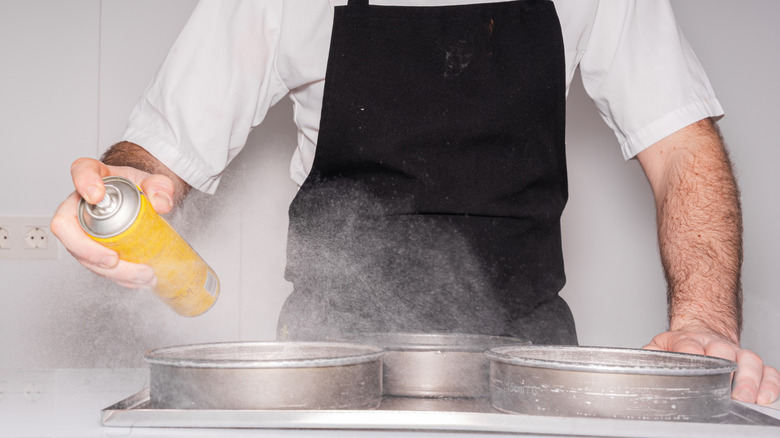
Shoveling snow is great exercise — you burn about 530 calories in an hour working most of the muscles in your body, but it's important to do it properly. About 11,500 people visit the emergency room with snow shoveling injuries every year, and 100 die. Using cooking spray helps keep the weight of the shovel down and reduces the amount of time you have to spend on the job because you won't have to stop constantly to try and bang the snow off it. But using it in combination with other safe practices helps prevent injuries and reduce muscle strain.
Lifting with your legs rather than your back is important advice, but wearing boots with a good tread, or even wearing microspikes, prevents slipping. Know when it's time to take a break. If you can't have a conversation because you're out of breath, you're working too hard. Choosing the perfect snow shovel also makes the job even easier. The best shovel is sturdy, lightweight, and ergonomic. Select a plastic or metal snow shovel with about an 18-inch blade; if the blade is too wide, the snow will be too heavy. Too narrow, and it won't pick up enough snow to work efficiently. With these tips, your snow shoveling can be done in no time, and you can go back to the warmth of your cozy home.