

11 Old-School Laundry Room Items Nobody Uses Anymore
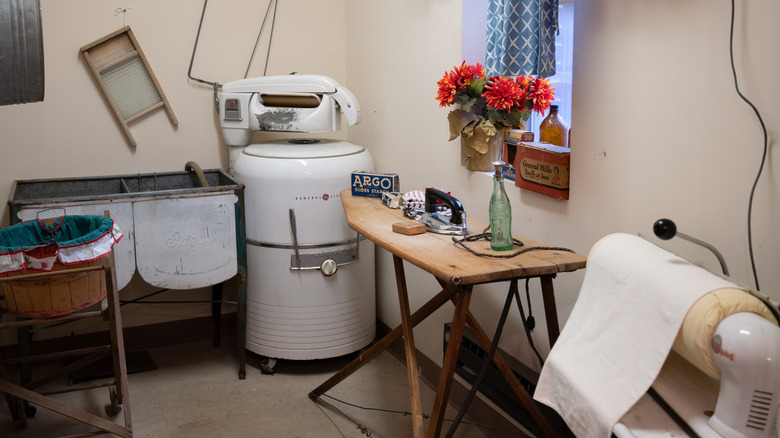
Doing laundry has to be one of the most annoying tasks you have to do as an adult. It feels like just when you get a load finished, there's another waiting in the dirty laundry basket. And you absolutely deserve adulting bonus points if you manage to wash, dry, fold, and put away a load of laundry in the same day. But to be fair, we have it easy these days compared to our grandparents and great-grandparents. You can't say you haven't considered buying an all-in-one washer-dryer machines just to make your life easier. Meanwhile, grandma was over there risking literal life and limb with a machine called a "mangler" to get her family's clothes clean. Thanks to many advancements in technology, there are quite a few old-school items we no longer use to get our clothes clean — thank goodness.
The process of doing laundry, before the invention of the electric washers and dryers we have today, was extremely time consuming and laborious. It involved a multi-step process that could actually take days to complete. Oftentimes, there was a specific day during the week the household would designate "wash day" and wash everything all at once. Before the Industrial Revolution, people would just go down to the river to wash their clothes. Thankfully, laundry tool innovation took off in the 1800s and has just gotten better since. The first washing machine was actually invented in the mid-1800s, but many households couldn't afford it so they stuck with the tools on our list.
Washtub
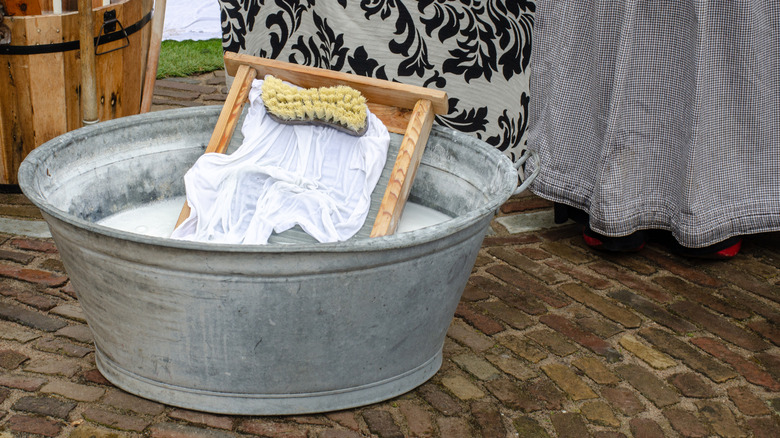
Washtubs were the main item you needed if you planned on getting any laundry done. Ideally, you would have two: One for washing and one for rinsing. Early versions of washtubs were usually wooden, but over time metal washtubs became more popular because they were less prone to damage and were lighter in weight. Many people today like to collect old washtubs, not to use necessarily, but to get a vintage farmhouse feel in their home.
Wood and glass/metal washboard
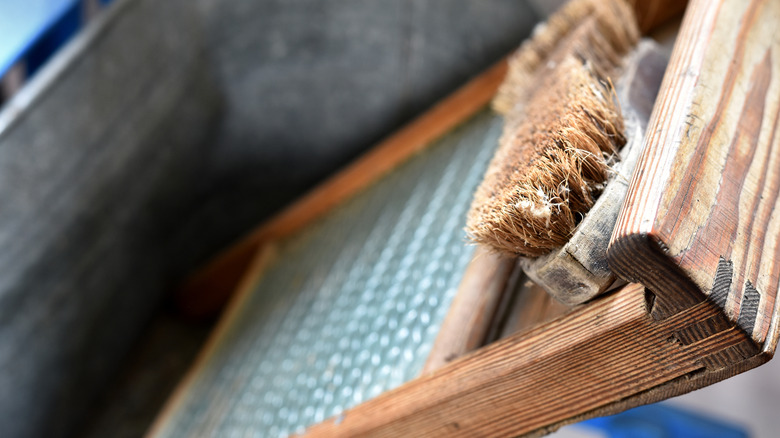
Washboards were an invention that revolutionized wash day. They were made of metal or glass with a wooden frame and were much more convenient than scrubbing on a rock near a river. You could have your washboard in your tub at the right height and it wasn't nearly as backbreaking to get your clothes really clean. And as crazy as it sounds, you might consider using a laundry washboard in this digital age to wash your delicates.
Laundry bluing
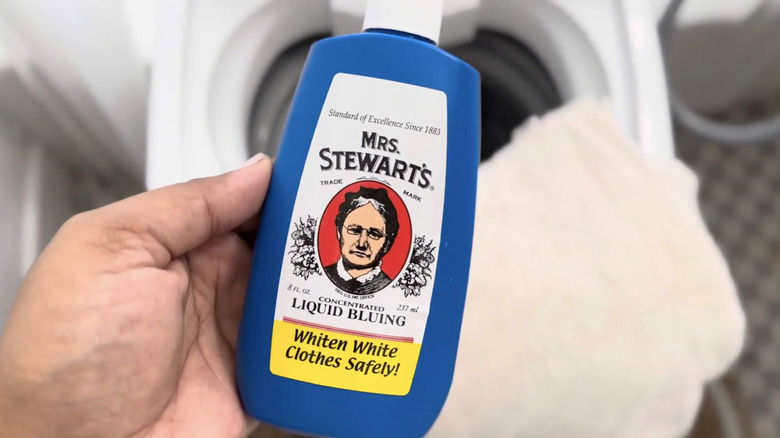
Before bleach, there was laundry bluing. During the late 1800s, people needed a way to make their clothes appear white and bright. The most common issue with white clothing of the time was that as it aged or was worn, it would turn yellow. Anyone who knows color theory, knows why people would add a touch of blue dye to their wash. You see, blue is a complementary color to yellow and it would make white clothes appear more white. Bluing still exists today, but bleach became popular by the early 1900s and most people made the switch.
Lye soap
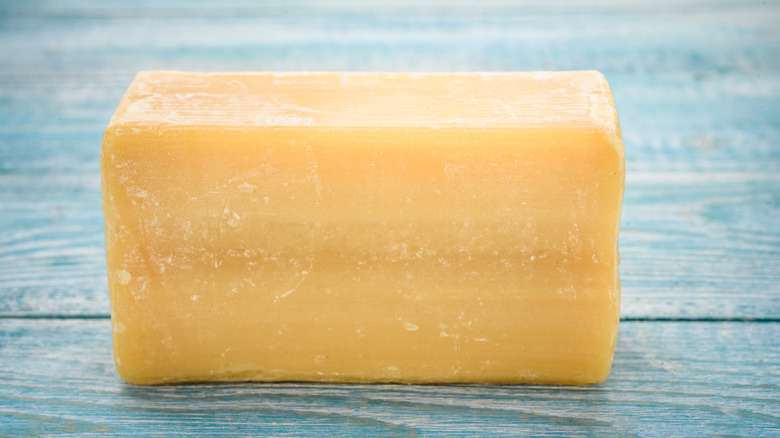
Thankfully, the caustic lye soaps people used to wash their clothes with were replaced by synthetic laundry detergent in the late 1940s. Unlike the handmade soaps of today, lye soap back then was extremely harsh and could cause severe skin irritation. It's bad enough you had to perform a serious workout to get your clothes clean, but you were also risking dermatitis. It's no wonder homemakers of the 1940s tossed their bars for Tide.
Laundry wringer/mangle
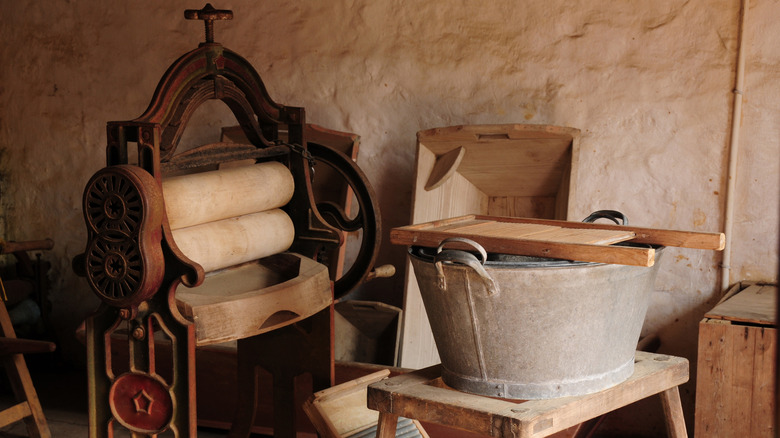
With a name like "mangle", it's a wonder anyone wanted to even try this washing contraption. Although there are some horror stories involving the use of a laundry wringer/mangle, they were extremely helpful when it came to washing day. Not only did they cut down on drying time because they were extremely good at wringing out your clothes, but surprisingly they were gentler on delicate fabrics than hand wringing. Anything that prevented you from having to repair or buy new clothing in the 1800s was a good thing.
Wooden clothespins without springs
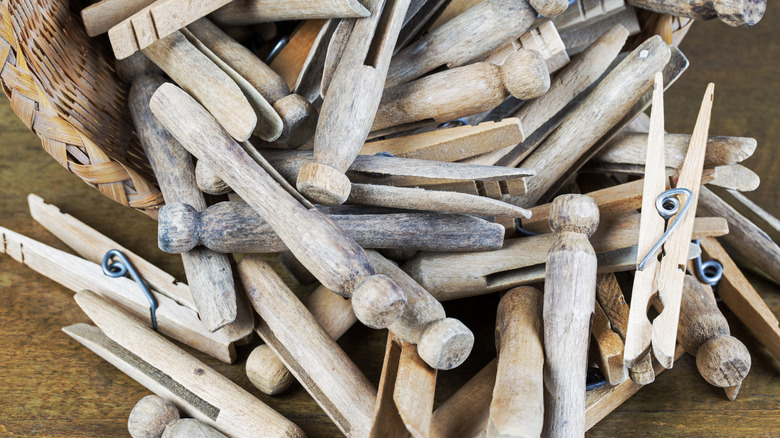
Although you can still find wooden clothespins today, it is rare to find people using the type of wooden clothespins without the metal spring, and most use the modern plastic version. These little items were vital for laundry day, keeping freshly-washed linens secure on the clothesline to dry. And they can even be repurposed as there are many amazing ways you could be using clothespins in your home and garden besides laundry-related tasks.
Laundry paddle
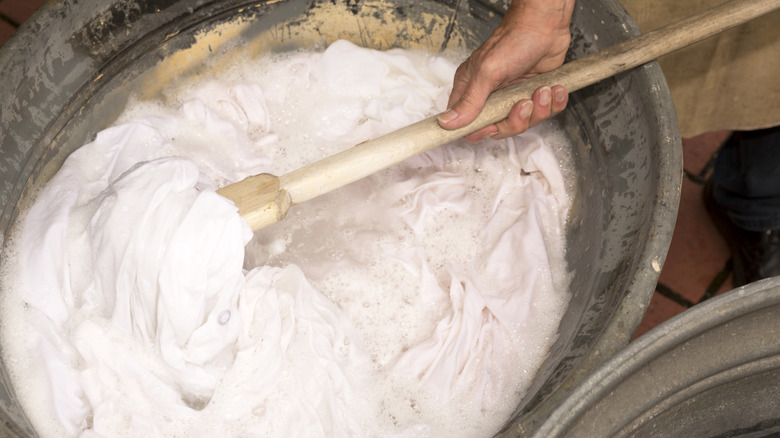
If you're not washing your clothes in a washtub, it is very unlikely you will need a laundry paddle. Exactly as the name implies, the laundry paddle was a wooden paddle-shaped device that was used to agitate your laundry in the washtub to loosen dirt. It was the old-school version of your washing machine's agitator. Stirring your dirty clothes in the hot soapy water with a laundry paddle was similar to using a washboard.
Sad iron and charcoal iron
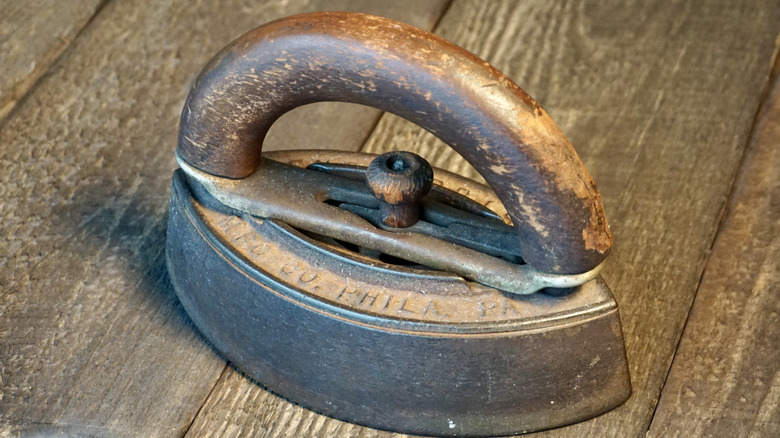
You might have been sad if you had to iron your clothes with one of these, but the truth is the name derives from the Old English word for "solid". There were two main types of irons that were used prior to the electric iron: The sad iron or the hollow charcoal iron. The one pictured here was actually invented by a young American woman named Mary Florence Potts in 1871. She improved the common sad iron design by adding a removable wooden handle, which prevented many a burn and made it possible to heat multiple irons at once.
Sock stretchers
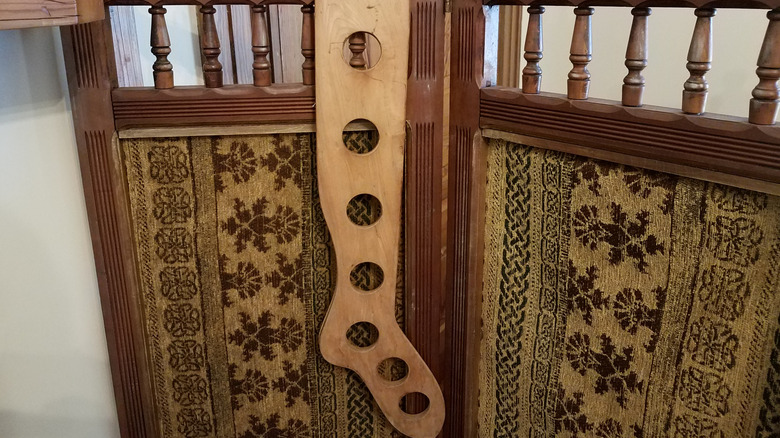
Sock stretchers were important to have around if your family wore wool socks. After washing, wool socks can shrink or lose their shape if allowed to dry without shaping. A sock stretcher was the solution to this issue. Using one of these handy items would ensure your socks kept their shape so they wouldn't have to be passed down to the youngest child in the family instead. They were a staple in 19th-century homes until the rise of socks made of synthetic materials.
Washing dolly/laundry plunger
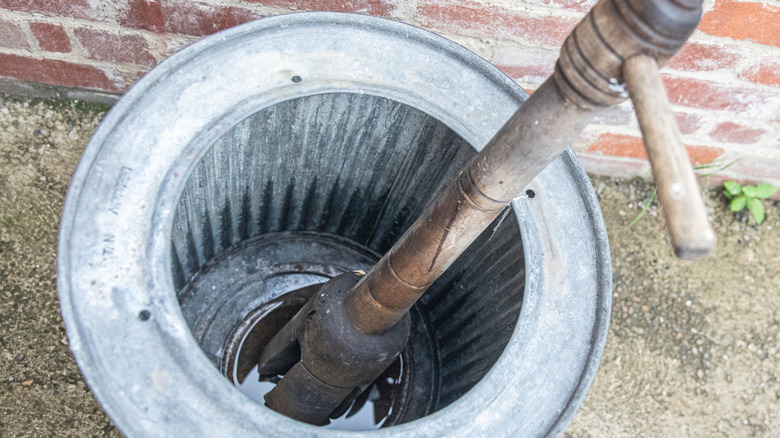
A washing dolly performed the same task as a laundry paddle, only its design was more efficient. Instead of just stirring the clothes around in a washtub, the washing dolly was designed to push water through the fibers of the clothing. Some washing dollies were designed with a metal plunger that created suction to more effectively clean your clothes.
Tin boiler/ wash copper
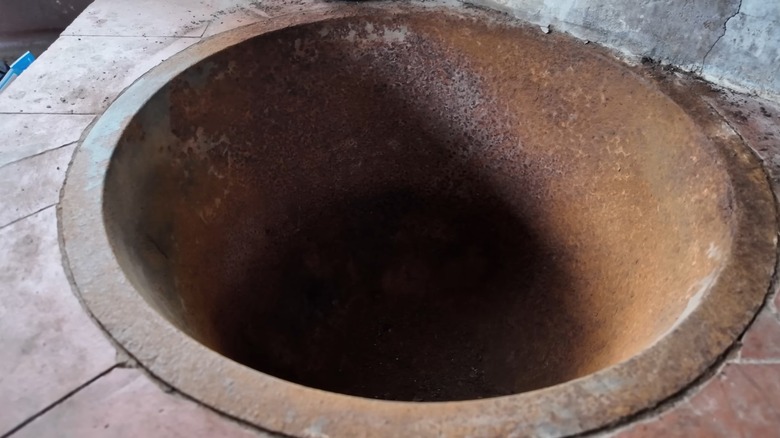
The tin boiler or wash copper, was used to boil water and laundry soap for washing linens or sturdy cotton clothing. It was a great way to sanitize clothing and bedding. The tin boiler was heated by fire before gas or electric boilers were introduced. Thankfully, with the advent of the modern-day washing machine, this step in the arduous laundry day was eliminated. No wonder it took all week to get the household's laundry done!