

Stop Using Plastic Shower Curtain Liners - This Is The Cleaner Alternative To Try
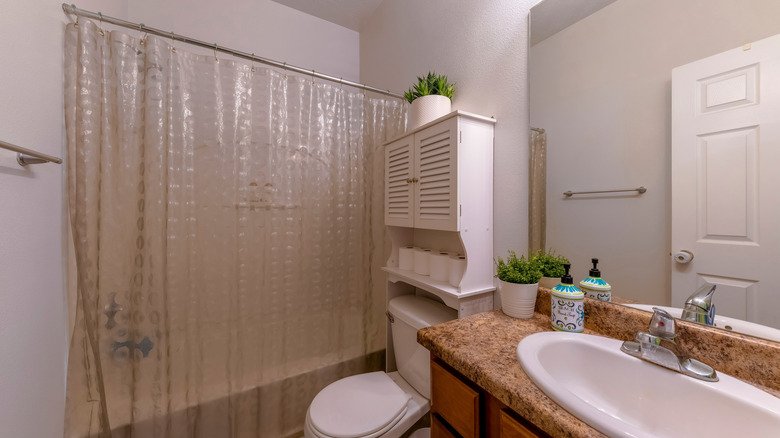
Shower curtain liners are essential for keeping water inside your tub and protecting floors from damage, as well as extending the life of your decorative shower curtain. They are one of those necessary, and sometimes frustrating items, that can make a person feel lost when searching for the perfect one. While shower liners add so much functionality to your bathroom, they are also a prime spot for mold and mildew to form — especially in a bathroom with minimal ventilation. Plastic shower curtain liners are a popular and affordable option for many homeowners because they are naturally waterproof. But they also come with a list of noteworthy concerns. Not only does mold and mildew buildup on plastic shower curtains, but they are also often filled with toxic chemicals that impact your home's air quality and your overall well-being. So if you are trying to make your home more eco-friendly, it might be time to switch to linen shower liners, a much cleaner alternative to plastic.
Plastic shower liners are often made of polyvinyl chloride (PVC) and phthalates, materials that are chosen for their durability, even though they are linked to indoor air pollution and often have additional toxic chemicals added into them, like lead and mercury. These chemicals can easily be released from shower curtains when exposed to high levels of heat and humidity, potentially leading to respiratory issues, as well as other hormonal, developmental, and reproductive problems. On top of the myriad of health concerns, they are not very friendly to the environment since most people throw them out and buy a new one once mold and mildew form.
Benefits of linen curtain liners
Opting for a shower liner made of a natural material like linen helps create a cleaner home. Even though it might seem a little odd to use a type of fabric material to trap water in your tub or shower, linen liners can be effective with a little waterproofing and offer many benefits that make them worth the extra work. Linen liners have natural anti-fungal properties, as well as being reusable and much more sustainable than plastic and other alternatives. While they are not naturally waterproof or water resistant, they are made from flax plant fibers that are woven tightly together to create a material that is highly absorbent and quick drying. They are good at preventing water from splashing all over your bathroom floor, especially if you purchase a good-quality one.
Linen curtain liners still need to be maintained and cared for, but are much easier to clean than plastic liners. They should be washed regularly to stop mold from returning in your shower. However, since linen liners are machine washable, they are easily thrown in with your laundry. They should be washed weekly in warm water to slow the buildup of harmful bacteria and hung dry to avoid shrinkage. Make sure to stay away from harsh chemicals like bleach and extreme heat to avoid damaging the liner. And because they don't need to be thrown out as often as plastic liners, they are ultimately a more practical purchase — creating less of an impact on the environment and costing less money in the long run.