

The Downsides Of Window Air Conditioners You'll Wish You Knew About Sooner
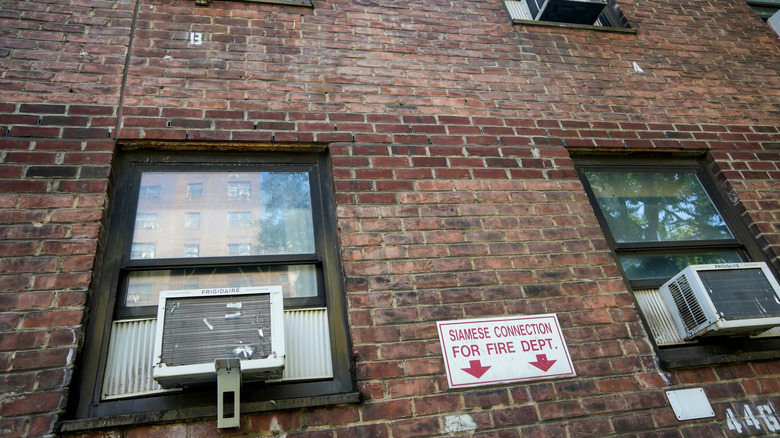
Sweating out the summer months without an air conditioner is no fun in many areas. Some climates, including areas in Alaska, Washington, and Montana, stay cool enough in the summer that air conditioning is more of a luxury than a necessity. But most states get hot and humid enough that AC is not only a comfort issue but a health and safety concern. There are ways to stay cool without AC, but heat waves can quickly cause heat-related health issues. While there are several types of air conditioning, a window AC is an easy solution to keep cool, especially if your home doesn't have a central cooling system. However, these cooling units also have many shortcomings that could affect your health, comfort, and budget.
For one thing, a clunky, noisy appliance sticking out of a window isn't the most attractive sight, indoors or outdoors. But beyond aesthetics, a window unit can't handle your entire home's cooling needs, and it often won't do a great job even in one room. Wrestling with a heavy AC unit every year can lead to installation issues, and the appliance limits your window usage while it is in place. You could end up spending more money between the cost of the unit and the energy to run it. Plus, this type of air conditioning can affect air quality and home security. Learning about these drawbacks before you buy a window AC unit helps you decide if it's right for you. We'll also offer some suggestions to minimize those disadvantages if a window unit is the only option.
A window air conditioner can't cool your whole home

A central AC system pushes cooled air throughout your home via the ductwork that runs through the walls and ceilings. But a window AC is only meant to cool the room that it's installed in — the cooled air comes out of the vents on the unit, so it can only go so far. It helps if you know how to choose the right-sized window AC for your space, but you still won't find a single unit that will cool a multi-room home. You can find small units designed to cool 150 to 350 square feet and much larger units that handle 1,050 to 1,600 square feet. But don't let those numbers fool you — even the largest units are still only made to cool one room, so the air won't circulate through multiple spaces, even if your home is under the max square footage.
If you're trying to cool an entire home with a window AC, you'll need separate units for each room. That can put a strain on your electrical system, and the costs add up for both buying the units and powering them throughout the summer. However, a window AC might be a good option for a small studio apartment or tiny home that's mostly open. It's also effective as a supplemental cooling device for an addition, shed, or garage that's not connected to your ductwork. Whatever you do, avoid the temptation to buy a larger window unit than needed for the room you're putting it in — you'll likely deal with short-cycling, high humidity, and excess wear on the equipment.
Inconsistent cooling and poor air circulation

Say you understand the limitations and choose a perfectly sized window unit for your room. You should be cool and comfortable all summer, right? Not necessarily. Even more powerful units aren't great at circulating the air. All of the cooled air is coming out of one point, which means your room will be the coldest near the appliance and likely much warmer in other corners of the room. Depending on how you have your furniture arranged, the seating areas could still feel stuffy and hot. Meanwhile, people sitting next to the AC might feel too cold. The cooling airflow can be limited even more if you have a clogged filter.
To help the window AC circulate air better, avoid placing furniture in front of it, as those pieces could restrict the flow from the appliance. Using a ceiling fan or floor fan to circulate the cooled air can also help create more temperature consistency throughout the room. Cleaning the coils and filter regularly helps prevent clogs that will slow the airflow. You may also need to straighten the metal fins on the unit occasionally to improve efficiency.
Lower energy efficiency than central AC

A window air conditioner is much smaller than a whole-house central cooling system, so it stands to reason that it takes less electricity to run a single window unit. After all, the window AC is only cooling one room, whereas central air cools the entire house. But when you look at how efficiently each type uses the energy it pulls, central AC is the winner. So while a single window model might not increase your utility bill too much, if you install one in every room, you'll likely pay a lot more for electricity than you would if you had a whole-house system. For example, central AC typically costs between $30 and $270 per month, according to HomeGuide. A single window unit can cost you $20 to $55 per month, so if you have multiples, you can see how quickly those costs would add up.
Making a window air conditioner as efficient as possible starts with the model you choose — one of the mistakes everyone makes when buying an AC unit is forgetting to look at the energy-efficiency information. Opt for an efficient model that fits your room size well. You'll spend more money to run an appliance that's too large or too small for the space. Location also matters — when possible, place your AC in a shady window at least 20 inches away from any structures that could block airflow. Part of what makes a window unit less efficient is the draftiness, so make sure you seal well around the unit. Keeping the unit clean, from the coils to the filter, also helps it work more efficiently because it doesn't have to try to push past the dirt.
Installation can be difficult and dangerous
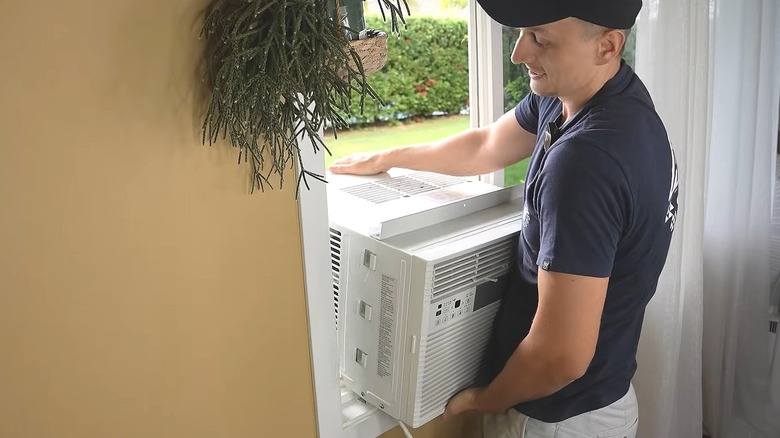
On average, a window air conditioner will weigh anywhere from 40 to 130 pounds. Units on the lower end might not sound that bad, but keep in mind that you have to not only lift that weight but also properly position and anchor it in the window. Even with someone to help, the bulky design makes the appliance awkward to maneuver and could result in injuries or damage if you can't handle it well. The next concern is proper installation — without it, the heavy appliance might not be secure and could fall out of the window, potentially causing damage or injuries. Or, you could cause damage to the window frame or water damage to the exterior of your home.
Being aware of the do's and don'ts of installing a window AC unit can simplify the process and make the installation more secure. That starts with understanding the proper way to secure the unit, which could vary based on the type of window and set-up of your space — you may need to install brackets as a support system. Always have at least one other person helping, but don't let anyone stand underneath the unit outdoors while you're installing it in case it falls. If you're concerned about installing the appliance yourself, hire someone to handle the work for you.
Unattractive appearance, inside and out
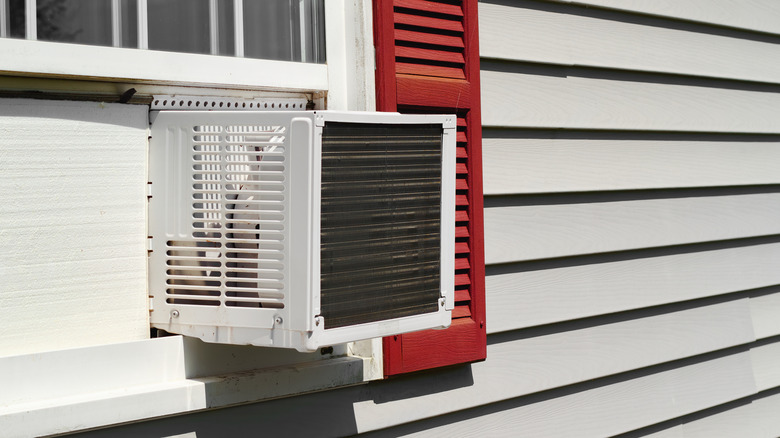
There's no getting around it: Most air conditioner units are unattractive. There are several creative ways to conceal an air conditioning unit outside when you have central air since the equipment is at ground level. Window units are often more noticeable because they're higher and hang out of a window. They can be even more of an eyesore if you have multiple air conditioners. You may also run into restrictions if you live in a condo or a community with an HOA — they sometimes prohibit window units completely or may specify what types of units you can use. Even indoors, the front panel of a window AC isn't exactly the design statement you want to make. With a central air unit, you just have the registers, which usually blend in with the floor or ceiling.
Before installing window AC units, make sure they're allowed in your neighborhood and check for any restrictions on what type of units are allowed and where you can place them. When possible, put the units in windows on the sides or back of your home so they're less noticeable from the street. You don't want to limit airflow to the window or block more sunlight in the area, so use caution if you're considering hiding the unit outdoors. Indoors, you could run into the same issue with airflow if you position curtains or furniture in front of the appliance. It's possible to close curtains over the unit when it's not in use or to build decorative doors that you can swing shut when you're not running the AC.
Nosier to operate than other AC options

You might notice a slight sound when a central air unit starts running, but it's relatively quiet, for the most part. Window air conditioners are a different story. Since the entire unit is in the room (or hanging just outside the window), you hear every noise a window AC makes — and it's usually not quiet. That can be a nuisance in areas where you regularly do activities, which is exactly where you want to install an AC to keep you cool. In your living room, you may have to adjust your TV's volume, and it could be difficult to hear conversations. For some people, the loud noise makes it difficult to sleep when the AC is in the bedroom.
If you're in the market for a new window air conditioner, search for quiet models with lower decibel ratings. You'll still hear the machine operate, but it won't roar quite as loudly as other models. If your AC sounds louder than normal or starts making new sounds, there could be an issue with the compressor, blower, or other components that need to be repaired. You might also try installing it in a window that's as far away from your activities as possible and run the appliance on the lowest setting that will still keep you cool, as higher settings are usually louder.
Potential security risks

The AC unit sits in an open window, often with little more than a flimsy extension to cover the rest of the opening. While there are ways to secure the window appliance, it's still often easy for experienced intruders to pop the AC out and enter your home, relatively unnoticed. A burglar might even snag the air conditioner, as well, when grabbing items from your home. As would-be intruders case the neighborhood, they might be particularly attracted to homes with window AC units on the main floor.
You might not be able to avoid it, but when possible, don't install window units on the ground level. Those windows are much easier to access anyway. It also helps to use installation brackets and to screw the air conditioner in place instead of just propping it in the window. To keep the window from opening any more, add side window locks or place a sturdy piece of wood in the window to stop it from moving.
Loss of window use while it's installed
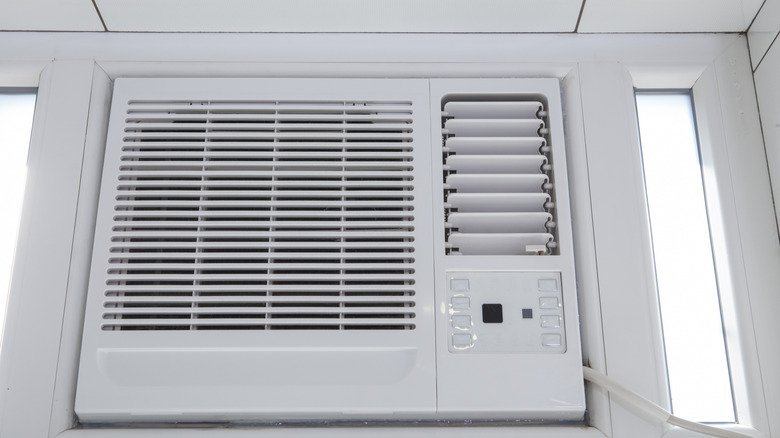
Window air conditioners are often installed for several months of the year, depending on the climate. During that time, you can't open your window for fresh air, and you miss out on a lot of bright sunlight in that area. Since you typically need a separate unit in every room, your entire home might feel a little darker, no matter how brightly the summer sun shines outside. The lack of window use can also be dangerous — it blocks a potential emergency exit, which gives you fewer ways to get out of the house in the case of a fire. That can be particularly dangerous in a bedroom with only one window.
When possible, limit the use of window air conditioners to spaces like sheds and garages where you don't spend a lot of time. In the main part of your home, you can open the blinds fully so that sunshine still enters through the top half of the window. It's also possible to add mirrors to amplify the light that does enter the room, and install more lamps to increase the supplemental lighting. To avoid creating a safety hazard, limit the use of window air conditioners to rooms that have at least two windows, so you don't block all alternative escape routes. Or, consider a wall air conditioner or ductless mini split in those spaces.
Air quality issues

Window AC units aren't great at cleaning the air, especially when compared to the filtering power of a central air unit. In fact, your AC unit might secretly be making you sick. A dirty filter won't be able to remove as much dust, pet dander, and other allergens from the air, which could cause them to circulate in your home. There's also the risk of mold and mildew developing inside a window unit — the humidity and organic materials within a window unit can create ideal growing conditions for mold spores. Mold in the unit could cause you to experience allergy-like symptoms.
You can clean a window AC unit without removing it to keep the risk of mold, mildew, and other buildup to a minimum. Clean the filter at least every month or two for the best indoor air quality when you use a window AC. It's also a good idea to inspect the filter more regularly — every two to four weeks — to look for any signs of mold or other issues.
Specific, dedicated power needs
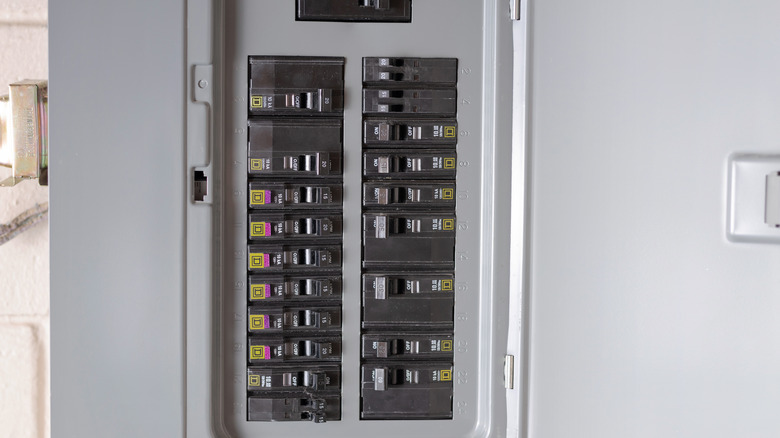
Window air conditioners usually don't require a special outlet — a standard 120-volt outlet is the norm. However, the unit still pulls a lot of electricity while it runs, which means you have to be careful about how you use it. Smaller window AC units might be able to share a circuit with other items, but larger ones often need a dedicated circuit to prevent issues like constant breaker tripping, overheating circuits, or electrical fires. The other issue is where to plug in the appliance. Is it safe to plug an air conditioner into a power strip or extension cord? No! The electrical load is often too much for anything other than an outlet to handle, so it could lead to melting, overheating, and fires.
To run your window air conditioner safely, you'll need to understand the circuits in your home and what's connected to each of them. Determining where you want to place your AC units helps you see if those nearby outlets are on dedicated circuits. If they're not, evaluate the load of other items on those circuits. If there's already a lot, even a small AC could be too much for the circuit to handle. You may need to hire an electrician to adjust the circuits in your home, so your AC can have its own.
Shorter lifespan than central AC

Consumers often lean toward window air conditioners because of the lower price tag. But the purchase price is only one part of the equation when it comes to the value you get from an AC system. You can expect a window unit to last eight to 10 years, while a central air unit typically runs for 15 years or more. The higher energy costs to run window air conditioners also add up over the years. While there are air conditioner brands to steer clear of, even the better brands have shorter lifespans than central AC systems. Not only are you spending money on new equipment more often, but you also have the hassle of shopping for a new window AC.
The way you treat your window AC often affects how long it lasts. Sizing it appropriately to the room and putting it in a window without direct sunlight are two easy ways to avoid overworking the AC. Cleaning the unit regularly and inspecting it for drainage issues and damage can help prolong its life. If possible, remove the unit for the winter to protect it from the elements.
Limitations on window compatibility

Almost every home has windows, so you might think that a window AC is always an option. But the appliances aren't compatible with every window. Standard window air conditioners work best in standard-sized, single- or double-hung windows. While there are ways to install an AC unit with a horizontal sliding window and other window types, it's easier when you have a traditional window. You could also run into issues with windows that have weak frames or areas where there are structures in the way. This can limit your options as far as where to put the unit (or if you can use a window unit at all).
If you have sliding or casement windows, look for taller, narrower units designed especially for those types of windows. They use particular fasteners and inserts to secure the appliance while blocking the rest of the window opening. If the window frame won't support an AC unit, you may need to have the frame reinforced or replaced.