

The Popular Herb You Should Avoid Planting Near Your Cucumbers
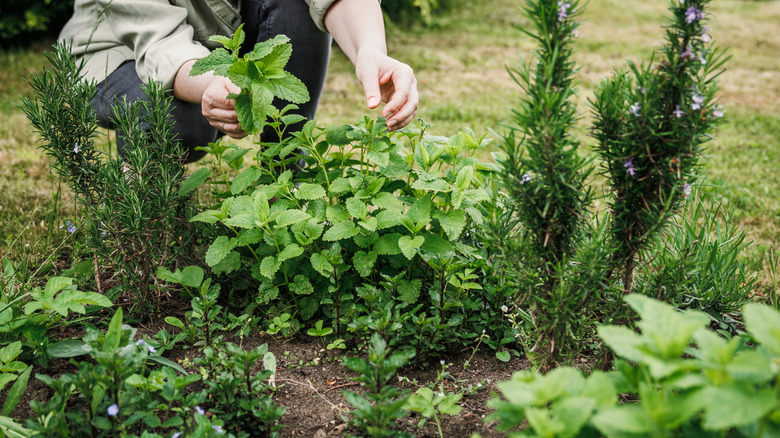
Rosemary is a garden favorite for good reason — it's hardy, low maintenance, and does well when planted beside vegetables and herbs such as cabbage, beans, carrots, peppers, oregano, and sage. But despite its versatility, rosemary does not get along well with every crop. In fact, rosemary is on particularly bad terms with one popular vining vegetable: cucumbers. Rosemary and cucumbers are on such bad terms they actually need to be kept away from each other, because when they share the same space, there are competition and growth issues between them.
To understand why certain plant pairings succeed while others struggle, like rosemary and cucumber, it helps to understand the core principles of companion planting. This is simply the practice of placing plants with beneficial relationships near each other while keeping plants known to interfere with each other's growth apart. This strategy offers a long list of benefits including suppressing weeds, attracting helpful insects, repelling harmful insects, shading smaller crops, and improving soil health by diversifying root structures.
Cucumbers require consistently moist, nutrient-rich, organic matter heavy soil to thrive. In contrast, rosemary prefers dry conditions and is highly drought tolerant once established. It prefers alkaline soil, common in arid climates, but you can easily help your rosemary plants thrive with one simple addition to the soil if your garden is more acidic.
Why rosemary and cucumbers don't get along
Planting cucumber and rosemary together forces them into direct competition; cucumber roots pull large amounts of water from the soil, while rosemary suffers if its roots remain too wet for too long. Other crops cucumbers do not get along with are Irish potatoes and aromatic herbs, of which rosemary is one. Together, these opposing needs make their pairing a recipe for stress on both plants.
It's easy to understand why rosemary is one of the most popular additions to home gardens. Beyond its numerous culinary uses — which can be bolstered with these tips for how and when to harvest rosemary for the best flavor — it offers a variety of medicinal and aromatic benefits, including circulation improvement, stress reduction, and natural antibacterial properties. You might even use it for an ancient rosemary practice that can keep your house calm, clean, and free of insects. When it comes to companion plants, rosemary thrives next to a large variety of vegetables and herbs — brassicas like cabbage, broccoli, and kale, beans, alliums, and Mediterranean herbs like oregano, marjoram, and lavender.
Just as important as knowing which plants benefit from rosemary is knowing which plants don't. Cucumbers, along with beans, corn, and squash, require the most water of any vegetable, and so they simply aren't a match for drought-resistant rosemary. Excess moisture around rosemary's roots can stunt growth or even kill the plant, while aromatic competition may hinder your cucumbers as well. Instead, plant cucumbers next to beans, corn, radishes, and chives.