

12 Fast-Growing Evergreens You'll Want To Think Twice About Before Growing
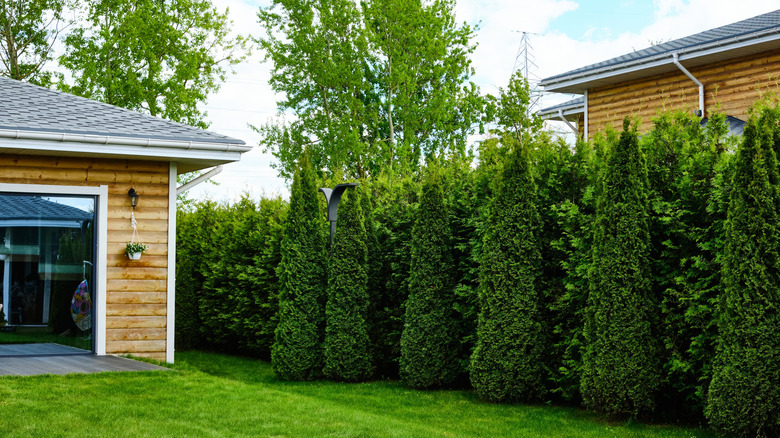
Fast-growing evergreens are great for creating natural privacy and giving you year-round color. However, some are invasive and others have a messy growth habit that needs constant attention. Then there are those that grow so big they can quickly overwhelm a typical suburban lot. Those with deep, vigorous roots are notoriously difficult to remove. Once an evergreen reaches 15 or 20 feet high, it can block light and take up a huge amount of yard space.
Non-native species can crowd out native plants. Some aren't compatible as habitat for native wildlife, and others become a significant water and nutrient drain. As a master gardener who specializes in permaculture, and I cringe when I see some of these plants in residential yards. I always recommend choosing specimens native to your area. It's also essential that you check that the trees you want fit your space when they're mature and are not considered invasive in your region.
Privet (Ligustrum spp.) is a fast-growing invasive
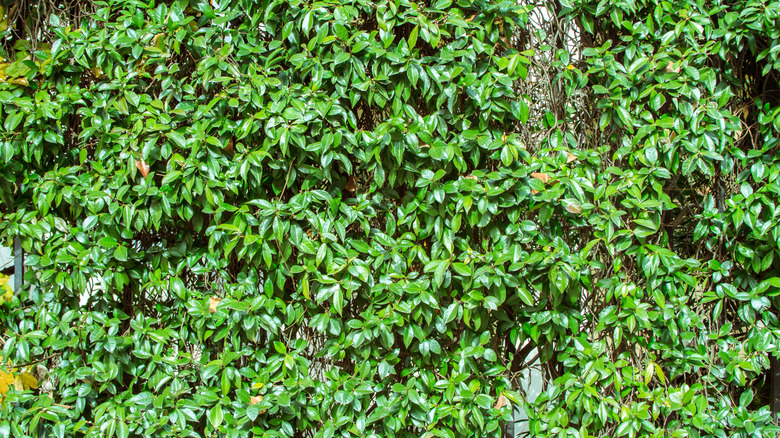
Privets of all types, including Chinese, Japanese, and glossy are all problematic. They quickly form solid walls of foliage. Chinese privet (Ligustrum sinense), for example, as well as many other related species, are considered invasive across much of the eastern and southern U.S., and are among the invasive privacy plants you want to avoid. They're notorious for creating near-monoculture thickets in forests and flood plains. They also encroach on public rights of way.
Because they form such dense thickets and grow so quickly, privets shade, smother, and choke out native wildflowers, trees, and shrubs. This reduces plant diversity, and therefore food and habitat availability for native wildlife. Because they produce berries, they do provide food for some species; however, this just exacerbates the invasive issue, as the animals that eat the berries spread the seed in their droppings. Some types of privet also spread by suckering, and can be so prolific that they'll even produce suckers from cut stumps.
If you've got privet in your yard, keep on top of it. Prune it regularly to keep it at a manageable height and to stop it creeping outward, as minimizing the spread is of top importance. If it gets into other areas of your yard or beyond your yard, it's really difficult to remove, even with herbicides. There are better alternatives to privets, like American holly or native inkberry.
Running bamboos (Phyllostachys spp.) create an evergreen wall that won't stay put
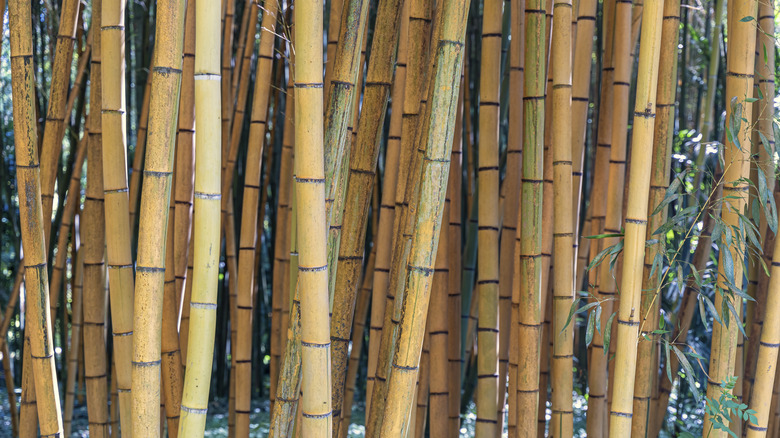
My neighbor planted running bamboos along a shared boundary and I wanted to scream. Running bamboos should never be planted for privacy, or for any other reason outside of their native habitat, in my opinion. They just cannot be controlled — even if, like my stubborn neighbor, you swear you'll keep them contained with a barrier underground. They'll escape. And spread. And cause you and the wider environment problems for decades. Yes, those dense stands of bamboo forests look attractive and give you privacy, but they're a menace.
The clue is right in the name. Some species, like golden bamboo (Phyllostachys aurea) put out long, leptomorphic rhizomes. These are long, thin, tough underground roots that "run" horizontally and, in the case of golden bamboo and several other types, can grow up to 15 feet in a year. And at regular intervals along the rhizome, new culms (bamboo stems) shoot up or, sometimes, instead of a new stem, you get a new rhizome that takes off in a whole new direction. And so it spreads incredibly fast.
It's almost impossible to control once it escapes confinement. Even deep containment barriers often don't work. The rhizomes simply jump over, tunnel under, or push right through. They'll go under fences, paving slabs, and lawns. And they'll pop up anywhere, including in carefully cultivated beds. They're also strong enough to heave even the best-laid patio slabs. (Ask me how I know.)
Removing it is ridiculously difficult. If you leave even one fragment of rhizome in the ground, it'll grow again. You'll be digging these out for years. And because the root systems are so extensive, even most chemical methods aren't effective, or take multiple applications over multiple years to work. And I am a natural gardener, so I never recommend chemicals anyway, unless there's absolutely no other option.
If you are set on the look of bamboo, please go with a clumping variety — like something in the Fargesia family — and even then, keep it contained, as it'll still slowly spread. Tall, hardy, clumping ornamental grasses are a better option, in my opinion. They're easier to control and still provide screening when planted correctly.
English ivy (Hedera helix) is a fast-growing evergreen climber
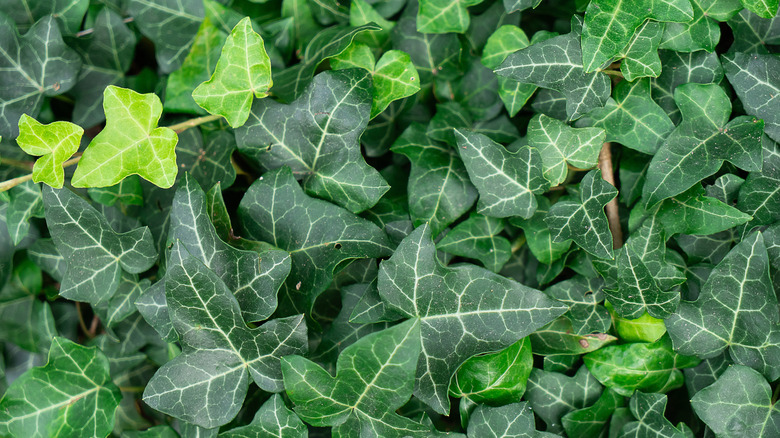
English ivy is undeniably pretty, and it does bring interest to the winter landscape, but it grows rapidly and is highly aggressive. It forms frustratingly persistent carpets on soil and anchors itself to trees and buildings. In much of the east and Pacific Northwest, it's considered invasive, as it spreads rapidly even in thin, nutrient-poor soils, and is difficult to control.
Whether on the ground, climbing buildings, or wrapping around trees, English ivy quickly invades woodland, yards, parks, and even rough urban environments, including sites where construction has started but stalled. In forests, parkland, and rural areas, it's incredibly problematic in environmental terms, because it so easily pushes out or kills native plants. It can even kill mature trees if left unchecked.
In urban sites, ivy can damage buildings. It has strong, aerial roots that can bore into siding or masonry and can force their way into existing cracks and joints, making these holes bigger as the roots grow. This plant can make its way into roof spaces, lift tiles and slates, and even work its way inside chimneys. And, if a house has damp problems already, a dense covering of ivy makes the problem worse, because it traps moisture and prevents a house from "breathing."
The leaves and berries are toxic if eaten, and some people are sensitive even to touching it, ending up with skin irritation. Removal is challenging, because each little piece of root that breaks off can grow a new plant, and since it's so hardy, it can grow basically anywhere. Plus, if you're removing with force from a building or a tree, you can do some serious damage. Better, non-invasive English ivy alternatives like creeping thyme or phlox are easy to manage. And, while they do spread, they aren't as damaging and smothering as English ivy. You can also get shrubby, non-climbing ivy. Native pachysandra, ferns, and low-growing hollies are nice alternatives.
Cherry laurel (Prunus laurocerasus) provides a quick screen, but is weedy and toxic
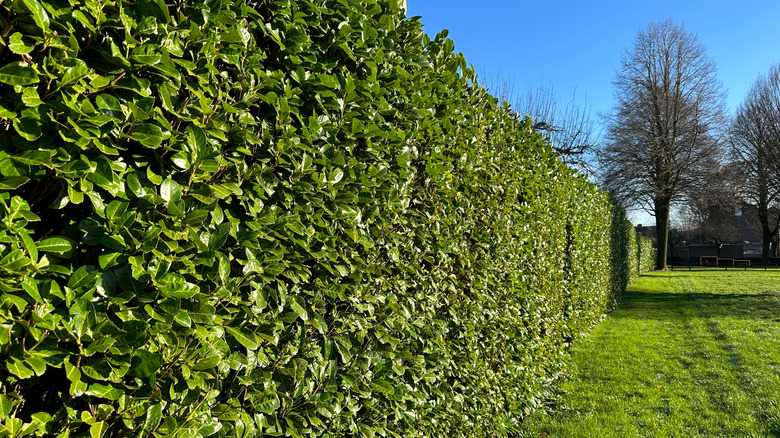
I have an elderly relative who loves their cherry (English) laurels, but those behemoths are a real pain. They are marketed as fast growing, dense privacy hedging plants, and this is true. But cherry laurels grow rampantly and, if left unchecked, can easily grow to 30 feet tall. They also get wide and bushy. And, unfortunately, they respond to even heavy pruning with vigorous new growth.
They're considered invasive in western Washington and parts of the Pacific Northwest. They escape gardens and have been documented in natural areas, including forests and wetlands. And, of course, they're toxic. The leaves and seeds contain cyanogenic compounds which, when ingested, turn into cyanide. This makes them dangerous to people, pets, and livestock. Even the waste from pruning remains potentially fatal.
English laurel is difficult to manage and ends up shading out underplanting and smothering out native plants. It's also a heavy feeder with large root systems that take nutrients away from other plants, so you'll struggle to grow much of anything, but especially perennials close by. Choose native evergreen shrubs instead or smaller, non-invasive laurels that are easier to manage.
Carolina laurelcherry (Prunus caroliana) is native, but vigorous and seedy
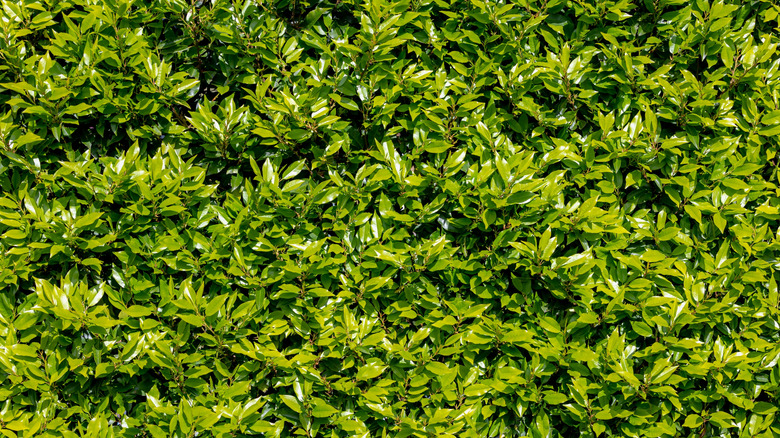
Carolina laurelcherry is native to the southeastern U.S., where it's commonly used as a tall, evergreen privacy screen. It reaches about 30 feet tall, but if left to grow to this height, it's scraggly and weedy, and really needs maintaining at no more than around 15 feet. Its weedy tendencies goes beyond its untidiness. Its seeds germinate easily and are spread by the birds and small mammals that feast on its ample berries, so it's common to see large swathes of seedings in your garden beds and in nearby wild areas.
Because of how readily they germinate and grow, these evergreens, even though they're indigenous in some areas, reduce biodiversity, outcompeting other native species. Like cherry laurels, they're also toxic if eaten, containing similar cyanogenic glycosides that can cause cyanide poisoning if you, your pets, or livestock eat any part of the plant, including discarded clippings. Native hollies, wax myrtle, or mixed native hedgerows all offer privacy and biodiversity with fewer potential problems.
Oleander (Nerium oleander) is tough, fast, and extremely toxic
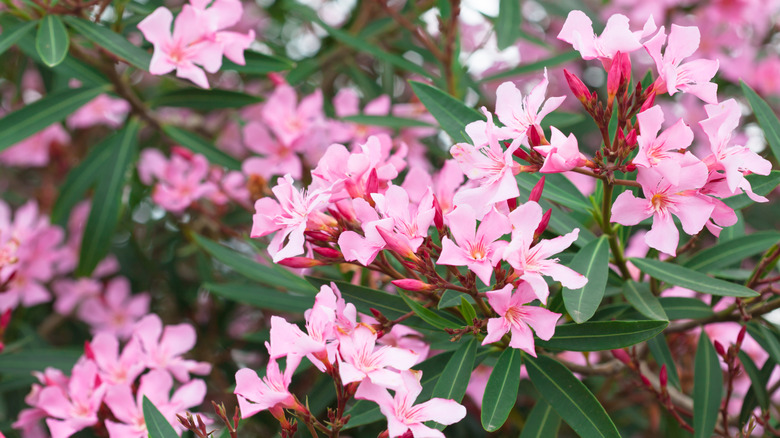
Oleander is most problematic in warmer climates, where it forms large, evergreen shrubs or small trees, reaching up to 20 feet tall. Once it gets established, it grows fast and needs lots of maintenance to keep in check. Oleander is one of several trees that are beautiful, but extremely toxic, that you don't really want in your yard.
All parts of oleander, from the flowers to the roots are highly poisonous. Even the smoke from burning the trimmings can be deadly. They contain powerful cardiac glycoside compounds that can be lethal in even tiny amounts. The cap can cause severe irritation to skin and eyes, so you can't even prune oleander without gloves. Because it's so dangerous, it's not a good choice for properties with children, pets, or livestock. Instead, I'd recommend non-toxic alternatives like salvias or ceanothus that can provide flowers and evergreen cover without the risk of poisoning. Both of these options are pet-safe.
Arizona cypress (Hesperocyparis arizonica) bulks up fast, but is prone to canker
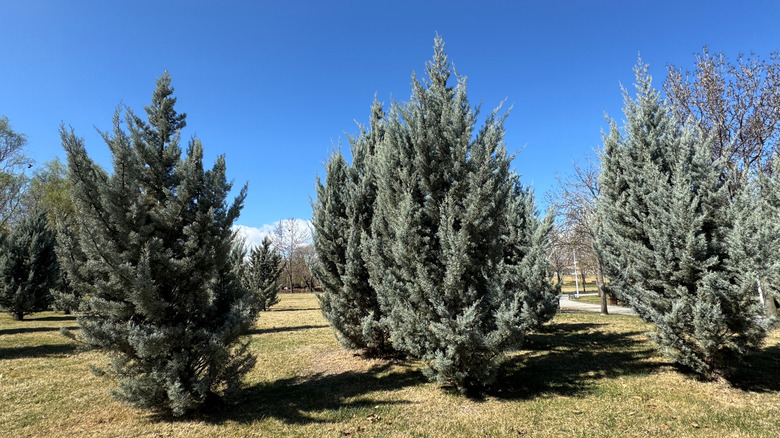
Arizona cypress is a fast-growing conifer that's a popular choice for windbreaks and privacy screens. They're often marketed as fast-growing evergreen hedges. And they are. In fact, come cultivars can get to 50 feet tall. So, if you have the right climate and can keep them well-maintained, they're not a bad choice if you need tall privacy screening.
That said, cypress canker is particularly problematic for these trees. It causes dieback and patchy brown foliage, and can result in the death of the tree. If a hedge is planted from the same stock (which is likely to share genetics), and disease hits, it can take out the whole hedge if the entire batch is genetically vulnerable.
If disease strikes and trees die back, you'll end up with unsightly dead trees, gaps in your screen, and expensive removal bills. Instead, if you still want to use Arizona cypress, especially if you're in a disease-prone area, mix them with other plants. Compatible options include indigenous conifers like Rocky Mountain juniper. You can also use wax myrtle or even grow pinyon pine, which also gives you delicious nuts.
Red tip photinia (Photinia x fraseri) is a fast-growing hedge prone to chronic leaf spot
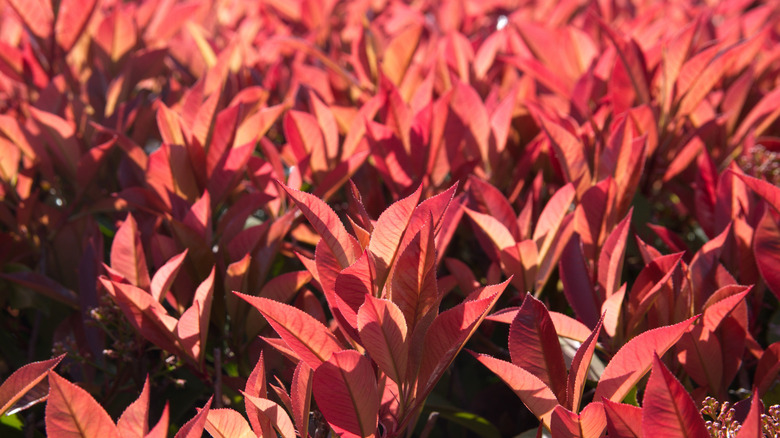
In peak condition, red tip photinia is beautiful, with its bold red leaves that age to lovely glossy green. It's a popular choice as a fast-growing hedge, but it's highly susceptible to entomosporium leaf spot. Even with successful treatment, if the plant gets reinfected multiple times, which is unfortunately common, this type of leaf spot results in leaf drop and thinning. This makes it look unsightly and reduces its efficacy as a privacy screen.
Once the fungus gets established, you'll need to remove the trees or continually maintain them. Control involves deliberate pruning to thin the plants and improve airflow to make the area less hospitable to fungal spores, as well as repeated, regular applications of fungicide. These plants can grow pretty wide, too, so you'll need to keep on top of pruning if you plant these in a small suburban lot, as they can overwhelm the space quickly, making it tough to grow much else.
Firethorn (Pyracantha coccinea) grows quickly into a screen, but it's thorny and disease-prone
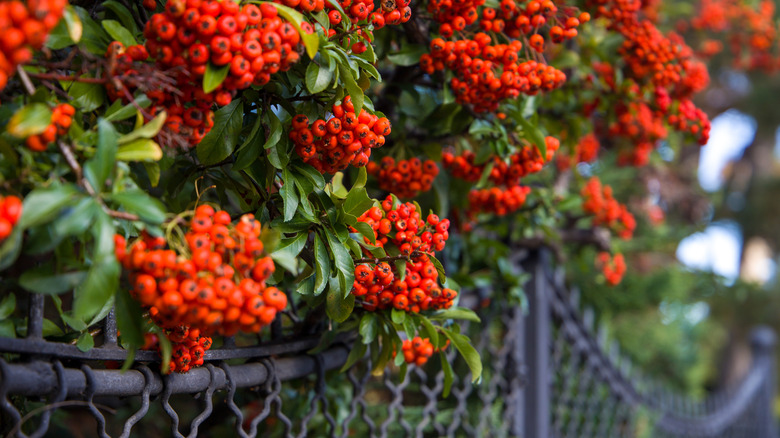
Firethorn is fast-growing and is evergreen, or at least semi-evergreen, depending on the growing zone. It creates a wonderfully dense barrier that, thanks to its sharp thorns, is a fantastic deterrent if you're planting for security, as well as privacy. The clusters of bright orange berries are attractive and provide valuable food for birds and wildlife. The impressive thorns makes pruning, hedge trimming, and general maintenance intimidating and difficult.
If you plant these near walkways or driveways, they can snag clothing and tear at your skin, so they shouldn't be planted lightly. And definitely not in areas where children or pets are likely to come into contact with them. Firethorn can spread quickly via birds spreading the seeds, and the volunteer plants are challenging to remove. It's also susceptible to scab and fire blight. These diseases cause leaf drop, dieback, stunted growth, branch death, and fruit disfigurement. You're better off planting thornless native evergreens that aren't so disease-prone.
Thorny elaeagnus (Elaeagnus pungens) grow rampantly and have thorny, dense thickets
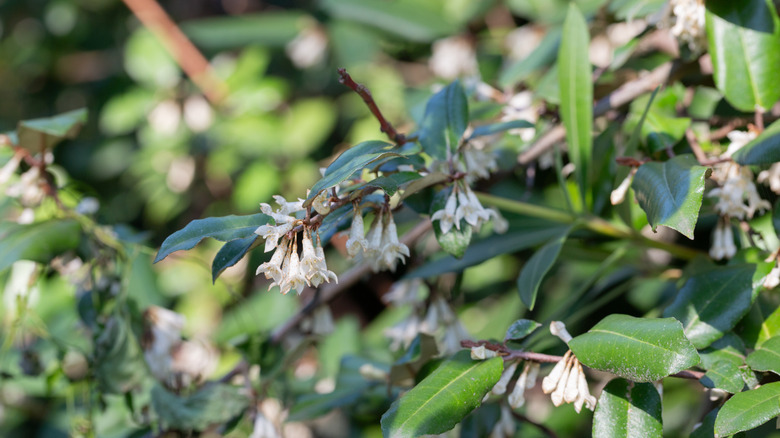
Thorny elaeagnus is a dense, evergreen shrub that can reach up to 25 feet tall. It has long, arching stems, some of which are armed with sharp thorns. This particularly fast-growing evergreen shrub grows in full sun to partial shade and tolerates most conditions, including poor, thin soil, wind, salt spray, and even manages to take root in unfriendly urban environments. This is why it's a common feature along highways and planted along large property borders.
This evergreen is native to eastern Asia and is considered invasive in many parts of the southeastern and mid-Atlantic U.S., including the Carolinas, Georgia, and Florida. As the name suggests, thorny elaeagnus forms dense, thorny thickets that out-compete native shrubs and smothers many low-growing flowering plants. It even outcompetes native tree seedlings in forests, as it grows so quickly and is so unfussy about its conditions.
Thorny elaeagnus spreads by seed dispersal, trunk suckering, and stem layering, so they spread quickly and easily. Once they're established, these plants are challenging to remove and can take many years to eradicate. Native evergreen shrubs are much better choices. I like wax myrtle, as it's fast-growing and low-maintenance. Native hollies are also solid choices, but what you choose will depend on your hardiness zone, the size of your yard, and what you want from your planting.
Eastern redcedar (Juniperus virginiana) is a tough native with a weedy habit and tendency for disease
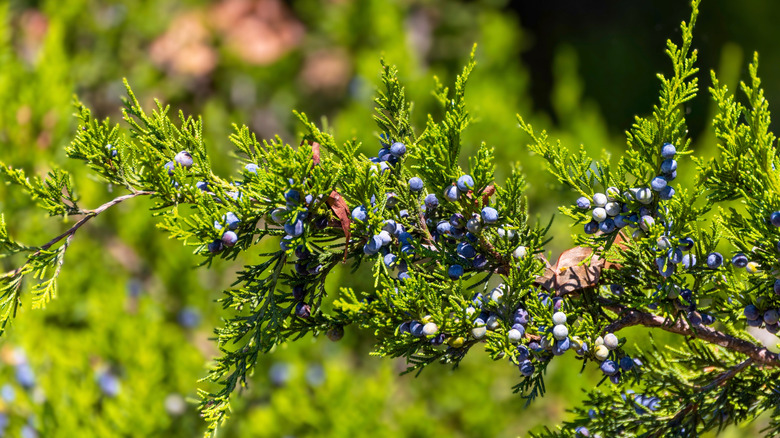
Eastern redcedar is actually a native juniper, and it is useful as a native windbreak. It's also great for supporting native wildlife, as it produces large amounts of blue juniper berries. The three main issues with this pretty evergreen is how fast it spreads, its intolerance to fire, and that it is a significant disease host. The seeds, dispersed by birds and small mammals, germinate readily, and seedlings take root easily almost anywhere. It happens a lot in fields and pastures, where it tends to form large stands which reduces forage for livestock.
The eastern juniper is notorious for converting prairie to woodland, because of its rapid encroachment into grassland if left unchecked. Where this happens, it's a drain on water and nutrient resources and increases wildfire risk. This tree is also one of the main hosts of cedar-apple rust, a disease that can cause significant damage to anything in the apple family, and puts orchards at significant risk. Once established, eastern redcedar is not easy to remove, so if it's already on your property, you may want to hire someone for mechanical removal — especially if it's sited anywhere near fruit trees. You'll also need to remove the inevitable volunteer seedlings that'll pop up.
A great, non-invasive alternative is the eastern white pine, which is an indigenous conifer that grows fast enough to be useful as a windbreak and privacy screen, but isn't a pest in pastures and prairies. It's also not a disease host. White spruce is another excellent option, as is northern white cedar.
Scotch broom (Cytisus scoparius) is an evergreen shrub that's a fire risk and quickly takes over large areas
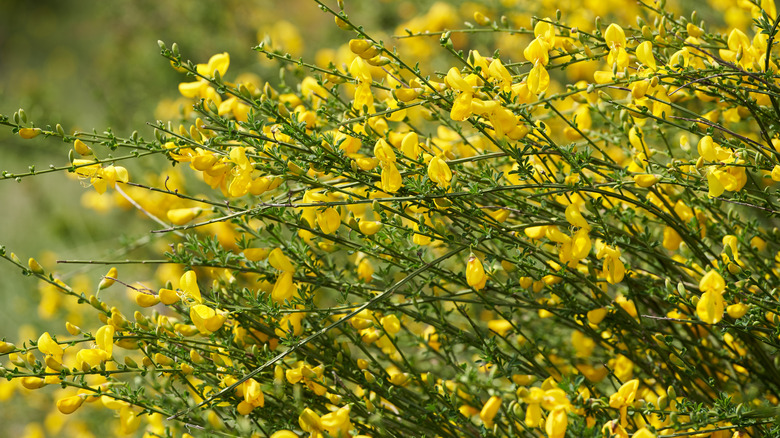
I like Scotch broom for its early blooms that feed pollinators, but it's a scrubby, weedy pain. It grows rapidly, spreads easily, and is harmful if eaten by people or pets. When I say fast, I really mean it. Scotch broom can grow 8 feet tall in its first two years, so you can see how it very quickly forms large walls or thickets of tough, close-knit plants. One of the biggest issues is the seedbank. Scotch broom seeds can remain dormant but viable in the soil for over a decade. As soon as the soil is disturbed or conditions are favorable, they germinate. This makes control and eradication an endless challenge.
This plant readily colonizes disturbed sites, open forests, roadsides, and disused lots. And it's a significant fire risk because Scotch broom has a very high oil content, so it's highly flammable. It's considered invasive in many parts of the U.S.. You might think that just one or two plants in your yard can't possibly do any harm, but that's all it takes to colonize your whole yard, as well as the surrounding natural areas, and from there, it continues to spread each year. When you try to remove it, you'll face a multi-year battle. Even with mechanical removal, you may not get it all, and the seeds will keep popping up for years.
Instead, choose evergreen huckleberry, which is great for wildlife and erosion control, as well as interplanting with conifers. Salal, a fast-growing ground cover that attracts pollinators, is fire-resistant and grows well under conifers, as is blueblossom ceanothus. Bearberry, although only 12 inches tall, is a great option for ground cover that can help stop Scotch broom seedlings from pushing through.