

The Ornamental Grass That Offers Food & Shelter For Birds In Winter
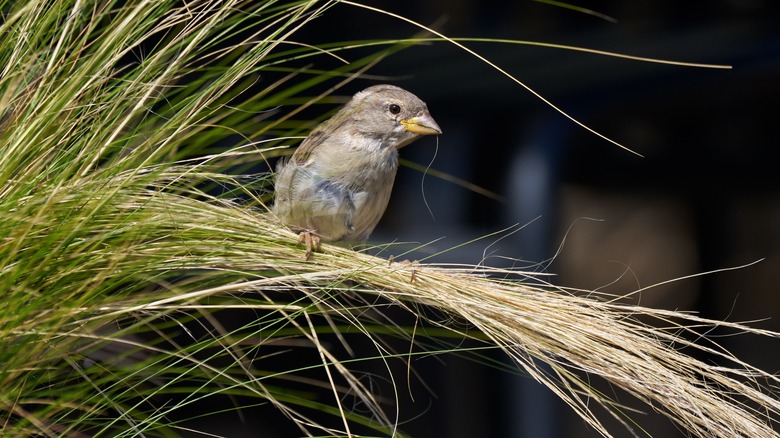
Winter has a way of changing how your yard looks — all the flowers from spring and summer are mostly gone for the season, and most of the trees are bare too. This botanical rest period can pose a problem for the birds still visiting your yard through the winter months. If you want a garden that doesn't stop during cold temperatures, and you're looking for unique types of grass to plant in your yard that birds can't resist, add Indiangrass (Sorghastrum nutans) to your plant collection.
Indiangrass is a perennial ornamental grass, hardy in USDA zones 4 to 9. This popular grass can grow 5 to 7 feet tall and features striking blue-green foliage that turns a gorgeous tan in the fall. It provides places for birds and other animals to hide out and keep warm, and its deep golden flowers and seeds are an excellent source of food for birds of all kinds, especially songbirds.
There are several common birds you might find in your garden in winter, but the cold months can be a tough time for any birds sticking around. Not only do they have to deal with cold temperatures, long nights, cold wind, and ice, but all the lush foliage they enjoyed during spring, summer, and early fall has either been eaten or died back. Insects they relied on during the warmer months are mostly dormant, making it hard for birds to find quality food sources. All of this becomes even harder when snow is added to the mix and is covering everything. With so many wintertime challenges for birds and wildlife to deal with, planting Indiangrass can go a long way toward helping them.
Grow Indiangrass and support birds and wildlife
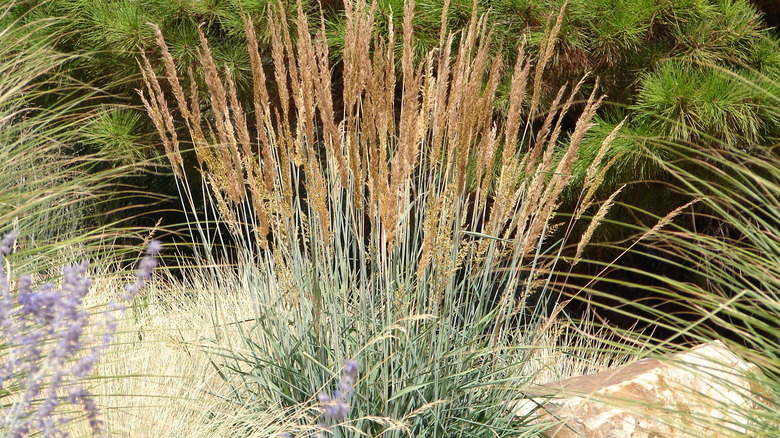
When looking for good planting sites, note that Indiangrass grows best in areas that offer at least six hours of sunshine daily. It's a large plant with a 2- or 3-foot spread, so if you are planting more than one, space them 2 to 3 feet apart to avoid overcrowding. While Indiangrass can handle different types of soil, the best for excellent growing results is well-draining soil that is on the moist side, but not soggy. It can handle poor, infertile soil and even heavy clays, but the soil must drain well.
While Indiangrass offers important benefits to birds and wildlife all year long, wintertime is when it really shines. These grasses are very tall and do not lose height or stability in winter when they are dormant. Many gardeners also love Indiangrass because it's one of the best ornamental grasses that double as stylish natural privacy screens. This height gives wildlife, including deer, small rabbits, and mice, plenty of places to use for shelter or just to hide. Grasshoppers and other insects feed on the foliage, which in turn provides additional food sources for the birds. Indiangrass is also a host plant to the butterfly called the pepper and salt skipper.
Leaving everything alone in the wintertime leaves plenty of seeds for all kinds of birds to enjoy, from game birds to songbirds. If your goal is to plant something that helps the ecosystem, you couldn't find a better choice than Indiangrass. You don't need acres of land to help birds and other wildlife; your backyard, side yard, or garden works perfectly.