

4 Alternative Solutions To An Iron Gate For Home Security
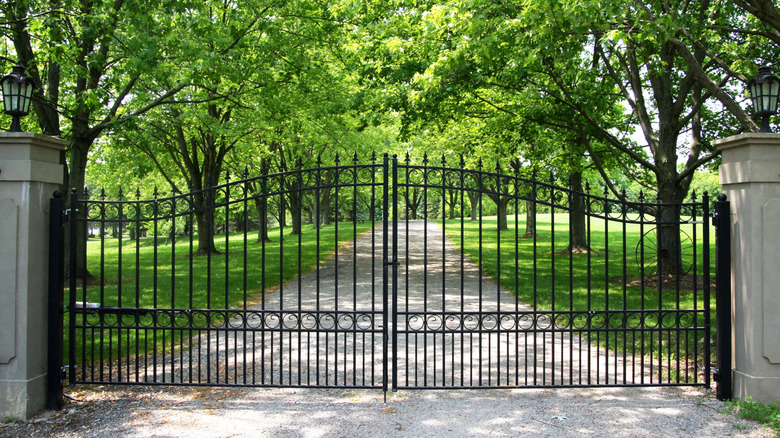
Iron gates are often the classic and timeless choice for homeowners when it comes to security. They are not the only way you can protect your property, though; there are many alternatives to traditional wrought iron. Whether you're in the market for a more modern, sleek alternative to traditional fencing or looking for a completely different aesthetic, there are many different materials and styles for gates. You may find something more affordable, a stronger material for added security, or maybe just something better suited to your home's style. The options include wood, vinyl and composite, steel, and aluminum.
A typical driveway gate is often around 14 to about 18 feet wide, but the function of your gate will play a factor in how wide it needs to be. If you don't need to get a car through it, it can be much narrower. You will also need to take the design or style of gate into consideration when determining material. Nontraditional options include a retractable or sliding gate, which require a track at the bottom. You may also want to explore different types of fence gate hardware to change up your gate's look. We will examine some of the alternative solutions to an iron gate and the pros and cons for security of these materials, while touching on aspects of maintenance, strength, and curb appeal to help you make the best choice.
Wood
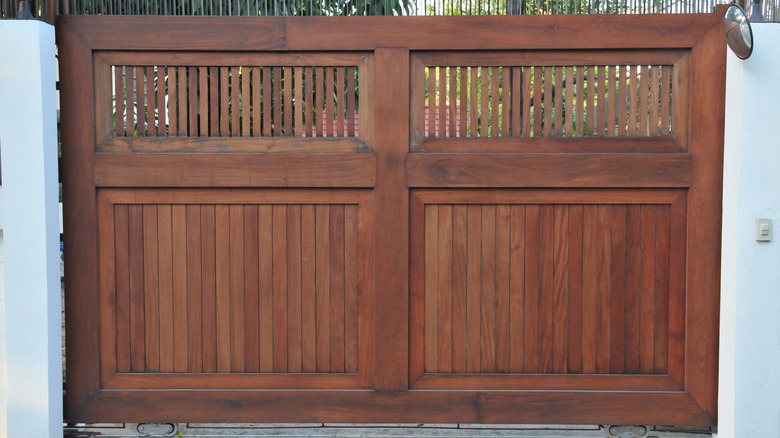
High-quality wood can be pricey, but if you provide proper care for it with stain, paint, or waterproof sealant, it can last a long time. Wooden gates are revered more for their looks and aesthetic for houses rather than their strength, since wood breaks down due to environmental elements. Still, this natural material complements home styles like ranches or farmhouses with lovely wood accents. They can also be easily customized to fit whatever security features you want — you can DIY an additional bolt lock without the help of a professional.
Even high-quality wood is typically cheaper than many metals, allowing you to install a cost-effective gate that's larger and taller for more security to your home. Wood is also easier to repair than most metals — and can be done fairly cheaply — but one downside is that they will likely also need to have more maintenance and repairs over time. Wood gates provide an elegant and sophisticated look, and as long as you maintain them, they are robust and secure.
Steel
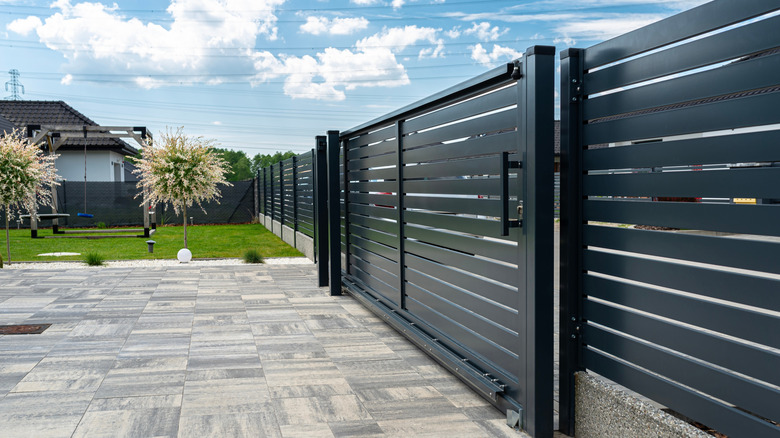
A steel gate can be a welcome upgrade from iron, and often looks more modern. The benefit of utilizing steel gates instead of iron gates for your home is that the material is stronger and more resistant to any rust or corrosion. Steel is treated with a coating that makes it able to withstand environmental elements. Your home is more secure with this type of sturdy barrier, and since steel is hard to cut through, you'll be much safer. You can also fit your steel gates with anti-theft bolts to increase your overall peace of mind.
The coating is what makes the steel "galvanized." It's coated with zinc to keep it from coming into contact with oxygen, which corrodes it. It looks similar to iron and is just as heavy and secure, so it can provide the same classic look as iron does. You can also keep the look more open-air by opting for a sliding chain link fence gate to protect your home. Finally, you will save money going with steel over iron, so if you're in the neighborhood for something more budget-friendly, this may be your ideal alternative.
Vinyl or composite
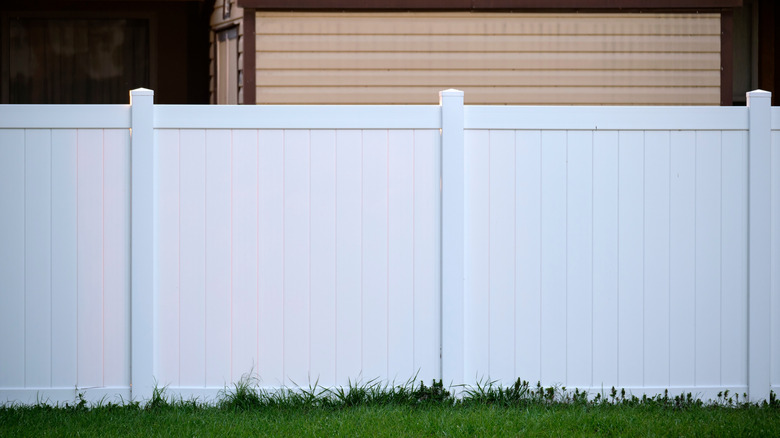
Maybe you want something that doesn't require much maintenance. Vinyl or composite gates are excellent because the material won't rot, warp, or potentially become infested, so it's strong and built to last. Both materials are similar in looks and longevity. Vinyl is excellent at accomplishing that "white picket fence" look, and you can build your vinyl gates taller to surround your home for more security and privacy. Vinyl can also be supremely suited to match your home's exterior, which is a nice option, and is also very easy to care for since they don't need any sort of sealant or cleaner to keep your gate looking pristine.
Composite, however, is a more environmentally-conscious choice, so anyone who is looking to be more sustainable will appreciate this alternative for their home's security. As a busy homeowner, you can benefit from not having to tend to these gate materials for many years, and they are a practical choice when wanting the look of wood without all the work. The aesthetics won't affect your level of security. Composite gates are sturdy, and when using reinforced panels for your gates, you can effectively keep intruders from breaching into your property.
Aluminum
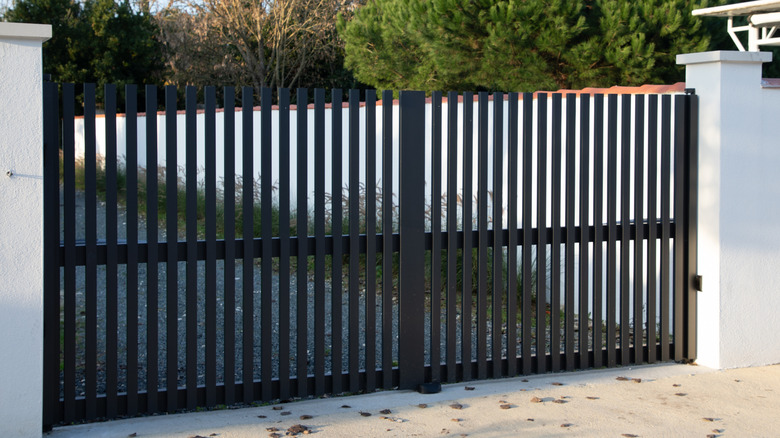
Opting for an aluminum gate is very similar to having a steel gate — it's a strong material that is also resistant to corrosion and rust. One of the more appealing features that aluminum offers is that it can be finished with a powder coating in many different colors, so you can match it to your home's design, and create a complementary style for your home. For more security, use aluminum as a privacy gate that's taller, possibly wider, and more solid. It will have an impressive presence around your home, effectively telling visitors that, unless they have an invitation, they are not welcome, to help keep intruders out. You can go with a solid vertical frame or horizontal slats, depending on whether you want a more modern or classic look.
Although it's not quite as strong or durable as iron, aluminum is made from a lighter material for easier installation. And the lighter material means it can be made in more solid styles where onlookers can't see what's inside, keeping your outdoor space private while making it a challenge to break into. A simple wash with some mild soap and water is usually ideal to keep it looking as good as new. Finally, aluminum, like composite, is also a more eco-friendly choice for your gate's material, since it can be recycled, and it doesn't break down over time like other metals.