

How Often To Water A Calathea So It Stays Happy And Healthy
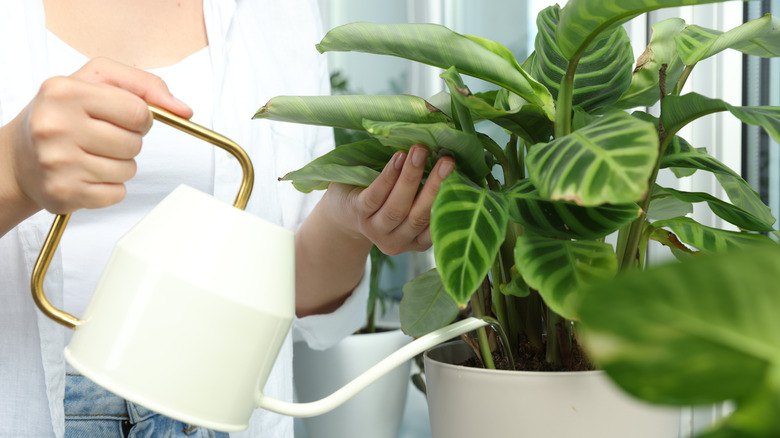
Houseplant lovers are frequently tempted to bring a Calathea (Goeppertia spp.) home because of their incredibly beautiful and ornate leaves. But for many of us, this tropical plant's gorgeous foliage soon develops crispy, brown edges, and a once beautiful indoor plant starts to look a bit sad. Calatheas have additional needs that can lead to dry-looking foliage, but getting the watering right is really key to keeping them healthy and happy since they need moist soil. And proper watering is not something you can just schedule in your planner and forget. To get the most out of your plant, it's important to wait until the surface of the soil is dry to give one of these beauties a drink.
Brown leaf edges can be a symptom of underwatering, but that's not the only sign. As types of prayer plants, calatheas have a distinctive behavior: these marvels of the botanical world raise their leaves at night, and in the morning when the sun rises, they lower them again. If your plant's leaves get stuck in a raised position, this is a symptom of dehydration. This is a bad sign as it can indicate your prayer plant is at risk of dying. While that's a rather dramatic call for help, you may also notice Goeppertia foliage that is curling up and looking dried out. If you notice leaves that are curling up or that don't lower, or brown edges on the foliage of your calathea, it's time to revisit your watering strategy.
Check the calathea's soil to know if it's time to water
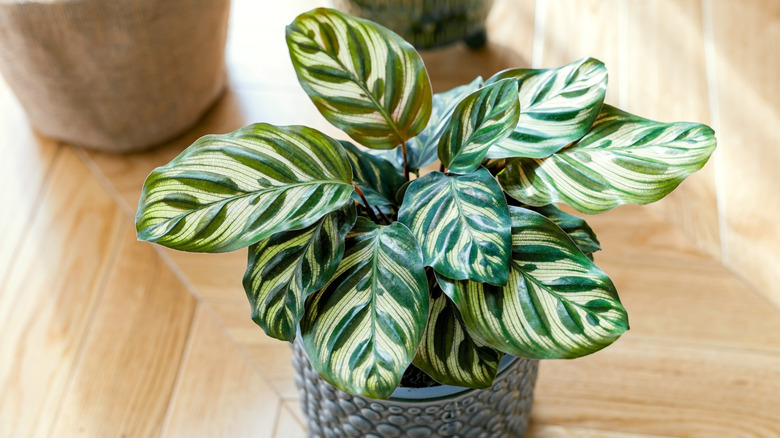
Everyone's home is different, so there's no absolute rule of thumb we can follow to tell us how often to water our houseplants. But we can develop good care routines after getting to know how indoor plants react to the light, heat, and humidity in our homes. As for calatheas, you can check their hydration status by touching the surface of their soil. Unlike some species that prefer to dry out entirely between waterings, or others that need the top inch or so of their growing medium to remain dry, prayer plants need hydrating when the surface of the soil feels dry to stay happy and healthy.
Once you get into a routine with your prayer plant and know how often to moisten its soil, you will need to adjust for the changing seasons. Calatheas are thirstier when the weather is warmer, so you may need to water more than once a week during sultry conditions. On the other hand, in winter you'll probably be able to lengthen the times between drinks. Depending on how warm and humid your home is, you may only need to water every 10 to 14 days during the cold months. Again, this will vary from home to home, and if you keep the thermostat high in winter, your calathea may need to be rehydrated as frequently as in summer to stay healthy.