

The Vining Houseplant That Isn't Scared Of Some Shade
Not all homes have abundant natural sunlight available for plants. Some spaces such as apartments with fewer windows, offices with no windows, and rooms in your home with north-facing windows that don't get any direct sunlight are considered low-light areas. If your plants need a lot of sunlight to thrive, these dimmer areas can be a real problem. Plants that don't get enough light can get skinny, sparse stems, have stunted growth, and the leaves can turn yellow and eventually fall off if the problem isn't corrected. Fortunately, there are plenty of beautiful, fast-growing houseplants that thrive in low-light areas. One popular example is the lovely heartleaf philodendron (Philodendron hederaceum), a vining houseplant that isn't scared of some shade. While this plant is sometimes confused for the popular pothos (Epipremnum aureum) plant, you can tell the difference by looking at the heartleaf's leaves which are thinner and more pointed.
If you are new to owning plants and your home doesn't get a lot of natural light, there are tips for choosing the right low-maintenance houseplant as a beginner that can handle surroundings with less sunlight. Heartleaf philodendron fits into this low-maintenance, low-light-tolerating category well and is an easy plant to take care of indoors thanks to its versatility and easy going nature. Since it is a vining plant, you can add a moss pole to your heartleaf's container to encourage that vining habit and create a stunning focal point for any room in your home regardless of the amount of light the room gets. Heartleaf Philodendron is toxic to dogs and cats, so be sure to put it in a place they can't get a hold of it.
The right lighting and care for your heartleaf philodendron
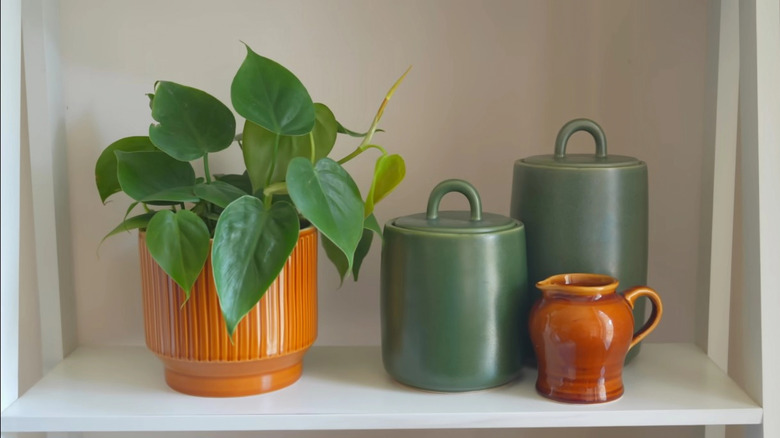
Lighting is one of the most important parts of any plant's care. It is as important as food is to humans and animals. Some plants need a lot of direct sunlight to thrive while others do best in shaded or low-light conditions. Then there are plants like the heartleaf philodendron that fall somewhere in the middle of those two categories. While the heartleaf philodendron grows best in bright, indirect light, it can handle areas that are a little more shady. The only lighting heartleaf philodendron can't handle is direct sunlight as this can lead to sun scald on the leaves.
While heartleaf philodendrons can tolerate low-light conditions, it is important to make sure that it's not too dark. In those shadier areas, growth may be a little slower and the leaves may be a little smaller than when it's in bright, indirect light. A sign this plant isn't getting enough light is when the leaves of the plant start to turn yellow or fall off. If your plant starts looking rough, move it to a brighter place for a bit to give it a boost.
Keep in mind that in lower light conditions, your philodendron won't need as much water since there is less evaporation. It can be very easy to overwater your plant in these situations. Use this eco-friendly hack to avoid overwatering your plants and causing root rot. If you feel the lighting in your home is too low to sustain your heartleaf philodendron, you can supplement with grow lights and get excellent results.