

Growing A Cherry Tree Indoors: Care Tips You'll Wish You Knew Sooner

With white and pink flowers that you can't stop staring at and fruit that is both tasty and healthy, it is really hard not to love a cherry tree. And, fortunately, with the right care tips, you can bring the magic of a cherry tree indoors. If you are wondering how, start by choosing a dwarf variety. It needs to stay small enough to thrive in a container indoors. Also, you must select the right spot for it. The ideal site will be sunny enough to meet the lighting needs of cherry plants and somewhere with good airflow to reduce the burden of diseases.
Furthermore, when growing a cherry tree indoors, you will need to simulate the cold temperatures of winter. This is especially important if you want them to bloom and produce fruit, as cherry trees require a period of chilling to induce blooming and set fruit. If the chilling requirement is not met, it could lead to delayed flowering, low fruit set, and even uneven shoot development.
Choosing the right variety, container, and place
Indoor spaces are not spacious enough to accommodate standard cherry trees. So, you will need to look for a dwarf cultivar that can easily thrive in limited space. Cutie pie dwarf sour cherry (Prunus cerasus' Cutie Pie') and sweet thing sour cherry tree (Prunus cerasus' Sweet Thing') are two good choices. But you can choose other cherry tree varieties to plant as well, depending on where you live. Once you have selected the variety, choose an appropriate container.
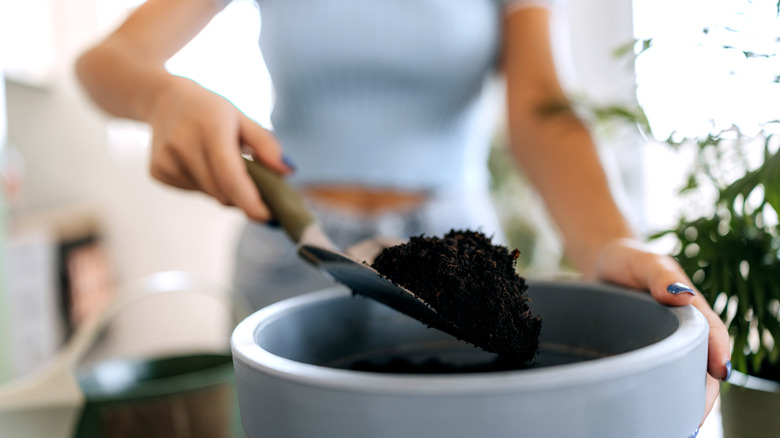
Container choice directly affects root health, water management, and long-term productivity for potted fruit trees. The container should be large enough to accommodate the entire root system. Also, it needs drainage holes at the bottom since cherry trees need well-drained soil to grow and thrive. To help with this, you can use a high-quality, well-aerated potting mix. Consider adding a thin layer of coarse gravel over the drainage holes as well to help prevent soil from clogging them.
Lighting is another important thing to consider. Cherry plants need full sun — at least six to eight hours daily. So, put your plants near a bright window, ideally a south- or west-facing window. You may also want to install grow lights for indoor plants to compensate for any lighting deficiency.
Watering, Fertilizing, And Chilling Your Indoor Cherry Tree
Watering indoor cherry trees is tricky. Growing in containers can magnify both underwatering and overwatering mistakes. A simple finger test will be your best ally here, though. Simply insert your finger into the potting mix, and if the top one to two inches feels dry, water thoroughly and deeply. Then wait for the upper layer to dry before watering again. Similarly, fertilizing a cherry tree kept indoors requires restraint. A lighter hand serves it best because, in containers, excess fertilizer builds up quickly; it could suppress flowering and fruit set and instead push leafy growth.
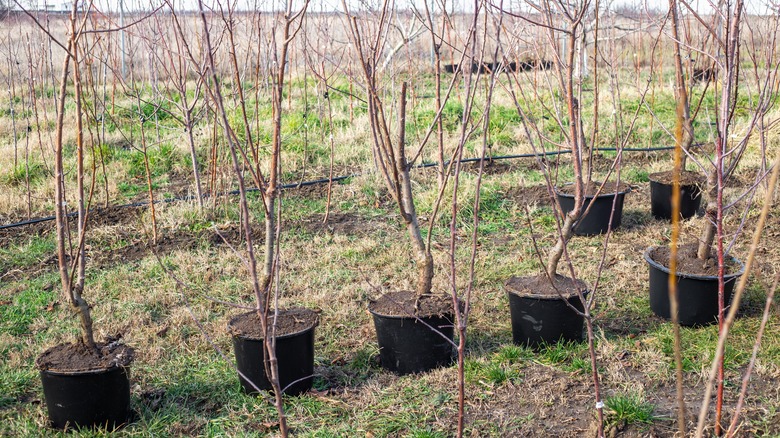
Another thing many people often fail to consider is that cherry trees require a winter chill period to break dormancy and flower properly. Meeting chilling requirements indoors is rarely possible, so you will need to take them outside. A patio, porch, and unheated garage are all good options. Selecting a variety with fewer chilling hours may be optimal. Some varieties require only 200 to 300 chill hours. Once the buds swell and show signs of bursting, you can move your cherry tree indoors.
Lastly, make sure to prune your indoor cherry tree to keep it compact and remove any dead branches. This will also help improve tree health and flowering. Just make sure to avoid making common mistakes when pruning your fruit trees, like pruning at the wrong time.