

Meet The Drought-Tolerant Crop You'll Want To Add To Your Garden

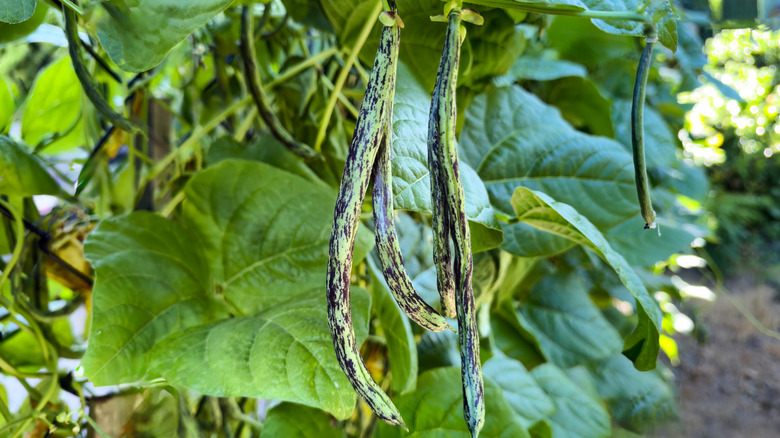
People in hot climates or drought-prone areas often have trouble keeping their vegetable gardens alive due to water scarcity issues. After all, every crop needs water, and some need it more than others. But what if there was a crop that could easily tackle drought or heat and still continued to grow, bloom, and set pods? You would definitely want it in your garden, right? Meet rattlesnake pole beans (Phaseolus vulgaris 'Rattlesnake'). They are a cultivar of pole beans with distinctive long, vivid green pods streaked with bold purple marks, creating a pattern that almost looks like a rattlesnake's skin.
The pods reach six to seven inches in length and carry tender and flavorful beans. Perfect for consuming fresh, freezing, or canning. Even better? If you keep picking the pods, the vines will keep producing all season long. You can even harvest them more than once a week. And thanks to their light purple flowers, distinctive pods, and climbing growth habit (reaching up to 10 feet in height), rattlesnake pole bean vines can also make a striking focal point in vertical garden spaces. This also makes it a perfect crop for gardeners with limited outdoor space in hot, arid climates.
Growing and harvesting rattlesnake pole beans for maximum yield
Like other beans, rattlesnake pole beans also thrive in full sun and warm conditions. You can plant them in pretty much all of the U.S. (USDA Hardiness Zones 2 to 11) after the danger of frost has passed. Just make sure that the soil temperatures are above 60 degrees Fahrenheit. Planting in anything cooler could significantly impact the seed germination rates. Also, aim for a slightly acidic soil with a pH of around 6 to 6.5. Once the soil is ready, sow seeds three to four inches apart and about an inch deep into the soil. Use a trellis to give your plants support, like a sturdy fence panel. A trellis helps improve yields and decrease plant diseaseslike rust of bean and powdery mildew, which rattlesnake beans are prone to. .
The seeds will germinate in about four to ten days. Although they are drought tolerant, it's important to water during this time, keeping the soil moist (not soggy) for best results. It will take the vines about 70 days to reach maturity, and maintaining moisture, especially during flowering, is of utmost importance.
You can use a mulch to help retain moisture as well. Once the pods appear, harvest them fresh when the pods still feel smooth. Rattlesnake pole beans are prolific producers, and you should harvest them multiple times a week. This is a harvesting trick that will increase the bounty from your garden, as it pushes the rattlesnake pole plants to keep producing. And if everything goes right, you might be able to enjoy the harvest till fall or even winter.