

12 Common Lawn Leveling Mistakes To Avoid At All Costs
We may receive a commission on purchases made from links.
There's much to be said for a level lawn. It's easier to mow, for starters, and when water is allowed to drain evenly, it's infinitely easier to keep a lawn healthy. A level lawn is also much safer, since it doesn't contain pits and high spots that are likely to trip you up. But is it easy to achieve? Honestly, it's hard to say.
Depending on the size of your garden, leveling your lawn could, theoretically, be straightforward. On the other hand, even a small garden could prove to be an amateur landscaper's worst nightmare, especially if there are severe imperfections that need to be ironed out. What's for certain, however, is that if you're not fully prepared for the task at hand, even the easiest job on paper could quickly become a DIY headache.
So, what can you do to avoid this? For starters, you should equip yourself with the appropriate tools. You should also plan your project in advance and ensure that you don't rush the process. More than that, you need to familiarize yourself with the most common lawn leveling mistakes that gardeners often make, and then avoid them at all costs. This is what we're here to help with. From not ensuring proper drainage and failing to prime your soil, to using the wrong equipment or choosing the wrong grass, we'll not only cover the lawn leveling mistakes you need to avoid, but also offer some tips on what to do instead.
Ignoring the reasons behind an uneven lawn
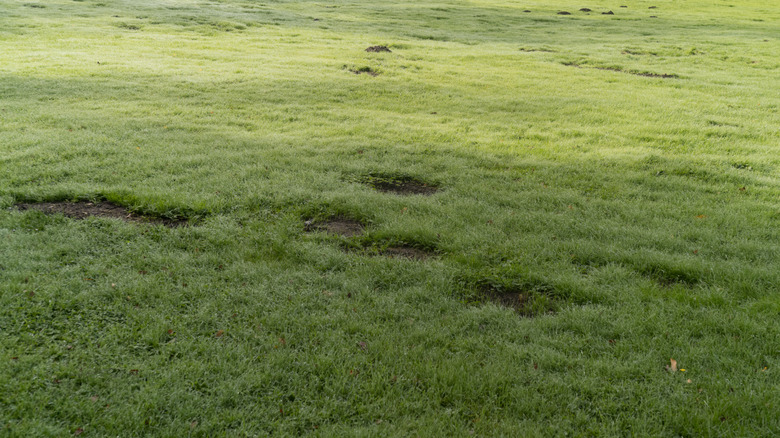
While it can be abundantly clear that your lawn needs leveling, it's not always easy to know why it looks uneven. If you don't know why, then it's important to find out, especially if you're going to the trouble of leveling it. By addressing the root cause now, you can avoid the frustration of seeing the same old problems occur and having to do the work all over again.
To get to the bottom of things, ask yourself some questions. Are problems with drainage leading to puddling and patchy growth? Are skunks digging up your grass in pursuit of a bevy of bugs lurking beneath? Is the type of soil in your garden causing it to look uneven? Or is heavy foot traffic compacting your soil and creating patches in your grass?
These are just some examples, and the reality is that it could be down to a combination of factors. The point is, if you don't understand the root cause, it's hard to guard against it in the future. Leveling your lawn is a potentially costly exercise, both in terms of time and money, and if you don't address the underlying problems, you could see your efforts go to waste.
Not testing your soil's pH level
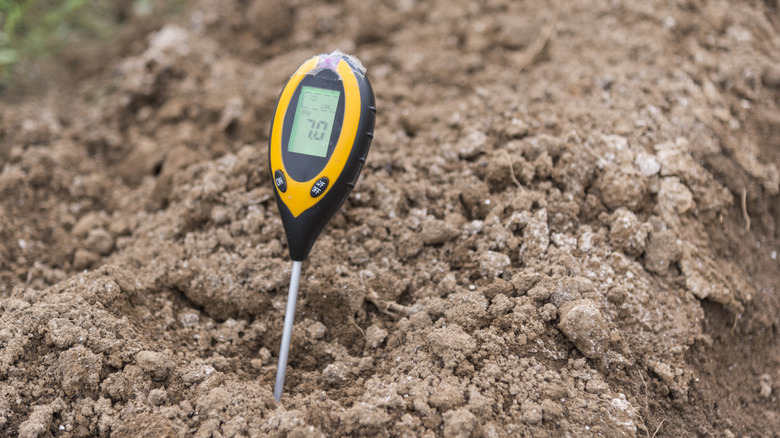
Soil testing is a crucial part of the lawn leveling process, one that you should, under no circumstances, skip. Why? Well, firstly, if you have a particular kind of grass in mind, you'll need to know that your soil is able to support it. At the very least, you'll need to know which amendments to make to your soil in order to provide the right growing conditions. Even if you're not set on one particular grass type, knowing your soil's pH can help inform your choice, allowing you to whittle down the many available options to one that's likely to grow well in your yard. Soil testing is also one of the best habits for maintaining a healthy lawn, which you'll surely want to do after going to the trouble of leveling it.
To test your soil, grab a tool like an IRTOV soil pH meter, collect some samples from around your lawn, and mix them together so that you can take an average reading. Depending on your findings, you may well find that your soil needs some serious adjustments. And while this could be a problem for gardeners who'd prefer not to disturb their lawn by digging out patches of turf, since you're planning to level it anyway, it's arguably the best time to do it.
Leveling your yard completely flat
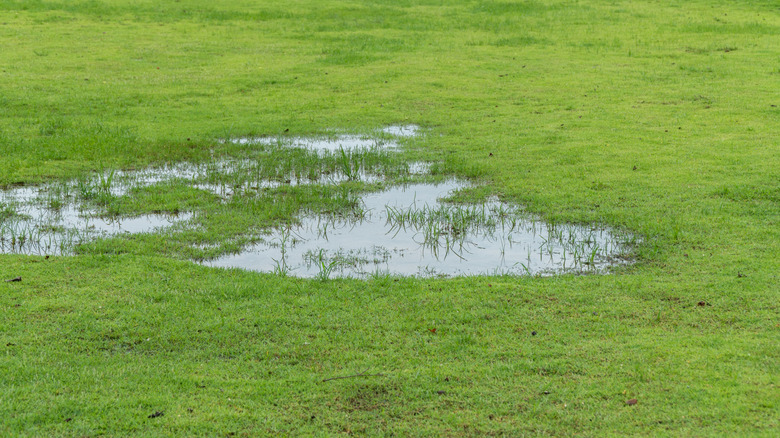
It is vitally important that you don't make this mistake, and the reason boils down to good drainage. If you level your garden to a point where it's totally flat, without any kind of gradient to encourage water to drain away, then your lawn will be left prone to flooding. Especially in areas that experience lots of rainfall, standing water may start to collect and could eventually lead to problems like algae, moss, and fungal disease. So, when you're leveling your garden, think of it more as an "evening out" exercise than one of true "leveling."
It's worth saying that there are other things that can contribute to standing water. Heavy clay soil, for example, is more prone to poor drainage than other, looser soil types. This, in combination with a perfectly level lawn, is a recipe for horticultural heartache. And, even if there is a suitable gradient in place, it's still worth regularly aerating firmer soils to ensure that water (and the nutrients it carries with it) can permeate your lawn.
If there isn't a suitable gradient, and this is currently contributing to your lawn trouble, then you'll want to adjust your lawn so that it gently slopes away from your home. Don't let it slope toward it, as this can lead to damp inside your house. To further aid drainage, it's also possible to dig ditches along the low end of the slope, which will help the water run off. In extreme cases, particularly where heavy soil and the lack of an effective gradient cause water to collect, you may need to install piped drainage beneath your lawn. In this case, it is worth enlisting the help of an expert.
Not de-compacting your soil
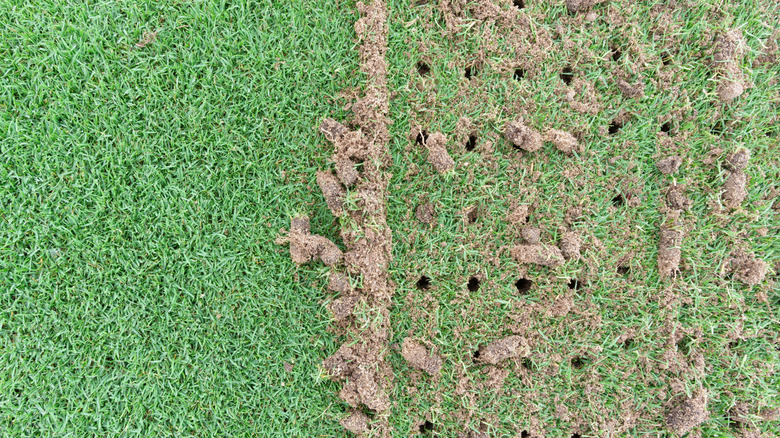
If you don't know how to aerate your lawn, then now is the time to learn. Without proper aerating, your grass may struggle to grow. Fortunately, the process is quite simple. In fact, as long as you're armed with one of the various types of spiked aerators now available on the market, you've already got everything you need.
If you're unfamiliar with the concept, aeration involves "punching" holes in your garden soil. It sounds drastic — savage, even — but it's often essential for healthy grass. It's especially important in more well-trodden parts of your garden, where heavy footfall can cause the soil to compact during frequent comings and goings. When the soil compacts, it becomes harder for it to draw in much-needed moisture and nutrients. Unfortunately, if left untreated, soil compaction can lead to patchy growth. In fact, if you've noticed recently that your lawn has lost its luster, this could well be the reason.
Rushing the leveling process
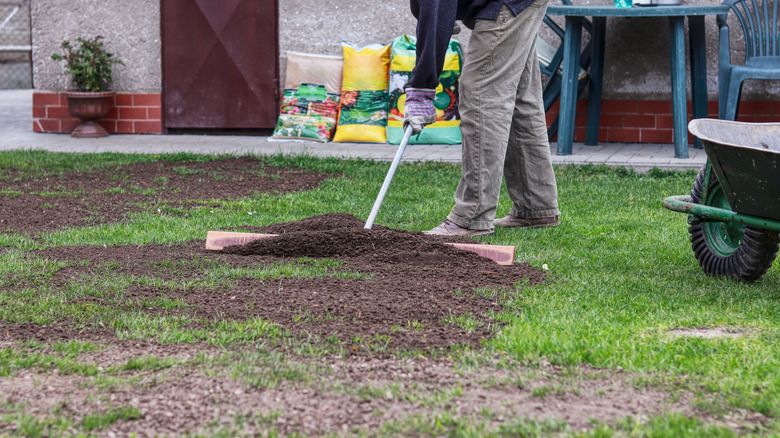
This is an easy mistake to make, but an important one to avoid. Even with smaller lawns, the leveling process should never be taken on lightly, particularly if you're doing it by yourself. By taking your time, it's entirely possible to achieve a finish worthy of a professional landscaper. Unfortunately, if you rush it, it'll quickly become apparent that a professional had little to do with the job.
So, be meticulous. Start by making a detailed assessment of your entire lawn, checking for humps and depressions that need either flattening or filling. Methodically mark these out so that you don't accidentally miss any. And before you start work, be sure to clear your lawn of any debris and detritus (like stones), to prevent causing damage to your tools. Finally, if you're not already equipped with the appropriate tools for lawn leveling (more on these shortly), then hold off until you have them. As keen as you may be to get on with the job, you're far better off waiting for the right equipment to arrive. Not only will you be able to ensure a better finish, but the job as a whole will be far easier if done correctly.
Using the wrong tools
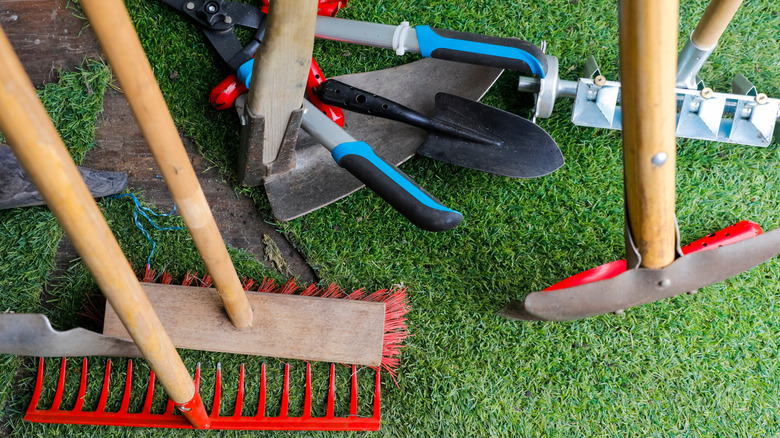
As with any outdoor project, the most essential gardening tools are those that are best suited to the job. If you use the right equipment, you're far more likely to achieve a satisfactory finish. More than that, you're sure to find the work much easier to complete with tools that are specifically designed for the task. As for which tools you should use, it depends, to a point, on who you ask.
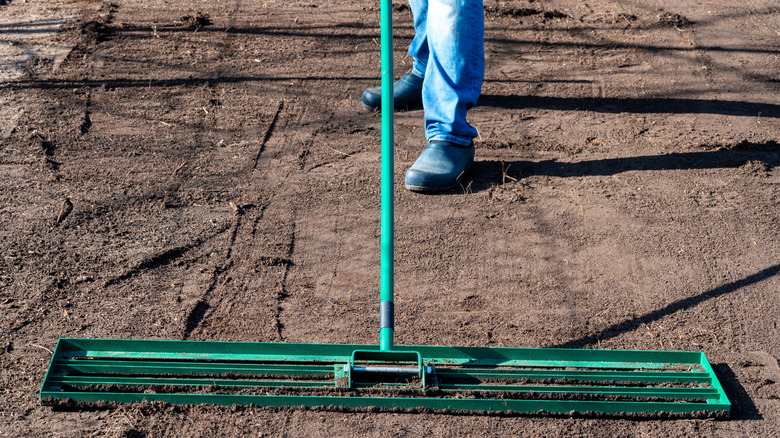
For example, you may have read elsewhere that using a lawn roller is the best way to iron out bumpy spots. Now, if you already have a roller in the shed, then it could well be worth trying. If you don't, then you may wish to keep your money in the bank. The problem with this method is that any roller that's light enough to prevent soil compaction simply won't have the required weight to flatten larger humps and bumps. Similarly, a roller that's got the weight to make mincemeat of your mounds is almost guaranteed to compact the soil, affecting its ability to absorb water and nutrients. Instead, you should arm yourself with a shovel and a leveling rake from brands like Yuchenfeng or Rocklin. A wheelbarrow will also come in handy if you need to lug quantities of soil around your yard.
Sowing your lawn with the wrong grass
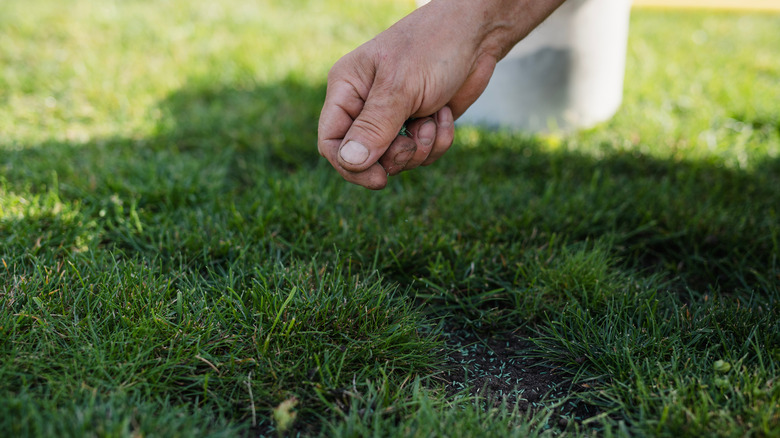
There are two ways you can get this crucial part of the leveling process wrong. The first is not knowing which hardiness zone you live in, and therefore selecting the wrong type of grass. Unfortunately, it's not as simple as finding a grass that you like and sowing it with merry abandon. Instead, you need to match it to your local climate. Grasses can loosely be categorized into one of two types: cool-season and warm-season.
So, which type of grass seed should you choose? Well, if you live in the northern United States, then cool-season grass types like bluegrass, ryegrass, and tall fescue are all reliable choices, since they prefer steady temperatures between 60 and 75 degrees Fahrenheit. Alternatively, if you're in one of the southern states where temperatures range between 80 and 95 degrees Fahrenheit, then consider warm-season types like centipede, zoysia, and Bermuda grass.
The second mistake is opting for invasive grass without considering how you'll control it. For example, while it's often grown as turfgrass (and while golfers will argue that it makes for a fine fairway), Bermuda grass is actually a weed. It's also an aggressive grower, taking a three-pronged approach to naturalization that includes underground rhizomes, overground stolons, and self-seeding. In other words, if you opt for an aggressive type like Bermuda grass, you'll need to find a way to stop it from spreading and taking control of your flower beds.
Leveling your lawn at the wrong time of year

Undertaking your leveling project at the wrong time of year can lead to seriously subpar results. As for when's best to do it, it depends. Since leveling is likely to be quite stressful for your lawn, you should try and do it when the conditions are best for your grass to grow and recover. Generally speaking, the University of Minnesota Extension says that between mid-August to mid-September is often a safe time to do it. Early spring is also a good time, as the work will take place while your lawn is starting to wake from its winter slumber.
The trick to good timing here is knowing how to identify the grass in your garden. If you live in the northern United States and therefore have cool-season grass, then autumn is a better time to level. Cool-season types grow better in cooler conditions, so will find it easier to recover in the fall. Similarly, if you level a warm-season lawn in cold weather, it may not be in the mood to bounce back as quickly as it would in spring conditions.
Over-correcting or under-correcting low spots
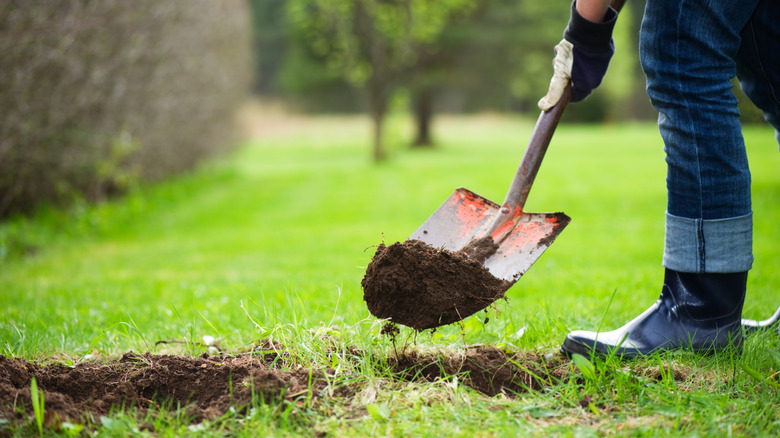
This is one of the easiest mistakes to make when leveling your lawn. It's also one of the most frustrating, potentially leaving you with a yard that's just as uneven as when you started. In fact, depending on the severity of your miscorrection, you could make the problem worse.
The key to avoiding this is knowing how much your soil will settle. First, though, let's examine a couple of common scenarios. The first is over-correcting, which in this case means topping up low spots with too much soil. We can understand the temptation, especially if your ankles have regularly fallen foul of the holes that you're now trying to fill. The problem is that, while any new soil will settle over time, if you add too much, then you could simply end up trading a hole for a hill. The second mistake is under-correcting, and the results are just as frustrating. If you fail to add enough filler, your holes are likely to reappear as the soil settles, leaving you back, pretty much, where you started.
Fortunately, this is an easy mistake to avoid. As a rule of thumb, when it comes to filling your lawn's low spots, top them up until the soil sits around an inch higher than the surrounding area. By doing this, you should find that, as the soil settles, it blends evenly with the rest of your lawn.
Using the wrong filler mix
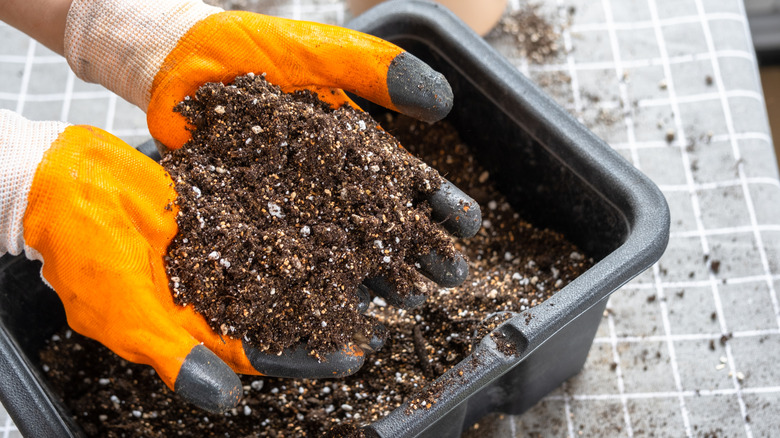
Using the wrong mix to fill the holes in your garden is an even bigger mistake than over- or under-filling them. Only by using the right materials to top dress your lawn can you expect to see good results when you come to sow new seeds. Now, for those of you who have high spots in your lawn that need to be dug out, we'll admit that it's entirely possible to dress your lawn with regular garden soil. However, in order to ensure that your soil drains well once it settles, it's important to mix it with sand. Sports sand is best (other types, like builders sand, are likely to become compacted), and you should aim to have a 7:3 ratio of sand to soil.
If the earth from your garden is in short supply, then supplement it with a loam-based soil. Loamy soils are highly fertile and water retentive, and yet they drain extremely well. In other words, they're the ideal surface material for new lawns, providing the optimal conditions for grass seed to germinate.
Not continuing to manage your lawns level
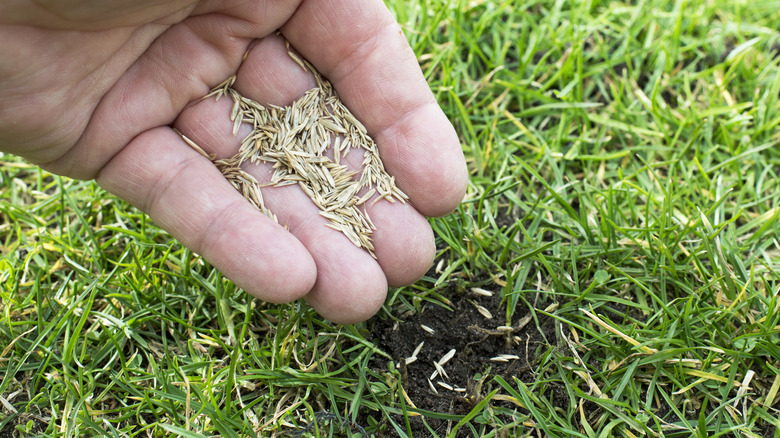
While leveling a lawn can be a time-intensive task, it's almost always worth doing, if only to remove those ankle-worrying pits that have been plaguing your time in the garden. However, it's not a "one and done" kind of job. Healthy, luscious lawns require ongoing maintenance, and just because you leveled it already, that doesn't mean that you won't need to do it again.
Contributors over on The Lawn forum explain that they regularly do leveling work to keep their lawns healthy and growing evenly. One suggests that you may need to level your lawn once or twice per year for several years before you can expect your work to stick. Another explains that they use a rotary tool on their lawn once a year to keep on top of things. "I've leveled once a year for the past two years," says another, adding, "I need a few more."
Of course, how frequently you'll need to maintain your lawn after leveling depends on how uneven your yard was in the first place. In most cases, your first attempt is likely to be the most painstaking, with future maintenance requiring progressively less time and effort. But if you fail to keep up the good work, you could eventually find yourself back at square one.
Failing to properly water your newly-leveled lawn
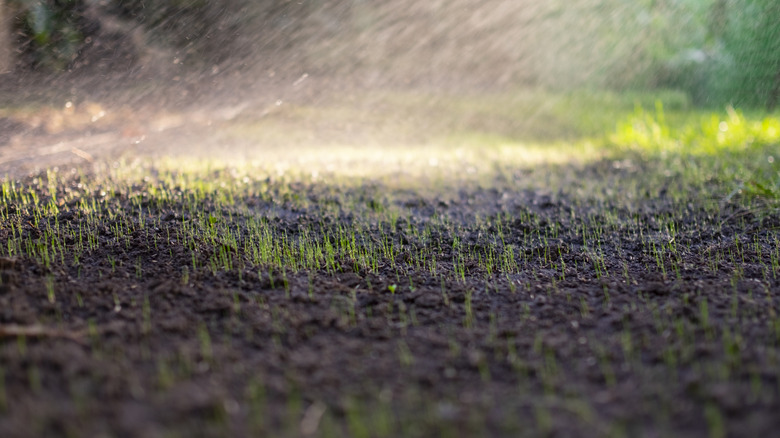
With all of the hard work done, it's time to sit back and watch your lawn spring to life. Right? Well, not quite. After evening out your lawn's surface and sowing your chosen seeds, it's very important that you keep them well watered. Any seeded areas that aren't duly doused are less likely to grow, potentially leaving you with a patchy and decidedly underwhelming garden.
When you've finished spreading your top-dressing, give the lawn a thorough and even soaking, and continue to water the seeded areas a few times a day until germination. If you're coming up to (or currently weathering) a dry spell, then consider postponing seeding until cooler climes prevail. Once sown, grass seeds should never be allowed to dry out, so unless you can guarantee regular irrigation during hot spells, you're almost certainly better off waiting. As for when to reduce your watering schedule, you should only do it once the grass has started to grow. Once it has, reduce the frequency to once a day, but increase the amount of water, ensuring that plenty is able to reach the roots of your burgeoning new lawn.