

22 Large Houseplants That Dramatically Fill Empty Spaces In Your Home
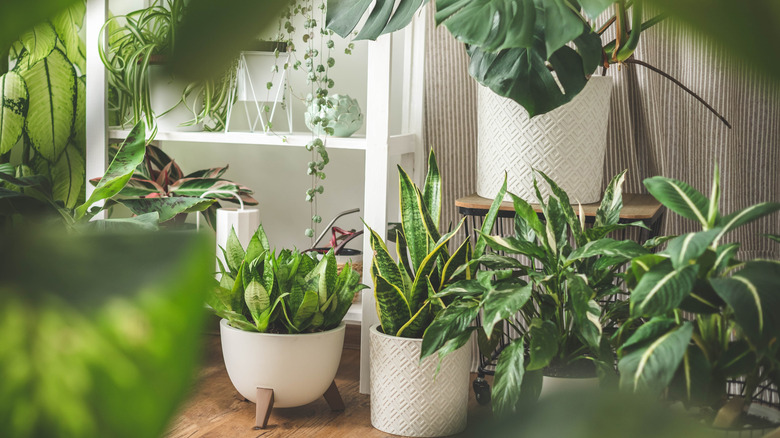
We might tell ourselves our homes are just places where our lives unfold, but we also use these spaces to create visual narratives, with intentionally chosen furniture and finishes — and of course, a selection of houseplants perfect for growing indoors. Large houseplants in particular can add a sense of drama and intrigue to our interiors. Columnar cacti can mentally transport us to deserts. The leafy fronds of palms can send us sailing down mysterious riverbanks. And the giant leaves of monsteras and tree philodendrons — well, it's hard to see them without imagining oneself in a jungle and feeling intense awe for the natural world.
Set your mind to it, and you can find an indoor plant for every room in your house. So look around for the empty corners or the blank walls that need brightening. These 22 huge houseplants can bring life to the space, and maybe change the story the room is telling. Of course, before you write out full parts for any of these leafy giants, you'll want to know if you can provide them the needed attention and care, which depends in part on how easy-going — or not — they are. And as you audition these green characters for a role in your home's story, you'll learn which ones can bring softness with their fine foliage, or provide a stark sense of contrast with coarse textures.
Bird of paradise
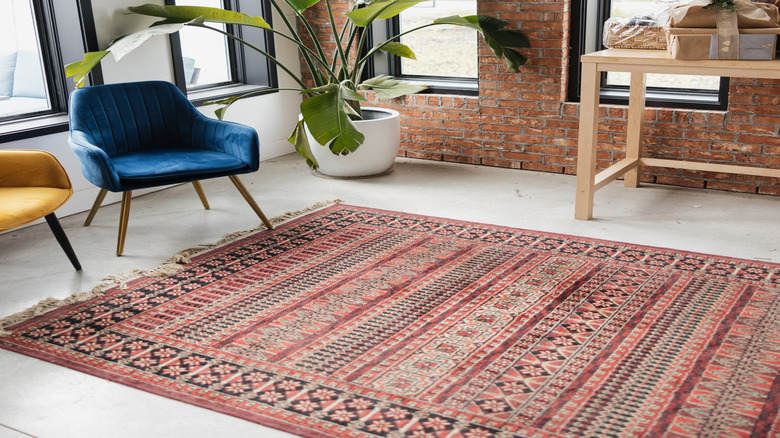
When you add a bird of paradise plant (Strelitzia spp.) to your indoor space, get ready for large, eye-catching flowers that are bound to impress your guests. These tropical plants feature upright, clumping stems, and large leaves that look similar to those of banana trees. Bird of paradise plants grow to between 4 and 8 feet tall indoors depending on the species, and will make a statement while remaining low-maintenance. Be sure to provide these dramatic houseplants with lots of sunlight if you want to see their unusual-looking blooms.
Corn plant
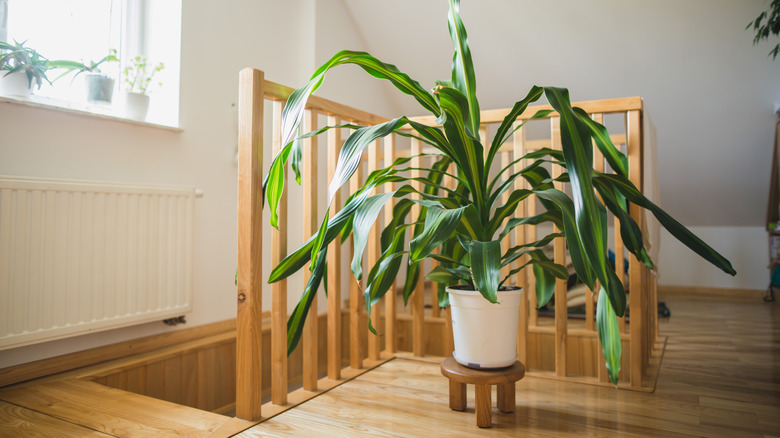
If you have a narrow space to fill, you need a plant that will grow tall but not too wide. Corn plant (Dracaena fragrans) will provide a tower of fountain-like greenery thanks to its long, glossy, green or variegated leaves. These tropical plants are slow-growing but can eventually reach 10 feet tall or more as houseplants. To create high drama with a corn plant, choose a dark-leaved variety like 'Black Beauty'.
African milk tree
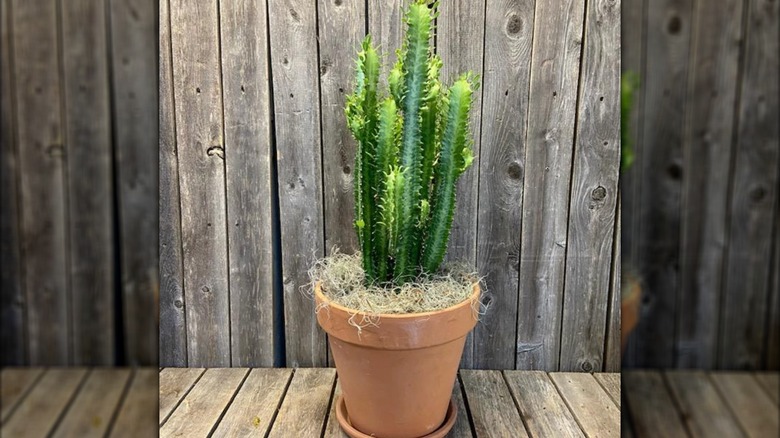
Another ideal plant for narrow spaces that has more of a coarse texture is African milk tree (Euphorbia trigona). The stems of this succulent are columnar and upright, inspiring one of its other common names, candelabra cactus. Although it looks like a cactus and has a desert vibe, it's not actually a member of that plant family; it is a succulent. As a houseplant, expect this spiky Euphorbia with small leaves to reach around 4 ½ feet tall. African milk tree requires a moderate amount of maintenance, so maybe keep looking if you're a newbie.
Croton
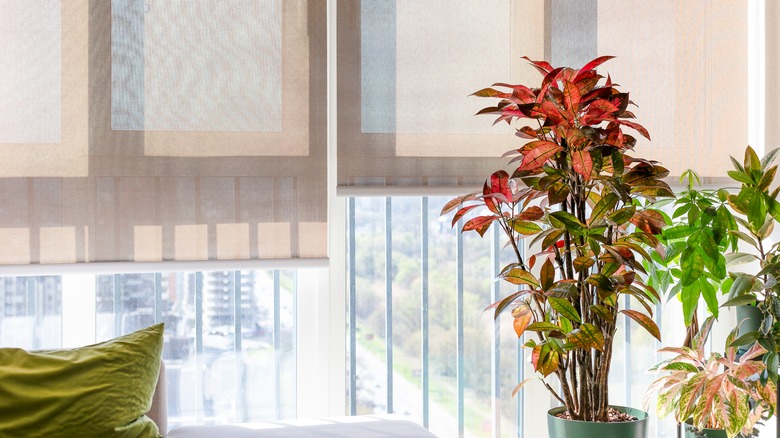
Green foliage is a way to bring the outdoors inside, but croton (Codiaeum variegatum) offers an opportunity to add some fiery tropical appeal. The most common variety has oval leaves splashed with pink red, orange, and yellow. Expect these shrubby plants to reach sizes of 6 feet tall and 5 feet wide indoors. You can keep your croton happy and thriving throughout winter as well as keeping its leathery foliage in full color by providing it with very bright light, including at least two hours a day of direct sun. Be prepared to provide moderate maintenance for these houseplants.
Dragon tree
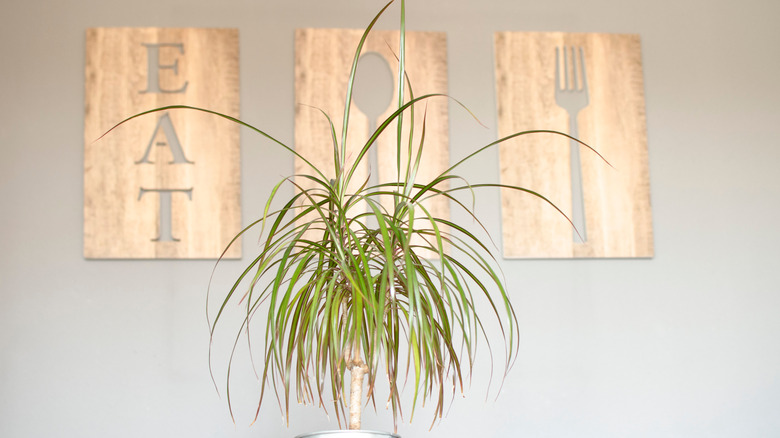
A relative of corn plant, dragon tree (Dracaena reflexa var. angustifolia) has spiky sprays of thin leaves held on branched, upright, bare stems. These wispy trees grow up to 6 feet tall as houseplants, where they require only moderate maintenance. They add fascinating foliage to an indoor space, but since the leaves are finely textured, a dragon tree won't overwhelm a room. Adding to the appeal, some varieties of dragon tree have colorfully variegated foliage, such as 'Magenta,' which has green leaves with pink-red margins.
Fiddle-leaf fig
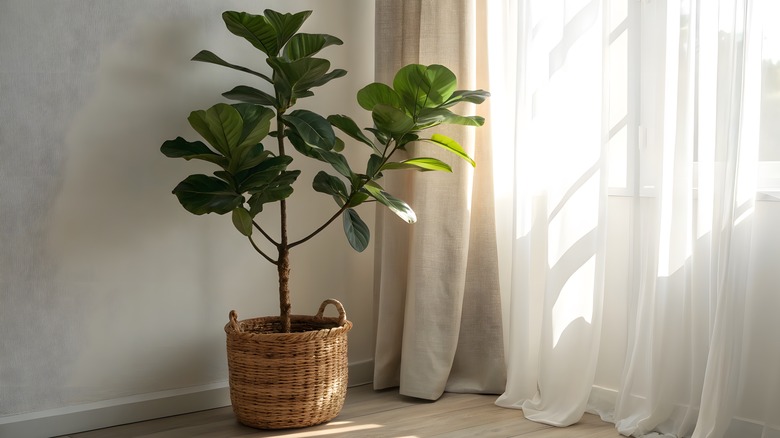
Fiddle-leaf fig (Ficus lyrata) is a popular indoor tree for good reason. With big leaves that are green and leathery with pronounced veins, it provides a larger-than-life presence and tropical feel. When grown indoors, fiddle-leaf fig trees can reach heights of up to 10 feet. If you start off with the right growing conditions — including very bright, indirect light and excellent drainage — these trees will be low-maintenance members of your houseplant collection.
Elephant ear
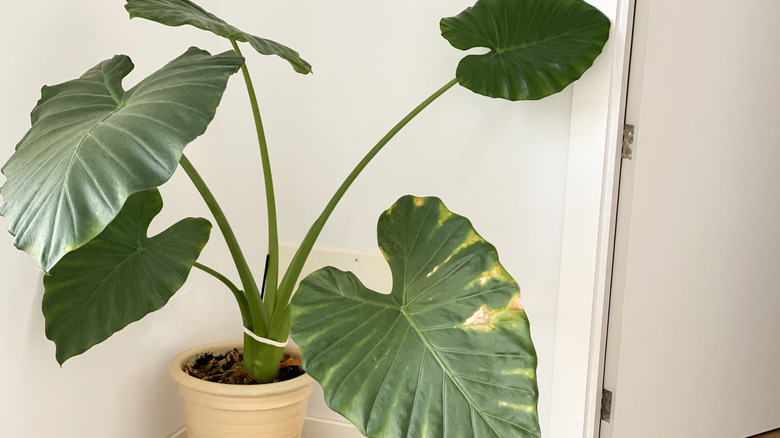
Elephant ear plants aren't just for the yard — many types of Alocasia species can also be grown indoors where their oversized leaves will convey high drama. Each heart- or arrowhead-shaped leaf can be up to 3 feet long, and is held on its own stem. These tropical or subtropical plants can reach a whopping 10 feet tall, depending on the type. Moreover, though they are fast-growing and will fill up a lot of space, elephant ears are low-maintenance.
Fishtail palm
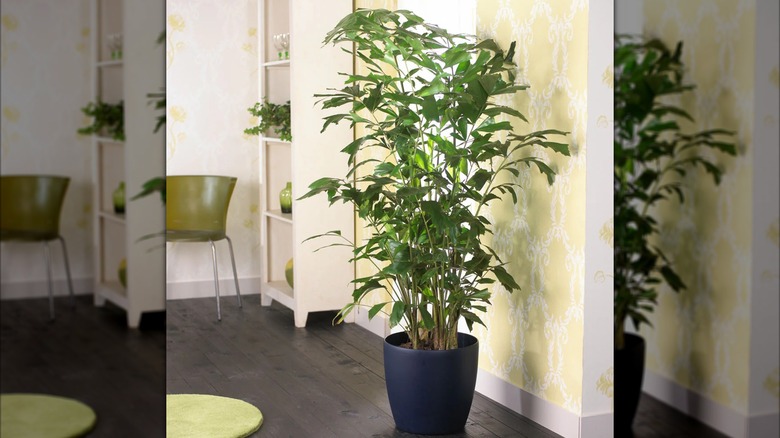
Fishtail palms (Caryota mitis) prefer indirect, bright light since they are understory trees in their native habitats. Their arching stems are covered with large leaves divided into triangular leaflets, giving them a unique appearance. These palms offer a coarse visual texture, which can help add contrast to an empty space. As houseplants, fishtail palms will grow to be 6 to 10 feet tall. They require a moderate amount of care, including frequent watering.
Lady palm
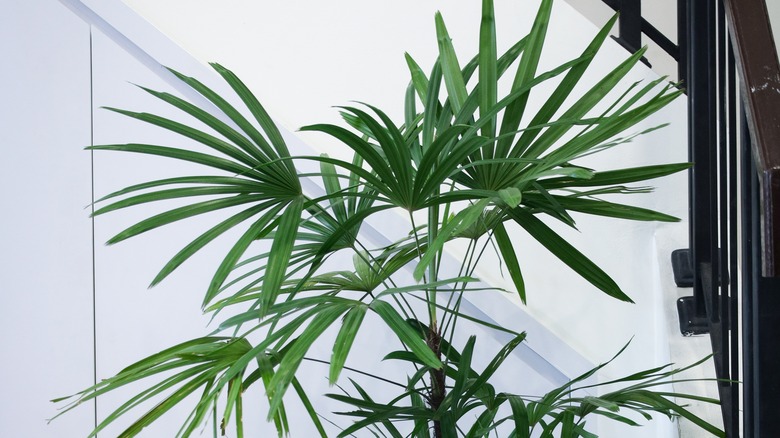
Clearly not all palms look alike, and lady palm (Rhapis excelsa) has a distinct appearance compared to the other palms on this list. This tropical, pet-safe, low-maintenance houseplant, which can eventually grow more than 6 feet indoors, has compound leaves splayed out like open fans. This species is also known as bamboo palm, because it produces many densely arranged stems known as canes. If you're searching for a gorgeous indoor plant with a medium texture — not too coarse, not too fine — you'll want to bring a lady palm into your home.
Money tree
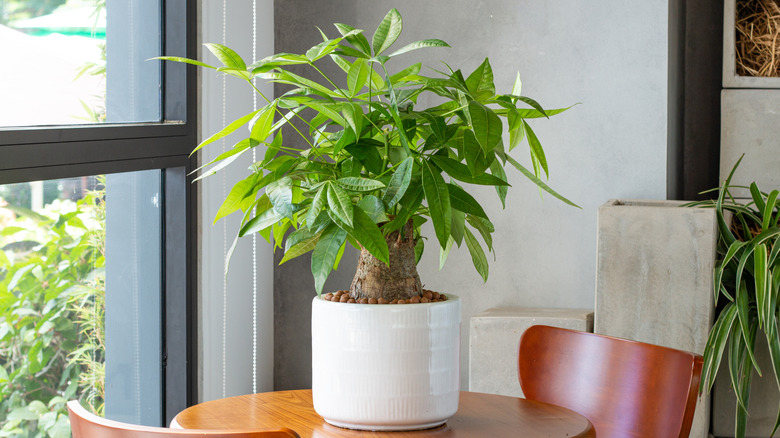
Money tree (Pachira aquatica) — also known as Malabar chestnut — is a large tropical houseplant that has compound leaves arranged in umbrella-like whorls. These plants have woody trunks with rounded canopies, and can grow to be 6 feet tall indoors, making them a great choice if you want a tree reminiscent of the outdoors in your home. Money trees require moderate maintenance and have a few needs not well-suited to beginners, such as a just-right level of moisture, so make sure you have some experience under your plant-growing belt before you bring one home.
Majesty palm
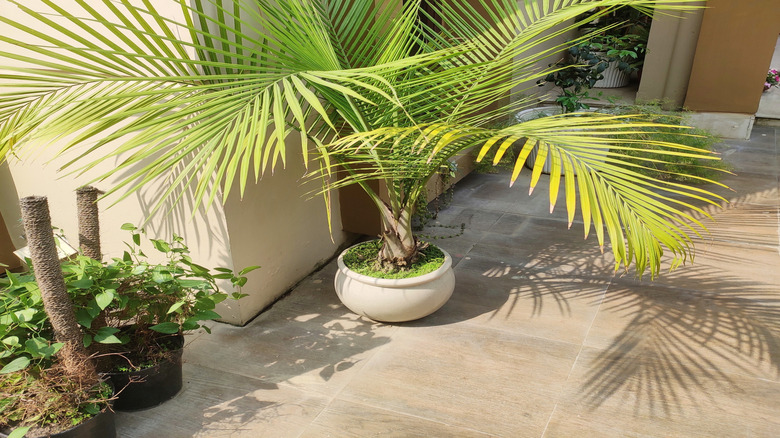
Majesty palm (Ravenea rivularis) has elegant green fronds and is non-toxic to cats and dogs, making it ideal for pet owners. This tropical species is best for advanced indoor gardeners who can provide it with high humidity and regular watering. It reaches up to 10 feet tall as an indoor plant, but if it's already the perfect size when you buy it, you won't have to worry about it outgrowing its wall or corner anytime soon, since it's a slow grower.
Monstera
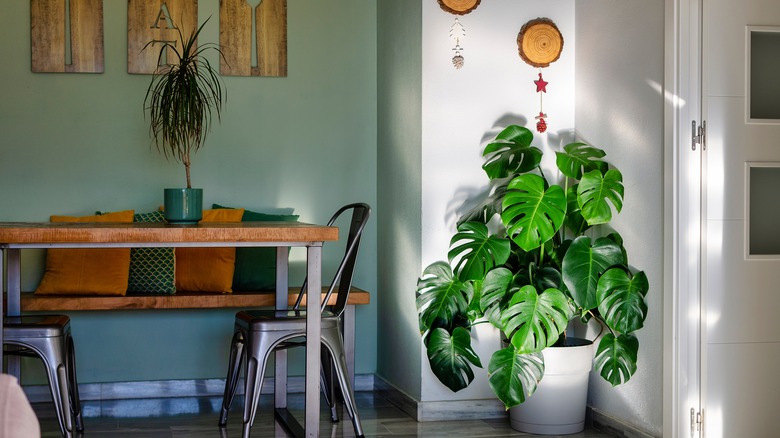
With extra-large leaves that cannot be ignored, monsteras (Monstera deliciosa) are great at filling space, and can even make an impact in large lofts and studios. They are often grown on poles or stakes, which help guide their leathery, green foliage vertically instead of allowing it to spread. Also known as Swiss cheese plants for the perforations in their foot-wide leaves, these vining tropical plants will grow quickly, reaching up to 10 feet tall as houseplants. Monsteras need moderate maintenance.
Cast iron plant
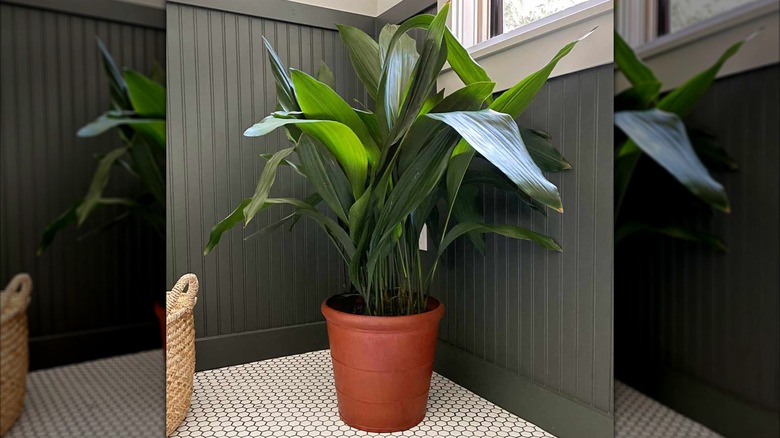
If you need a plant for low light and love large leaves, look to pet-friendly cast iron plants (Aspidistra elatior) to fill your space with low-maintenance greenery. With big leathery leaves that can grow 2 to 3 feet long and are held upright, these are excellent houseplants that are almost impossible to kill. Since they're don't need bright light, you can even use them to create intrigue in dim rooms. There are also varieties with foliage that is variegated or dappled with star-like dots.
Norfolk Island pine
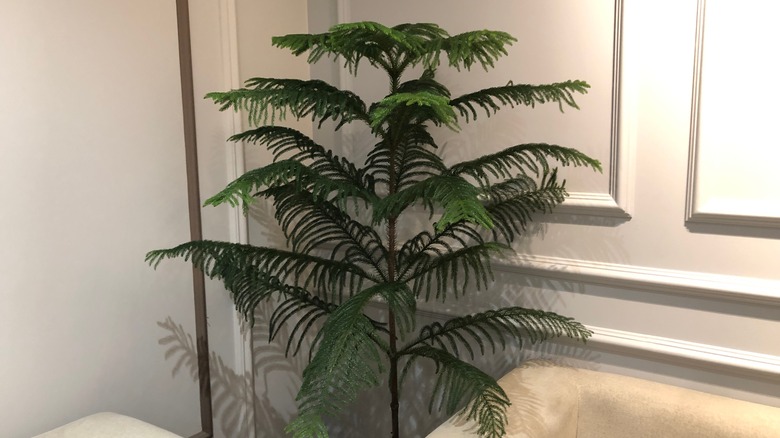
If you're searching for a low-maintenance houseplant to fill your home during the winter holidays, you might choose to add a Norfolk Island pine (Araucaria heterophylla). These evergreen, pyramid-shaped conifers can be decorated with lightweight ornaments for Christmas. But there are a few things you should look out for when picking out a Norfolk pine — like making sure the plant hasn't been painted green, which sometimes happens at big-box stores. These conifers can easily outgrow your home, so consider limiting their growth by keeping them in a smaller pot.
Parlor palm
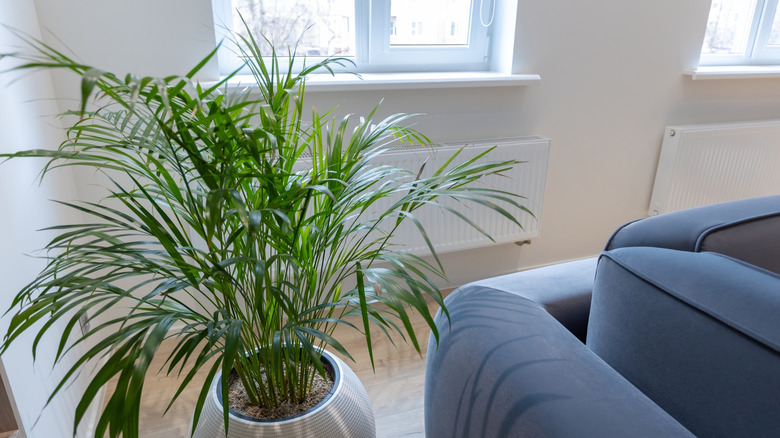
If you want to create a tropical atmosphere indoors, but don't have humid air in your home, a parlor palm (Chamaedorea elegans) is a good choice. It can grow in low light and low humidity levels, making it also an easy houseplant for beginners. Parlor palms produce single, upright stems that bear arching, compound leaves, and they are often grown with several plants in one pot for a fuller look. Expect your parlor palm to reach no more than 5 feet tall when grown indoors.
Peruvian apple cactus
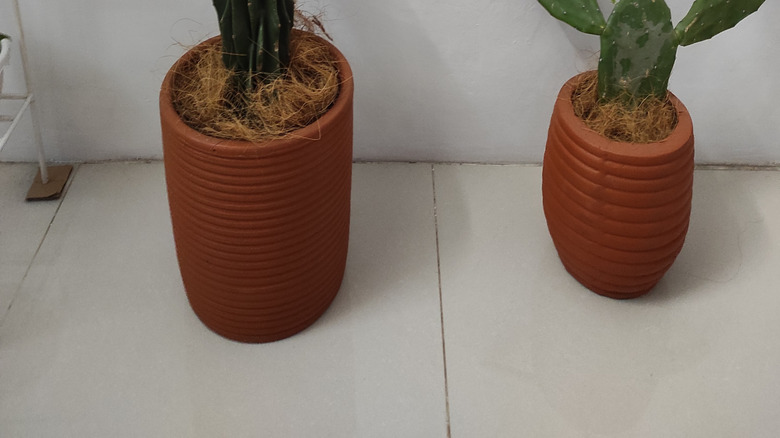
Do you have a blank wall crying out for some greenery to help complete a southwestern theme? Peruvian apple cactus (Cereus repandus) will do the job if you have plenty of bright, preferably direct, light. This spiny cactus has branching, column-like stems and produces fruits that look similar to dragon fruit. This houseplant — formerly classified as Cereus peruvianus — requires infrequent watering to thrive. Expect Peruvian apple cacti to max out at about 8 feet when grown indoors.
Rubber plant
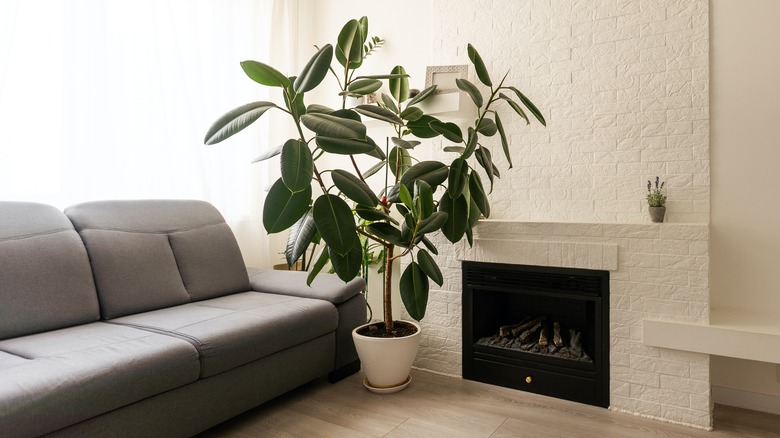
Fans of large leaves and medium texture should add rubber plant (Ficus elastica) to their wish lists. This species has shiny green leaves that can reach up to 17 inches long, and there are varieties with different colorations and variegations as well. These trees can grow up to 10 feet tall as houseplants, and they have an upright and rounded shape, making them perfect for corners or other empty nooks, provided there's not too much afternoon sun. They prefer bright, indirect light or partial shade.
False aralia
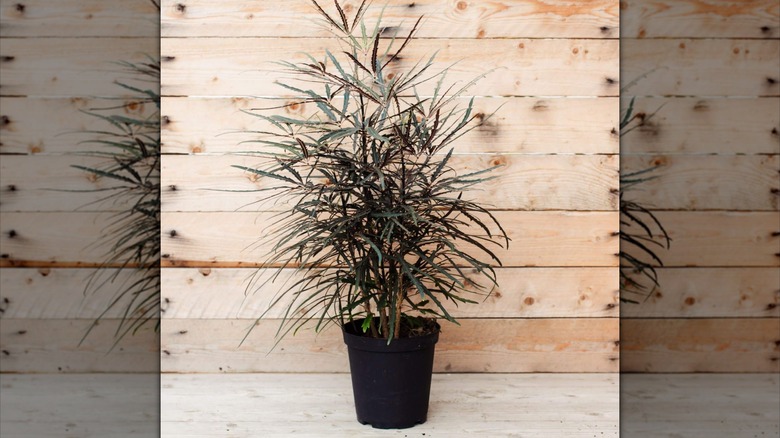
False aralias (Plerandra elegantissima) convey a unique sense of mystery with their feathery foliage and can infuse an interior with a gentle elegance. The coppery to dark green leaves are arranged like umbrellas, made up of several long, serrated leaflets. As houseplants, false aralias can reach 6 feet tall. Although they may look high-maintenance with their delicate leaves, these indoor trees are easy to care for as long as you offer them bright, indirect light.
Ponytail palm
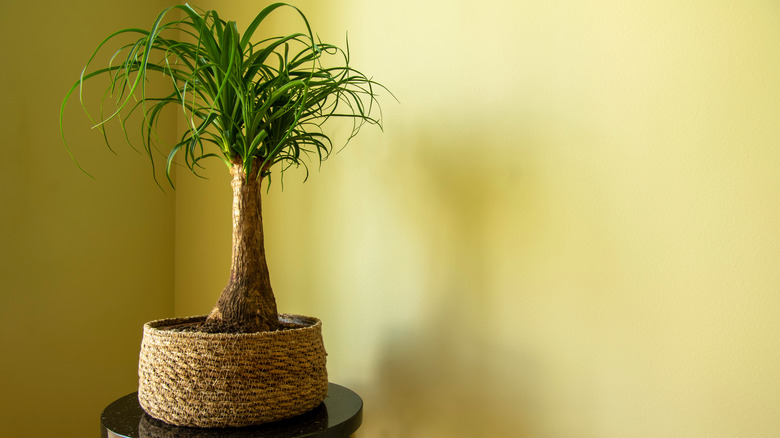
With its fountain-like foliage emerging from a trunk reminiscent of a Dr. Seuss story, ponytail palm (Beaucarnea recurvata) adds a sense of movement, flow, and contrast. This is a plant that will stand out, but won't be hard to maintain, and it can handle low humidity. An unusual feature of the ponytail palm is its caudex, the swollen base of the plant that stores water. Though they are tall trees outdoors, expect them to reach 6 to 8 feet tall as houseplants.
Snake plant
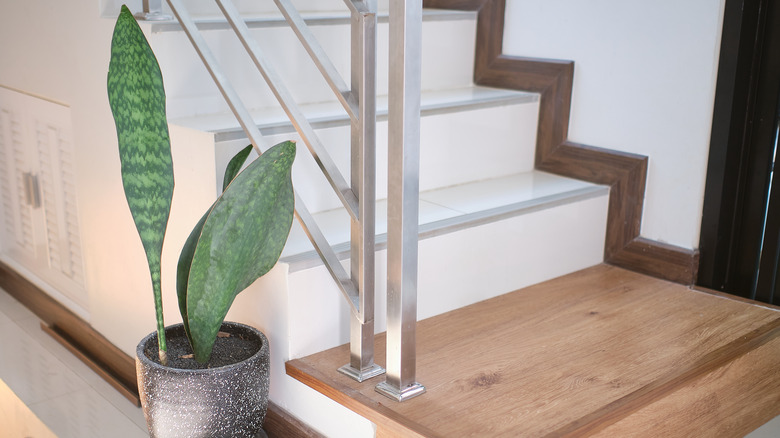
Snake plants (Dracaena trifasciata) are known for their sword-like leaves and bomb-proof care routines. So if you need a large, low-maintenance houseplant for a narrower space, a snake plant's long, upright leaves and coarse visual texture are perfect for drawing the eye vertically. There are many different species and varieties of these dramatic-looking succulent plants, and many of them reach 3 or 4 feet tall. You can count on snake plants — formerly known as Sansevierias — to provide many years of greenery in your home.
Spineless yucca
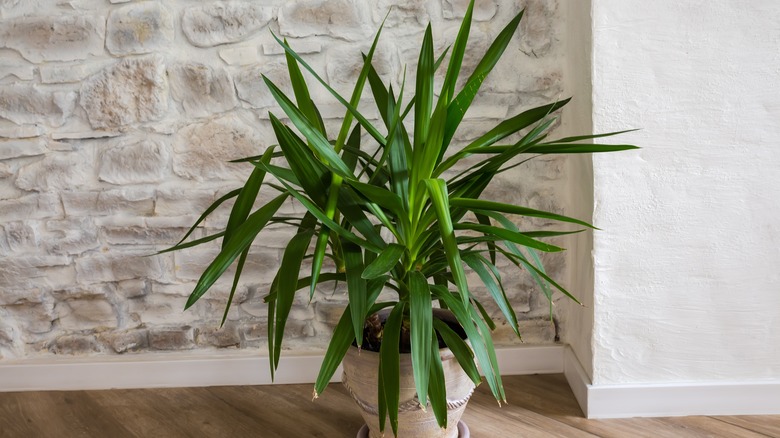
If you're looking for an eye-catching tree that can grow to take up an entire wall, consider a spineless yucca (Yucca gigantea). With a thick trunk and rosettes of spiky leaves, this indoor plant will add a strong vertical presence in any room. Though spineless yuccas can reach up to 30 feet tall and 25 feet wide outdoors, expect them to grow up to 8 feet tall as houseplants. Spineless yucca is a low-maintenance species thanks to its drought tolerance and ability to tolerate dry air.
Tree philodendron
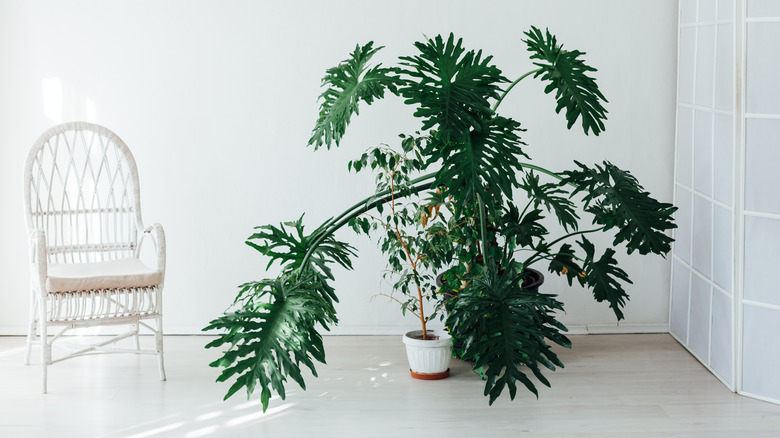
Tree philodendron (Philodendron bipinnatifidum) adds striking vegetation that's ideal for filling a roomy corner or wall. These tropical shrubs can reach up to 15 feet tall and wide as houseplants. But even more impressive than their size are their deeply divided green leaves, which can each reach an astounding 3 feet long. While tree philodendrons will loom large in a room, they don't demand much care in return. If you want to create a feeling of drama that hints at thick jungles, tree philodendron is your plant.