

Invasive, Parasitic Plant Detected For The First Time In North America

A rather nasty and fast-spreading parasitic plant has made its first detected appearance in North America, posing a particular threat to sunflower crops. A homeowner detected invasive, parasitic sunflower broomrape (Orobanche cumana) in Yakima, Washington, in October, and two branches of the Washington State Department of Agriculture confirmed the identification.
The plant manifests its parasitism by attacking the roots of sunflowers (Helianthus annuus). Sunflower broomrape contains no chlorophyll and lacks the ability to undergo photosynthesis, so it attaches to host plant roots and steals nutrients and water from these. Other members of the 1,620 genera in the Asteraceae family, which includes chrysanthemums, asters, coneflowers, and many other popular plants, are also susceptible as hosts to sunflower broomrape. The plant's ability to spread quickly via hundreds of thousands of seeds the size of ground black pepper is a significant concern. Worse still, the seeds can viably endure in the soil for decades.
This Eurasian native, identifiable by the leafless flower stalks it sends up through the ground, has spread throughout Europe. With its global spread, this plant illustrates the difference between an invasive plant and aggressive growers. Sunflower broomrape is a major pest plant that covers 16 million hectares of farmland around the world and damages about half of all sunflower crops. The problem has gotten so bad in some places that farmers have stopped growing plants that the weed attacks.
Sunflower broomrape attacks roots of sunflowers and other plants
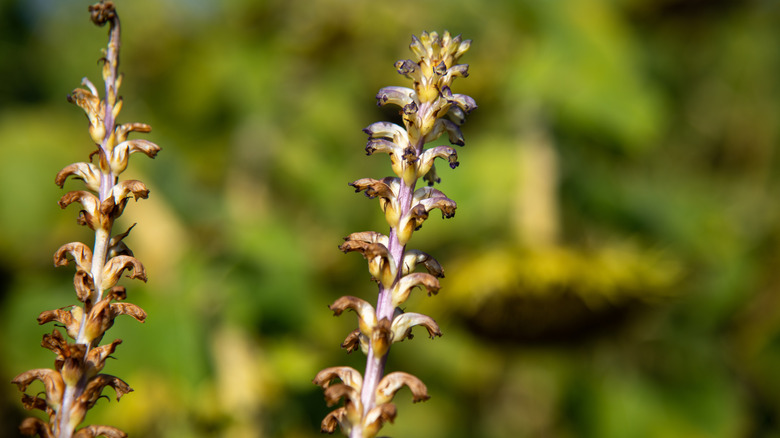
Sunflower broomrape, surely a candidate for the list of the worst invasive plants, is quarantined in many of the countries in which it grows to keep it from decimating sunflower production. To keep a lookout for this invader, you may see the first signs occur in the sunflowers you're growing. The sunflowers may wilt, and their foliage may turn yellow. Your plants could be stunted or die suddenly with any obvious explanation. You can also watch for sunflower broomrape itself — the flower stalks may look like asparagus before they bloom, and you might see pale yellow to purple stems emerging near the base of your sunflowers.
The emergence of sunflower broomrape may have you asking if you should plant sunflowers in your garden. The presence of the plant among the sunflowers grown by average gardeners is not well reported, but any invasive plant is likely a threat. Keep your eyes open for the signs described. If you do see a plant you suspect is sunflower broomrape, don't touch it or disturb it, as you could inadvertently spread the seeds. Take a photo of it and report it to your state department of agriculture immediately.