

The Popular Fruit Tree You Should Be Pruning In December For Healthier, Tastier Results
Apples are a delicious fruit loved by many people, so it's hardly surprising that they're a popular backyard fruit tree. There are many apple varieties you can grow that are great for snacking — whether you want a single tree in your garden or you're crafting a mini orchard. All fruit trees require regular maintenance and more than a little patience to thrive, but the rewards are delicious, making them well worth all that work. For example, yearly pruning is vital if you want healthy apple trees that produce delicious fruit in abundance. Trimming the trees at the right time matters, too. The best time to prune your apple trees is in December when they're dormant.
Knowing how to grow and care for apple trees begins with understanding why you prune them. For starters, pruning an apple tree in mid-winter doesn't deplete the energy stores it needs to start growing again in spring. Your apple tree will be devoid of leaves in December, so it's a great time to inspect the trees' branches. You can easily spot evidence of disease, pests, or broken or weak branches and deal with those problems then and there. Removing weak, dead, or broken branches and thinning the tree circulates air through the canopy and prevents the unhealthy branches from affecting healthy ones. If you prune your apple trees earlier than December, you may accidentally encourage them to start sprouting new growth, which can be damaged by late snow and frosts.
How to prune your apple tree properly in mid-winter
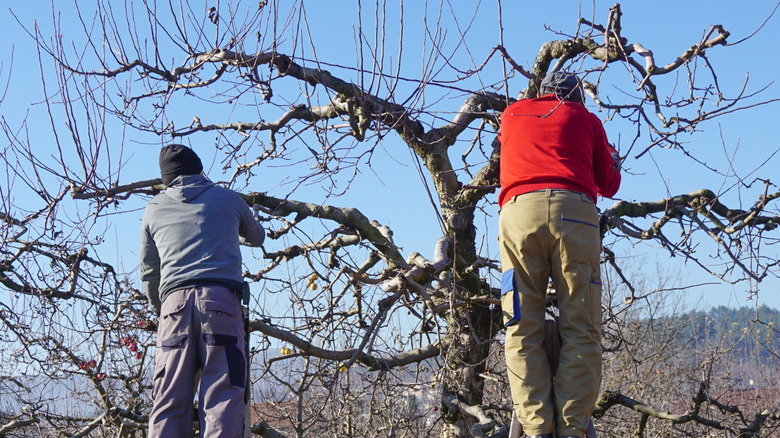
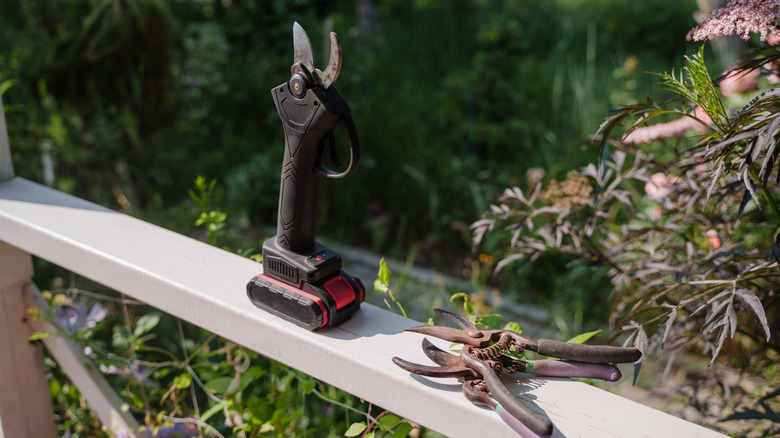
Hand and pole pruners, loppers, and saws are just a few of the tree-trimming tools you simply can't go without when tackling apple trees in December. Make sure you have cleaned, sterilized, and sharpened your pruning tools before you start trimming your apple tree's branches. Remove any dead or broken branches first. If you notice any diseased branches, remove them, of course, but also take detailed notes regarding their condition. You need to identify what's causing the disease and address any problems immediately. Otherwise, you risk infestations spreading to other branches or trees. Remove any branches that are crowding out or crossing over their neighbors. This reduces the density of the canopy, ensuring sunlight reaches the center of the tree as leaves appear on the tree in spring.
If you are pruning mature fruiting apple trees, only remove weak branches that are no longer producing. You're reducing the height of the tree for easy harvesting and letting sunlight reach the interior — both important factors for all apple tree species and cultivars. Here's a very December-appropriate technique for pruning mature apple trees: trim the plant into a Christmas tree-like shape. In other words, make sure the upper branches are shorter than the lower branches to reduce shading. Shaded branches may produce fewer apples. Make smooth, close pruning cuts. You only want to leave a stub if you are trying to encourage new growth. Otherwise, leave a visible collar— the swollen ring where branches join that heals easily.