

20 Varieties Of Plants You Can Grow In The Shade Of A Covered Patio
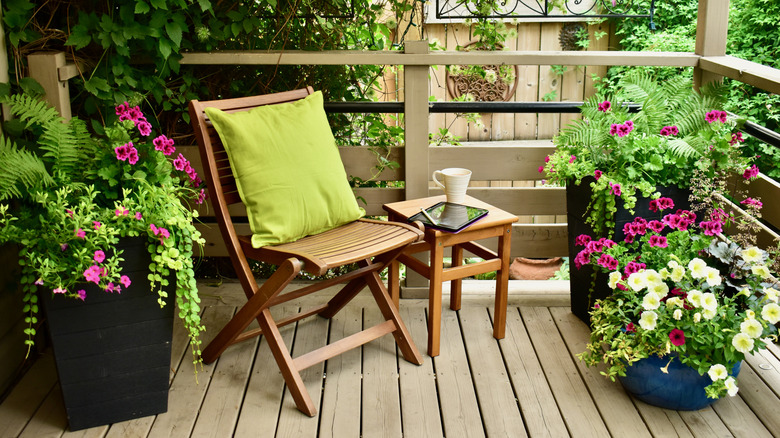
Many homeowners increase the aesthetic appeal of their patio by adding plants. But patios often have a roof, pergola, or deep overhang to cut direct sun. This means your plants will have to sit in partial or full shade. So when choosing plants for your patio, you need something that can tolerate some or full shade. Some good examples of such plants include impatiens and azaleas if you want something flowering, and coleus and hosta if you are into beautiful foliage.
Likewise, basil and mint can also be added to a patio if you want something fragrant that will also season your dishes, or boxwood and sweet box for year-round interest. However, only selecting a shade-tolerant plant is not enough if you really want it to thrive in your covered patio. That is because even though the patio is covered from above, your container plants still will be exposed to the elements outside.
So, make sure you take your USDA Hardiness Zone into consideration before choosing plants for your patio. Likewise, research your plants' maintenance and care needs, and their mature size, so they don't take up too much space on the patio. And lastly, be creative, and don't be afraid of experimenting by trying new ways of transforming your patio with flowers and plants.
Rex begonia
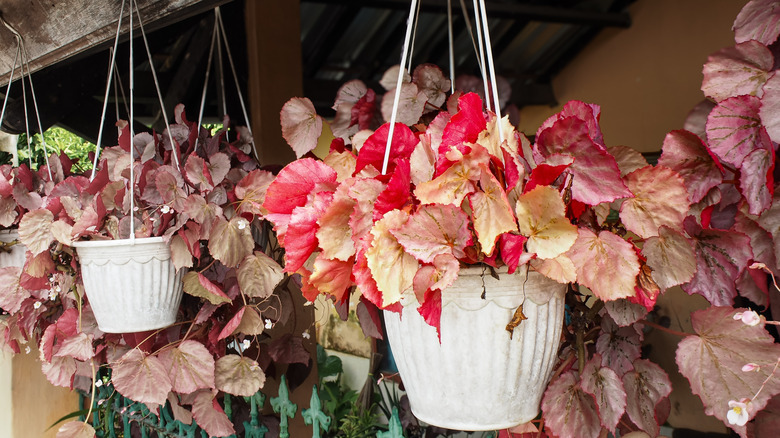
Many species of begonias are the plants of shady forest floors. So, naturally, they have a preference for shade and will grow quite nicely in a covered patio. Mostly they are known for their flowers, but some begonias are grown for their foliage, like Rex begonias (Begonia rex-cultorum). They thrive in filtered sunlight, and their leaves are truly one-of-a-kind with remarkable color and patterns. You can put them in containers or add them to hanging baskets. Grow Rex begonias outdoors in the warm seasons as annuals or overwinter them as a houseplant during colder months.
Florist azaleas
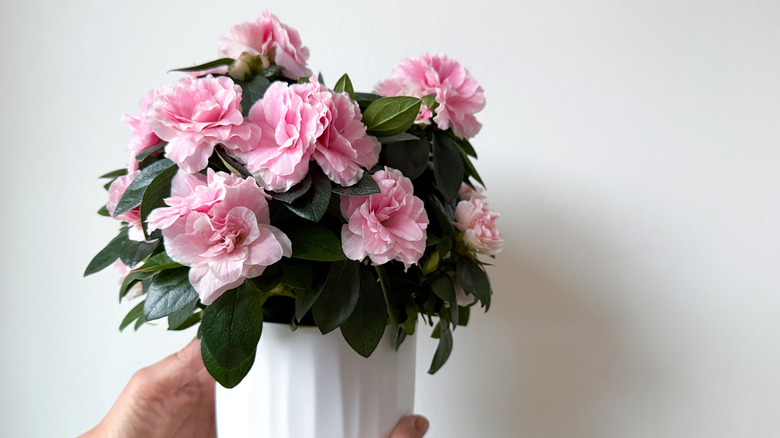
Azaleas are the patio plants you want if you like a ton of flowers. They flower so much that sometimes you cannot even see the leaves. But choose wisely as some azaleas grow up to 10-feet tall. So, when choosing azaleas for your patio, stick with compact varieties like florist azaleas (Rhododendron simsii). These low-maintenance species are hardy to zone 7, depending on the variety, and grow well in partial shade. Florist azaleas are generally grown as annuals or short-lived perennials.
Coleus
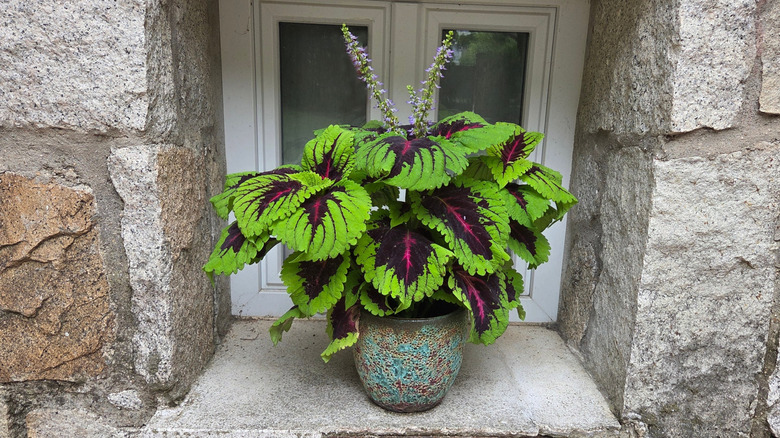
Flowers are not always the only way to add color to your shaded patio. Sometimes foliage plants like coleus can also get the job done, and most of the coleus varieties are naturally well-adapted to growing in shade. Combine that with its colorful, velvet-textured foliage, and good heat and pest resistance, and you have something on your patio that won't have you worried about its care and maintenance all the time. The main downside? Because of its extremely cold-sensitive nature, in most of the U.S., it is grown as an annual north of zone 10.
Hostas
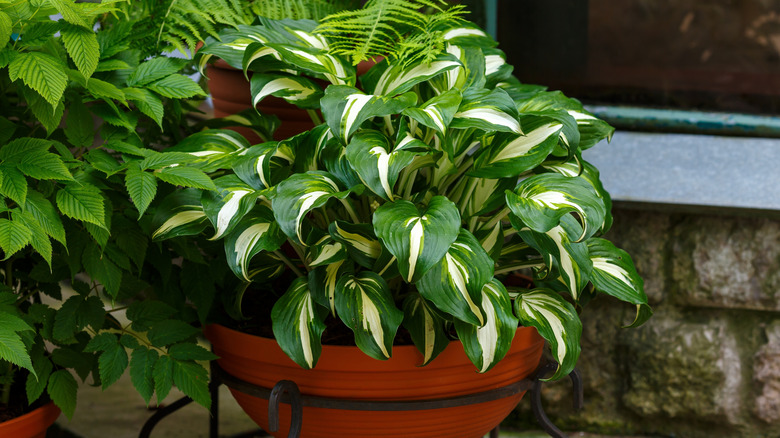
Hostas are one of the most popular shade-tolerant perennials, and they thrive across zones 3 to 9. Also, they are easy to grow, and depending on the variety, they might even bloom. Add that to their attractive foliage and you have an eye-catching leafy plant that grows perfectly in tight, shady spots of a patio. Just keep them away from windy areas because those giant leaves could easily get torn. Also, when grown in pots, they dry out more quickly and need more frequent watering — just something to keep in mind.
Basil
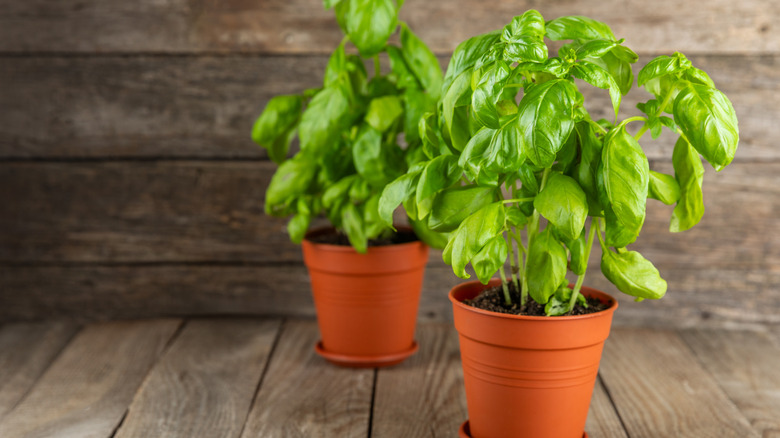
Plants on the patio don't always have to be about flowers and foliage. You can also plant herbs like basil (Ocimum basilicum) that do okay in partial shade. You can grow it easily from seeds, and since it is only 2 feet in size, it is perfect for those smaller pots you might want to add to your covered patio. And if you don't care much about its value as an herb, there are some ornamental cultivars with purple foliage available, too. Just add them to a window box on your patio, and you are good to go.
Mint
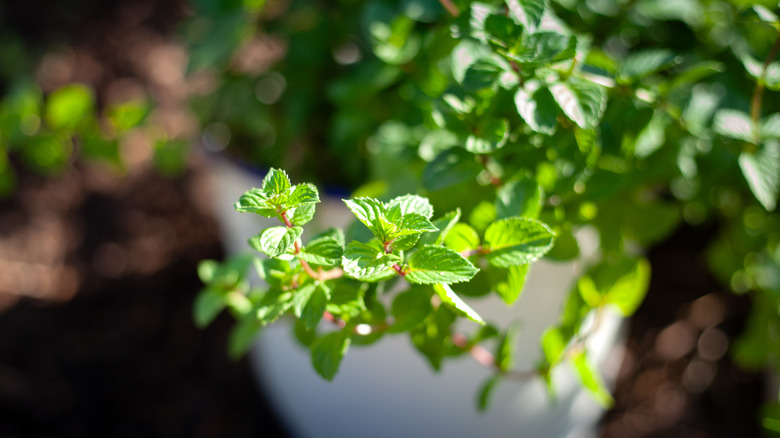
Mint is perfect for heavily shaded patios as it requires only about two to four hours of direct sunlight. Plus, it makes sense to grow it in containers on patios as it is highly invasive otherwise. Besides that, mint is perfect for cold regions as it is hardy to about -20 degrees Fahrenheit and can be grown reliably to zone 4. What makes it even more compelling is that it has very few pest problems and requires very little fertilizer. All you need to do is keep it away from excessively wet conditions, which can promote leaf diseases.
Mustard greens
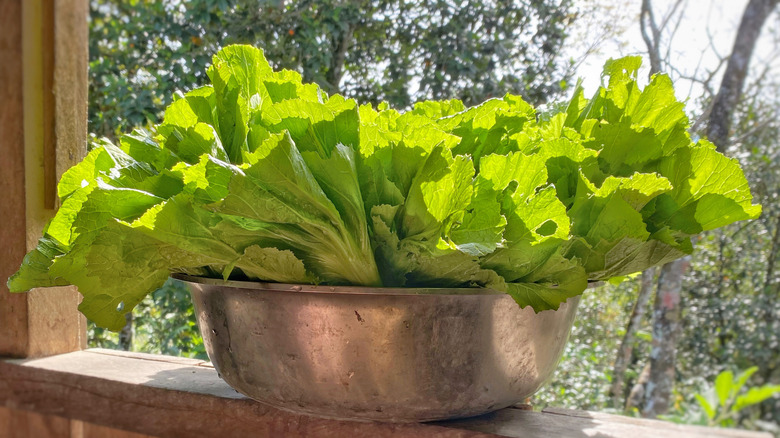
If you are looking for something edible to grow on your covered patio, mustard greens are definitely a worthwhile choice. Just like mint, they can grow with just two to four hours of sunlight and are pretty low-maintenance. And since they are annuals, you don't have to worry about the hardiness zones. Just plant them from early spring to the middle of the summer, and they will be ready for harvest in the fall. They taste much better if exposed to the cold temperatures, so planting them later is probably a good idea.
Ferns
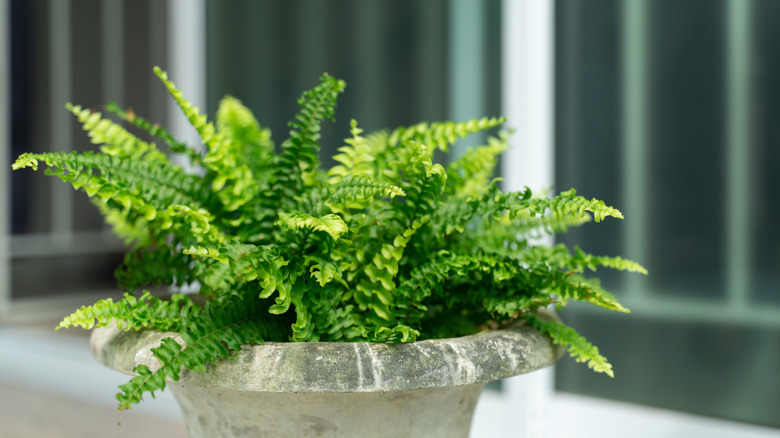
If your patio is located on the north side of your home and receives almost little to no direct sunlight, you probably need something that grows well in full shade. And that is where ferns come in. Many types of ferns, like Boston fern (Nephrolepis exaltata' Bostoniensis'), Japanese painted fern (Athyrium niponicum), and maidenhair fern (Adiantum pedatum), grow well in full shade as well as in containers. They're the perfect plants for your covered patio. Just make sure to place them in a spot with humidity and moist soil, and don't let them dry out.
Creeping St. John's wort
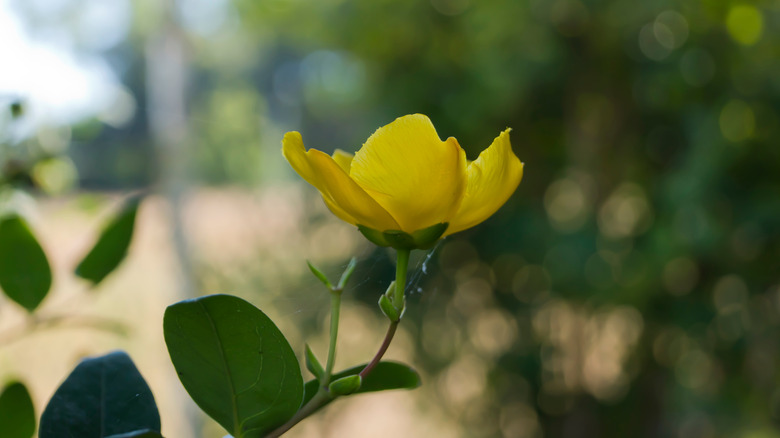
St. John's Wort (Hypericum calycinum) is the perfect plant to grow in the shade of your patio if you are looking for something trailing because of its vining growth habit. Also, it does well in containers because when planted in the ground, it can become invasive due to its aggressively spreading stolons. This plant grows well in zones 5 to 10, although it might die back in harsh winters. But in areas with warm winters, it stays evergreen throughout the cooler months. Just make sure to keep your children and pets away, as it is toxic to humans and animals.
Foxglove
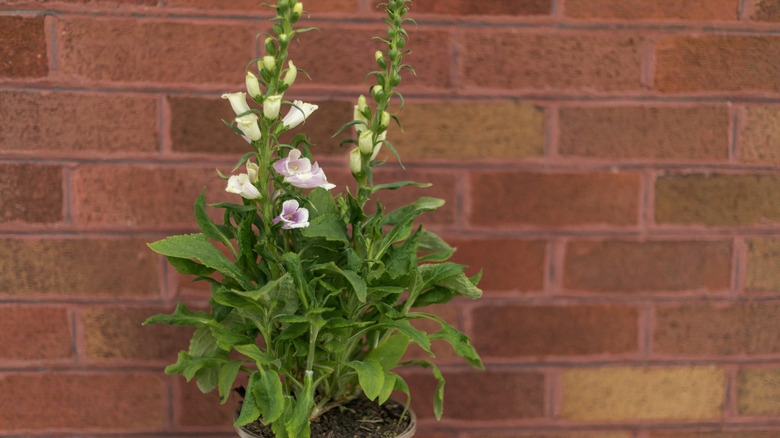
If you are looking for a tall, eye-catching plant to go in your containers on a shaded patio, foxglove (Digitalis) is a good choice. Just remember, since it is a biennial, in the first season, it will just have a little rosette of plain green leaves — nothing too exciting. But wait for the spring, and the little rosette will shoot upward and get filled with a bunch of tubular purple flowers. As for hardiness zones, it is hardy from zone 4 to 9. Just make sure to put them in a well-draining, rich soil.
Impatiens
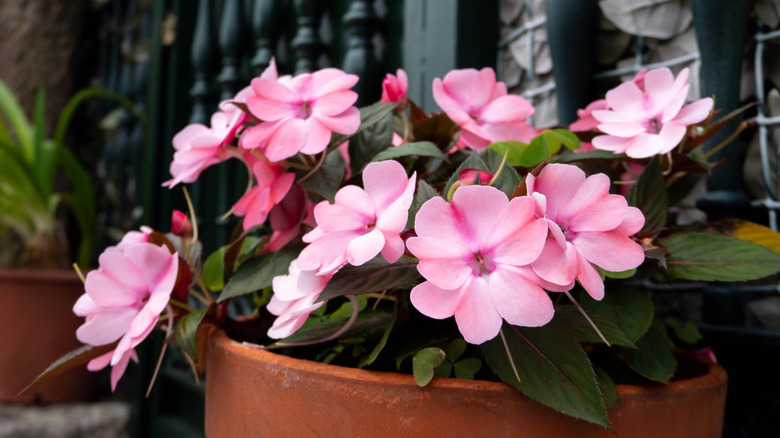
Impatiens are easygoing plants, and they grow happily in planters in the shade. You can use them standalone in containers or as a filler to complement your tall plants. And since they come in a range of colors from pink to white and purple to yellow, just to name a few. Impatiens are great for mixing and matching with companion plants. They bloom from May to October and are one of the few plants that bloom this much in shade. They are susceptible to fungal conditions, so make sure to avoid overwatering.
Bleeding heart
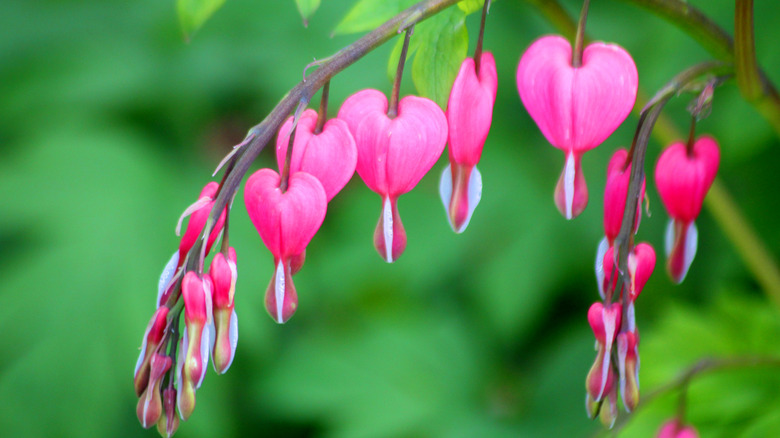
Bleeding hearts (Lamprocapnos spectabilis) are the perfect plants to add to your covered patio if you want to add vibrant color to your containers. They bloom early in spring, producing pink to purple-red flowers. When they are not blooming, they can still add visual interest with their lacey and fern-like gray-green leaves until it gets hot, when the foliage dies back. You can grow them reliably anywhere in zones 3 to 9 as long as they are planted in moist and well-drained soils. Just keep pets and children away as they have poisonous characteristics.
Coral bells
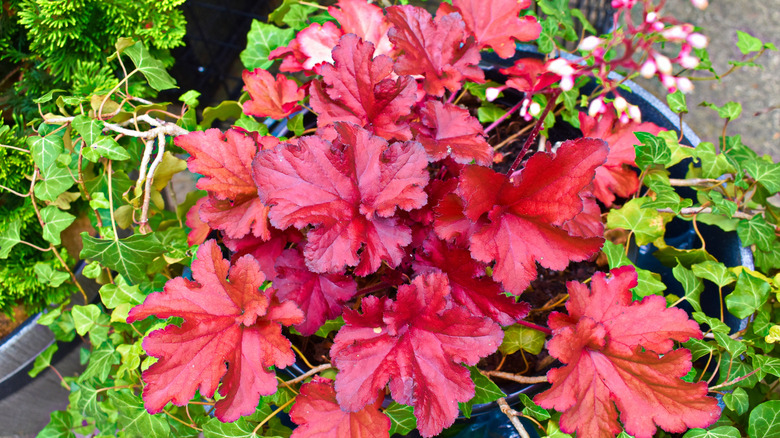
Coral bells (Heuchera spp.) are another great perennial to add to your shopping list. It offers a pop of color with stunning foliage and spikes of flowers that add interest to a covered patio. They work exceptionally well as spiller plants in hanging baskets and containers. You can grow them reliably anywhere in zones 4 to 9. The best part? There are many striking varieties of coral bells to choose from. The main issue is that the base of these plants get woody as they age. But it is a simple fix — just lift and replant them slightly deeper.
Caladium
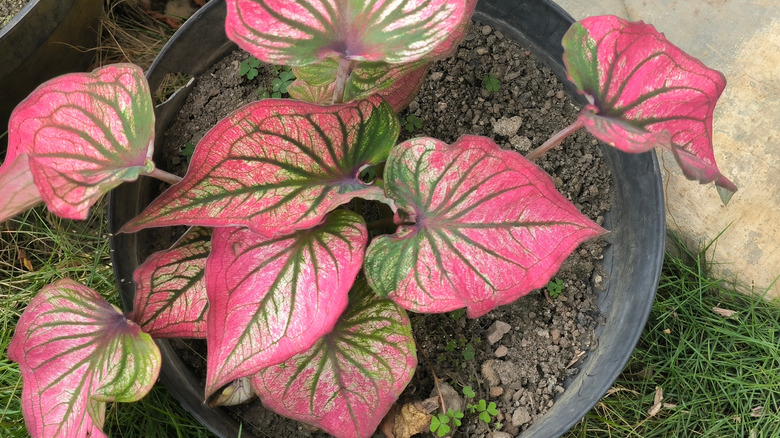
Caladiums (Caladium bicolor) can instantly brighten any spot they are planted in, and people often use them in hanging baskets and pots for their colorful leaves. You can grow them alone or with other shade-loving plants in a container on your patio. They prefer filtered light, so make sure you keep them away from direct sunlight, especially the afternoon sun. This will help improve their color while protecting them from sun scald. Caladiums require constant moisture, rich, acidic soil, and you will need to water and fertilize them regularly, especially when they are actively growing.
Silver vase bromeliad
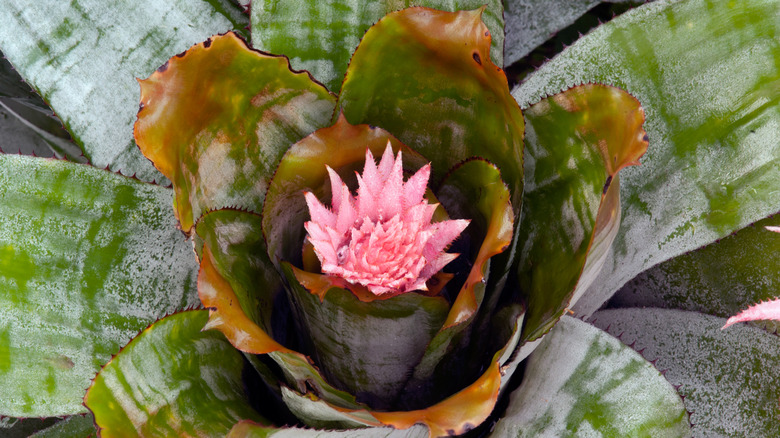
If you wish to give your covered patio a soft tropical look, bromeliads are the perfect plants. Take for instance, the silver vase bromeliad (Aechmea fasciata). The plant is known for its arching gray-green foliage with silver highlights. It grows to about 3-feet tall as a perennial in zones 10 and 11, but you can bring it in to overwinter as a houseplant. Unfortunately, the silver vase bromeliad dies after just flowering once, but before it does, it produces pups that you can transplant to keep the beauty going.
Lady palms
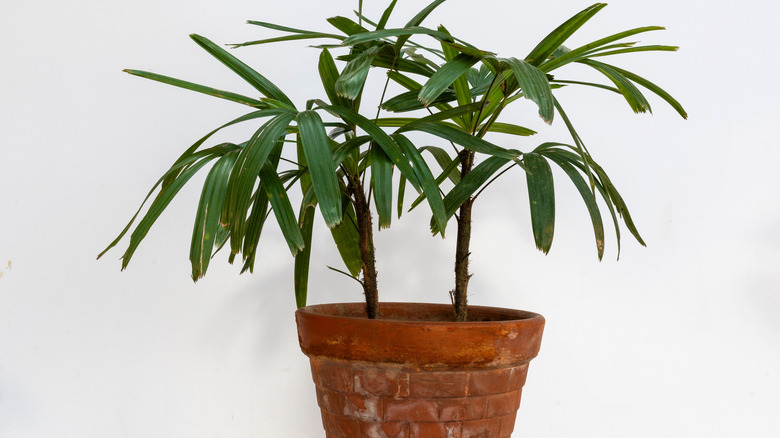
Lady Palms (Rhapis excelsa) also make good plants for a shaded patio. They are small, they have a clustered look, and they do quite well in containers. With time, you might need to move them to a larger pot, though, as they become root-bound. If that is not something you want, you can also thin out some of their suckers to fix the issue. Lady palms are only cold hardy from zones 9 to 11, but if you move them indoors for the winter, they should be fine.
Peacock ginger
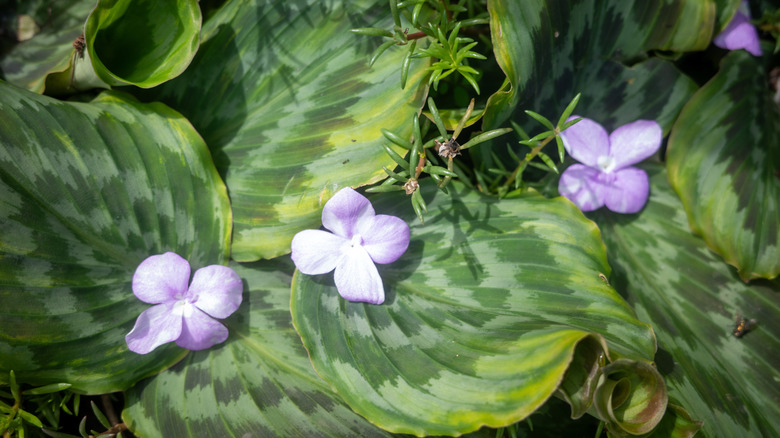
If you cannot grow hostas because you live in a warmer climate, peacock ginger (Kaempferia spp.) might be a good alternative for your shaded patio. This plant grows well in zones 8 to 11 and has bold green leaves with silver, purple, and bronze markings. In cooler regions, you can overwinter them indoors as long as you keep them away from direct sunlight. Plant peacock ginger in a rich potting mix. Water as needed when they are settling in, but and keep the soil dry when they are dormant, as these are deciduous and lose their foliage in the winter.
Oxalis
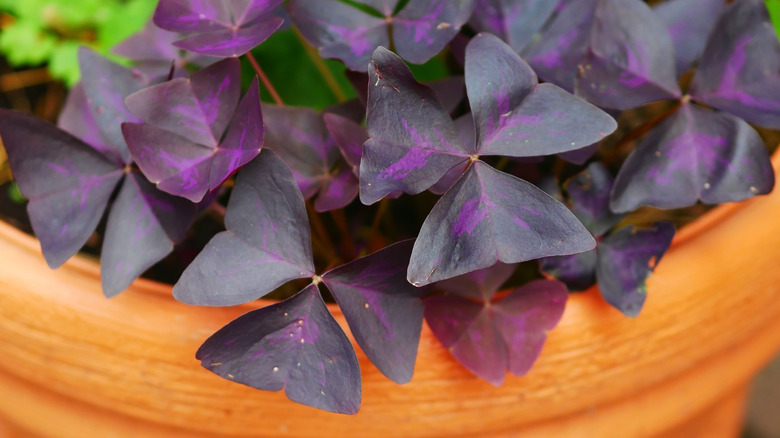
Oxalis or woodsorrel are popular house and garden plants that feature heart-shaped trifoliate leaves. One of their most interesting features is their pretty tubular flowers, which open and close as the light changes. Oxalis grows well in partial or dappled shade in zones 5 to 10. Some species are known for becoming weedy, but if you are going to grow them in a container or a hanging basket on your patio, it shouldn't be a problem. If they do, however, become weedy, you can easily remove the extra plants.
Sweet potato vine
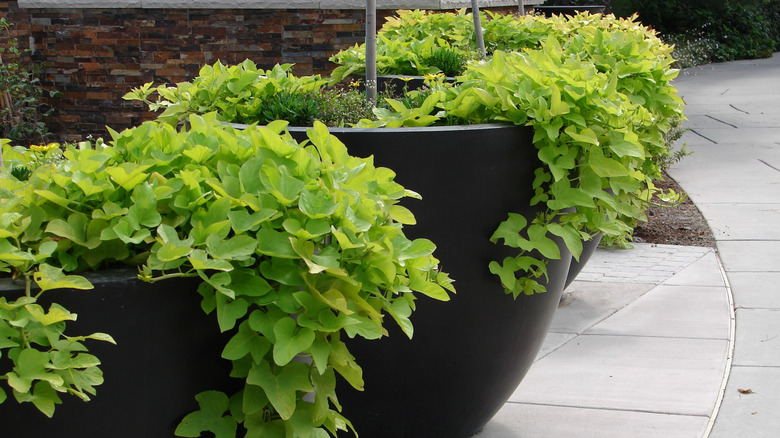
Sweet potato vine (Ipomoea batatas) is known for its heart-shaped leaves and a trailing growth habit. It has many ornamental cultivars that you can use to color your covered patio with partial shade. For instance, the 'Ace of Spades' features heart-shaped dark leaves and 'Pink Frost' is a stunner offering lobed leaves with white and pink variegated patterns. You can put them in planters, window boxes, or hanging baskets on your patio as long as you give them rich and well-draining soil. At the end of the season when frost hits, you can even dig them up and eat their tuberous roots.
Wishbone flowers
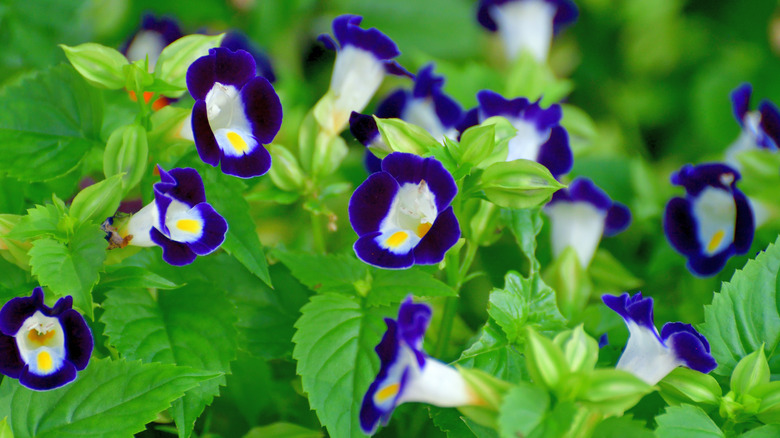
Last on the list are wishbone flowers (Torenia fournieri). They prefer dappled sun and part shade and can even grow in deep shade as long as you plant them in rich soils. And if you are looking to attract hummingbirds, adding these two-toned flowers to hanging baskets on your patio will definitely get the job done. Hummingbirds just can't seem to resist their flashy, colorful flowers. If they stop blooming, prune them a bit, apply fertilizer, to encourage them to flower again in about a month.