

The Best Plants For A Rain Garden That Really Solves Your Flooding Problem

If your favorite hobbies are best spent in the fresh air, then you're likely itching to get back outside once a rainstorm has passed. However, few things can rain on your parade like stepping outside only to find that the ground in your backyard is flooded, with pooling water and spongey, soaked earth that leaves you sinking. There can be a variety of reasons that your yard has a flooding problem, from culprits like poor grading to compacted soil. Fortunately, just as there are many reasons behind a flooded yard, there's an equal amount of solutions, including a rain garden filled with native plants.
Before diving any further, you may be wondering what a rain garden is. First, it's not a submerged or wet garden; it likely won't hold up to constant water exposure. Instead, a rain garden's purpose is to soak up excess water right after rainfall before drying within the next two days. This ensures that no water-loving pests (hello, mosquitos) can breed, while also protecting your yard's soil from the pollutants carried by rainwater.
The best plants for a rain garden are native plants, as they offer a range of additional benefits that makes them a smart solution for flooding in your yard, especially given their intricate root systems. When curating the perfect rain garden, there are a few factors to consider, such as which plants are native to your specific region and their growing conditions. After all, to keep flooding to a minimum, you'll want a healthy, thriving rain garden.
How (and why) to use native plants in your rain garden
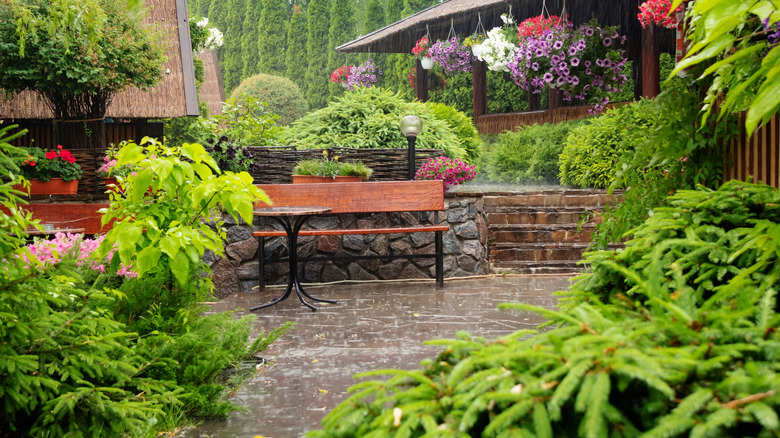
There are nearly 400,000 plants in the world, each with its own unique appearance and characteristics. With so many different plants to choose from when it comes to creating a successful rain garden, why are native plants the go-to choice? There's actually two main reasons for this, and it has to do with how native plants interact with both the soil and water in their regions.
When it comes to flood benefits, the star of the show are the roots. Native plants sport deep, intricate root systems that spread and hold onto the soil, which helps to naturally prevent erosion. These same complex root systems can also trap and soak up the excess storm water that leads to flooding while filtering out pollutants for an overall healthier yard. As an added benefit, native plants are also uniquely adapted to their specific regions, which means less TLC on your part. They require less maintenance while positively interacting with other native plants and wildlife.
However, despite their hardiness, not all native plants are perfectly cut out for this job. Instead, it's essential to choose flood-tolerant plants that can handle a bit of soggy soil. Placement within your rain garden is also key. Keep the moisture-loving plants in the center of the garden, and reserve the more drought-tolerant options for along the rim. For the best results, pay attention to the conditions in your yard, such as daily sun exposure, soil type, and the average amount of precipitation.